Letting the Rain In: Why Our Original Hoop House is Taking a Summer Vacation
If you’ve been by the farm recently, you might have noticed something looks a little bare. Our original hoop house—the structure that has protected our most delicate, early-spring ranunculus and anemones for the last five years—is completely skinned. No plastic, just naked metal arches reaching up to the July sky.
It looks unfinished, but it’s actually one of the most intentional things we’ve done all season.
After five years of continuous production, sheltering crops from winter frosts and spring storms, the soil underneath that plastic was tired. In a permanent structure, the earth misses out on natural weather cycles. So, we decided it was time to give this patch of land a true rest.
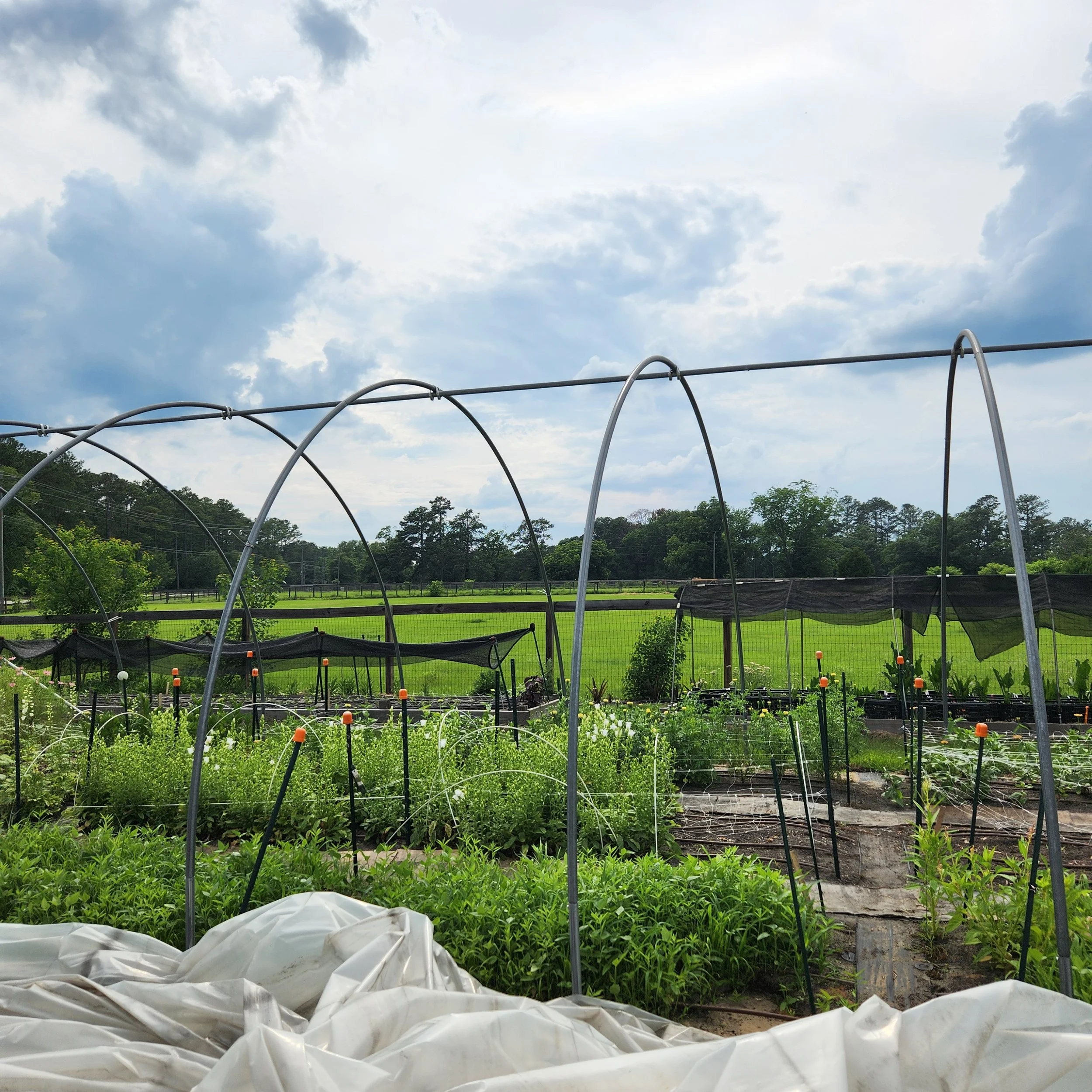
We removed the plastic on June 9th, once the weather warmed. The row closest to the camera is cover crop that was seeded two weeks before we removed the plastic.
The 14-Plant Jungle Once the old plastic came off, we let the open air and our heavy Southern summer rains hit the dirt. To jumpstart the soil biology, we’re sowing a specialized "Warm Season Soil Builder" mix from Greencover.com. We’re sowing the seed gradually, as our early season crops finish blooming.
We didn't just sprinkle it; we sowed it incredibly thickly so it would form a dense green canopy to block out the summer weeds we usually battle. If feels like a tiny, diverse jungle! The mix features 14 different plant varieties, all working in harmony:
The Builders: Cowpeas, Non-GMO Soybeans, Mung Beans, and Sunn Hemp to naturally grab nitrogen from the air and fix it into the soil.
The Anchors & Looseners: Okra, Sunflower, and Flax with deep taproots that break up our tight clay soil like miniature tillers.
The Soil Protectors: PPS Sorghum Sudan, German Millet, and Brown Top Millet for massive organic biomass.
The Bio-Fumigants: African Cabbage, Rapeseed, and White Mustard to naturally suppress harmful soil pests.
The Pollinator Favorites: Buckwheat and Sunflowers to feed the beneficial bugs above ground.
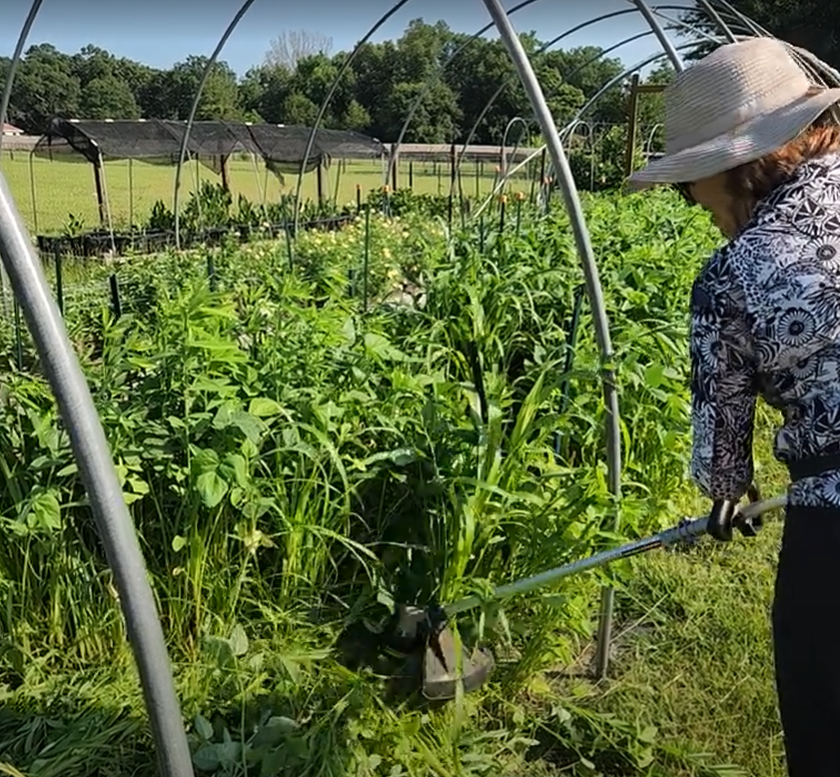
By July 9th, it was time to cut the first sowing.
Feeding the Ground from the Ground Up This week, the jungle’s work is done in some spaces. We’re taking a hedge trimmer and weed eater across the top of the beds, chopping all 14 species down to the ground. Instead of hauling that green waste away, we left it right on top of the soil.
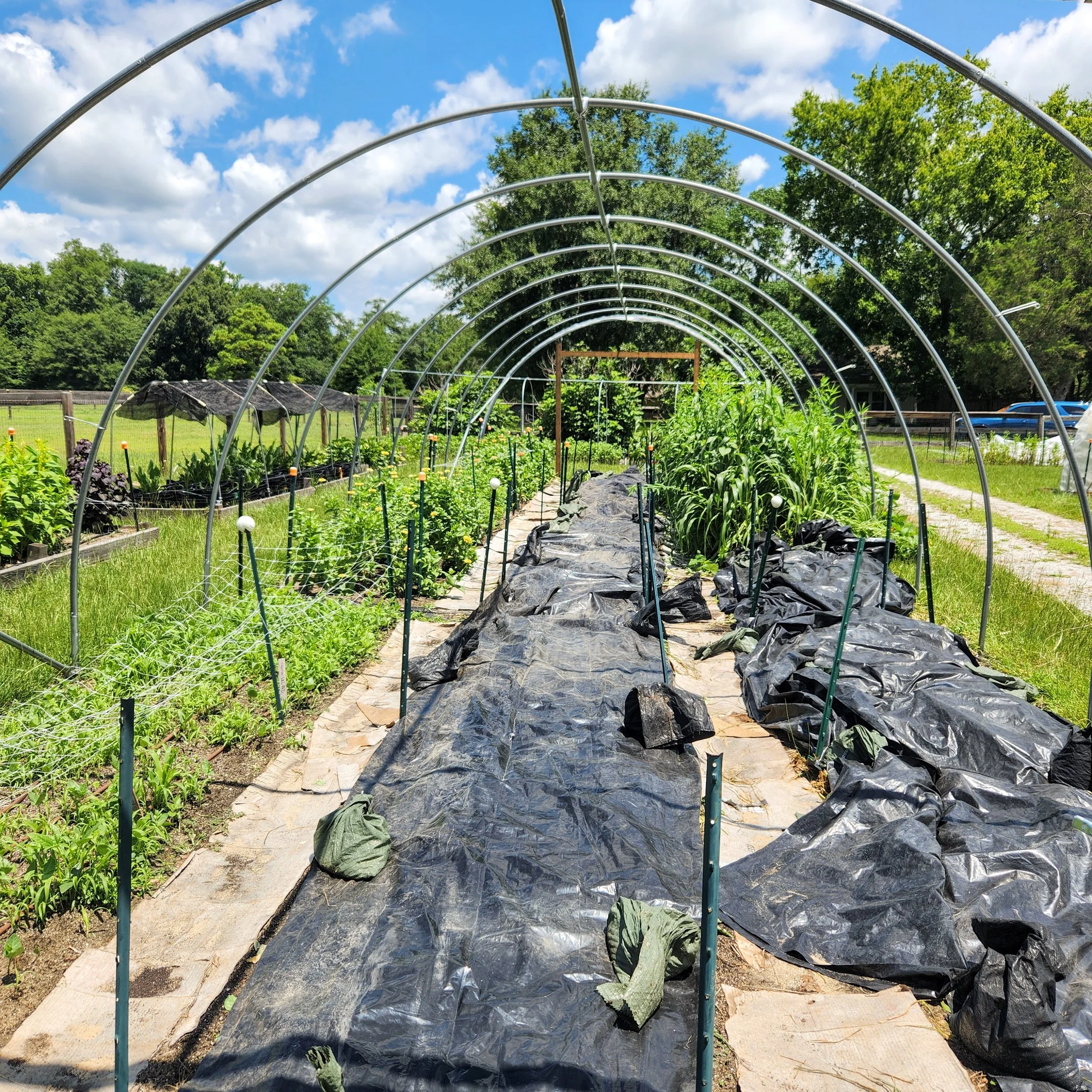
Tarps add heat, which helps breakdown the organic matter, prevent weeds and block light and water. Sandbags keep them in place.
Next up, we are tarping the space. By covering the chopped organic matter with heavy silage tarps, we create a warm, dark environment where our local soil microbes and earthworms can feast. Over the next few weeks, they will break all that plant material down into a rich, dark, crumbly compost right in place.
Looking Ahead to Spring 2027 In late September, we will pull the tarps back, stretch a brand-new sheet of protective plastic over the steel hoops, and prepare the beds. And this fall, we will drop our seeds and corms into the ground for our early spring 2027 harvests.
It takes a lot of patience—and means giving up a covered growing space for an entire summer—but we firmly believe that the health of the soil is the key to the best possible flowers. Beautiful blooms aren't forced; they are nurtured.
Happy Summer,
Linda
P.S. Want to experience the joy of local, sustainably grown flowers in your own home this season? Our Late Summer to Fall Bouquet Subscription is just weeks away from starting. We deliver fresh, field-grown happiness right to your shaded porch bucket. We only have 8 spots left—we’d love to have you join us!