A plant profile for cutting gardens and seasonal bouquets
Why Grow Rudbeckia?
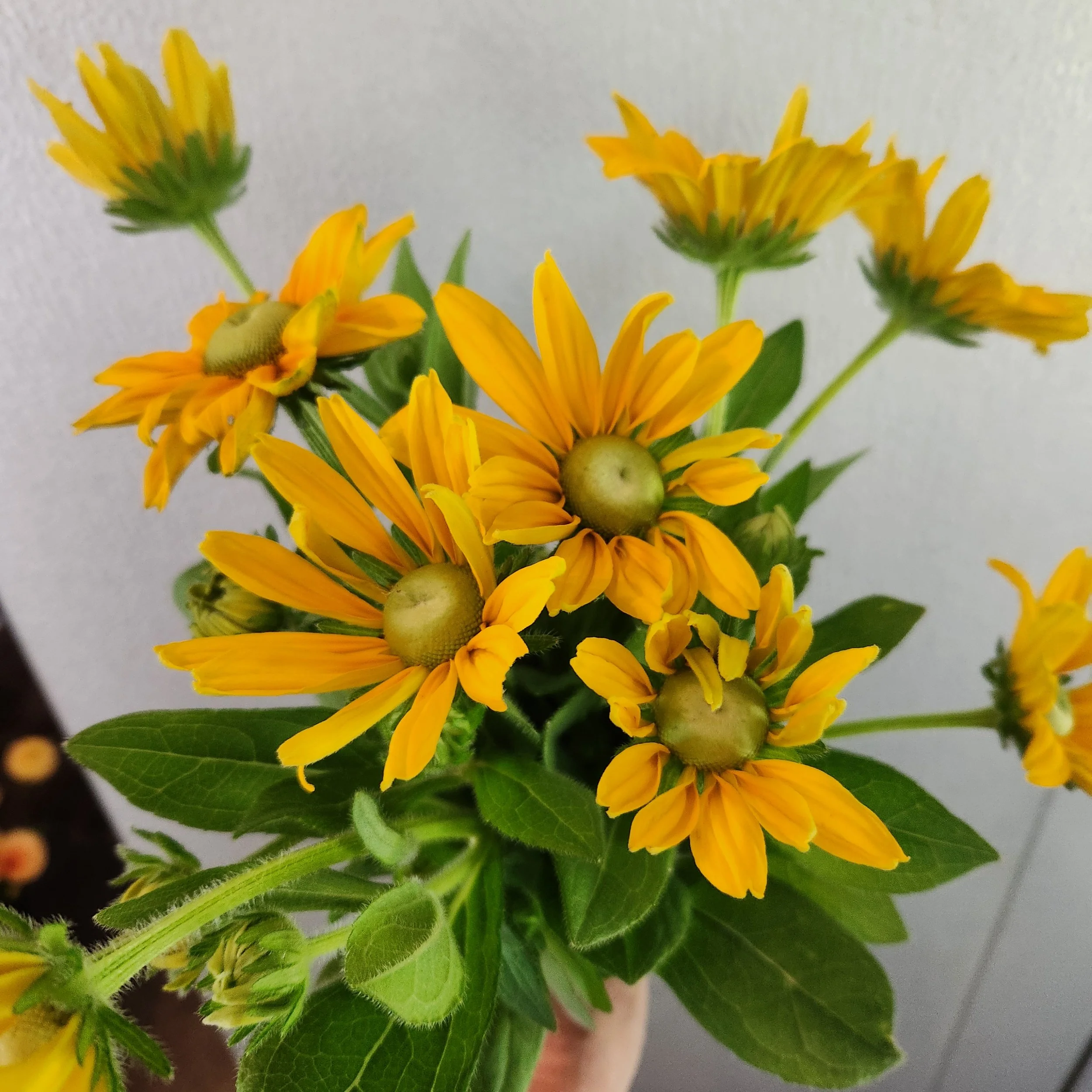
Rudbeckia, commonly known as Black-eyed Susan, is a cutting garden favorite for its bold blooms, long flowering season, and exceptional heat tolerance. With varieties such as Sahara, Irish Eyes, and Indian Summer, Rudbeckia offers a rich palette of warm, earthy tones that are especially valuable for summer and early fall bouquets.
It thrives in heat, performs reliably in challenging conditions, and is easy to grow from seed. In our South Carolina climate, it earns its place as both a hardworking garden plant and a dependable bouquet flower.
Recent breeding work has expanded the color range and flower forms available, particularly within the Sahara series, giving growers more design flexibility without sacrificing performance.
Selecting the Right Varieties
If you plan to use Rudbeckia in arrangements, variety selection matters. Taller cultivars with strong stems are best suited for cutting, while shorter forms may be better reserved for garden color.
When choosing varieties, consider:
Mature plant height - growing stems that are least 16 inches tall will provide optimal flexibility in arrangements
Flower form (single, semi-double, double)
Color palette and how it fits into your bouquets
Best Rudbeckia Varieties for Cutting Gardens
Rudbeckia hirta ‘Cherokee Sunset’
Double to semi-double blooms in warm sunset tones; strong stems and excellent heat tolerance.
Height: 20–22 inchesRudbeckia hirta ‘Cherry Brandy’
Deep burgundy petals that add dramatic contrast to mixed bouquets.
Height: 22–24 inchesRudbeckia hirta ‘Double Gloriosa’
Classic golden-yellow, double flowers with a traditional Black-eyed Susan look.
Height: 24–27 inchesRudbeckia hirta ‘Prairie Sun’
Golden-yellow petals with lime-green centers; bright, cheerful color and sturdy stems.
Height: 28–32 inchesRudbeckia hirta ‘Irish Eyes’
Chartreuse-toned petals with a distinctive green eye; striking and unusual in arrangements.
Height: 36–42 inchesRudbeckia hirta ‘Indian Summer’
Large golden blooms on tall stems; excellent for mass planting and cutting.
Height: 36–42 inchesRudbeckia hirta ‘Sahara’
Unique warm tones including rose, apricot, and bronze; semi-double to double blooms.
Height: 20–22 inchesRudbeckia triloba
Tall, branching sprays of smaller golden blooms; outstanding as a late-season filler flower.
Height: 48–60 inches
Note: Rudbeckia fulgida ‘Goldsturm’ is an excellent landscape plant but has a very short vase life and is not recommended for cutting gardens.
How to Grow Rudbeckia (Zone 8b)
Sunlight
Rudbeckia prefers full sun, with at least six hours of direct light daily.
Soil
Grows best in well-draining, moderately fertile soil. It tolerates a range of pH levels but performs best between 6.0 and 7.0.
Water
Water regularly until plants are established. Once mature, Rudbeckia is drought-tolerant and well suited to hot summers.
Spacing & Air Circulation
Space plants 12–18 inches apart to reduce fungal issues and improve airflow.
Planting Methods
Direct Sowing
Seeds can be sown outdoors in fall or early spring when temperatures are cooler. In our climate, some Rudbeckia may behave as short-lived perennials, but for best results, fresh plants are recommended each year. Allowing plants to go to seed can provide volunteers for future seasons.
Starting Indoors
Start seeds indoors 6–8 weeks before the last frost date. Transplant outdoors once the danger of frost has passed. Seeds require light to germinate, so press them into the soil surface without covering.
Maintenance for Optimal Flower Production
Pinching & Pruning
Pinch young plants once they have four or more sets of leaves by removing the top two sets. This encourages lateral branching and increases stem production. Deadhead spent blooms regularly to encourage continued flowering.
Fertilization
Apply a balanced, slow-release fertilizer at planting. Rudbeckia is not a heavy feeder; excessive nitrogen can lead to aphid problems.
Pest & Disease Management
In humid conditions, watch for powdery mildew and leaf spot. Water at the base of the plant and maintain good airflow.
Harvesting and Using in Bouquets
When to Cut
Harvest flowers when blooms are fully open and firm to the touch.
How to Cut
Use sharp pruners and cut stems at a 45-degree angle. Place stems immediately into cool water.
Post-Harvest Care
Remove foliage below the water line and change vase water every 2–3 days.
Vase Life
Expect a vase life of approximately 7–10 days.
Extending the Bloom Season
Rudbeckia responds well to succession sowing during cooler parts of the year. Start seeds in fall, then sow again once or twice between late February and early April. Each planting can bloom for a month or more.
Later sowings may bloom before extreme heat arrives or pause during summer and resume flowering in fall. The key is establishing strong plants before high temperatures set in.
Companion Plants for Bouquets
Rudbeckia pairs beautifully with:
Cosmos for height and movement
Celosia for texture and color
Zinnias for similar bloom timing
Eucalyptus or basil for fragrant greenery
Seed Sources
Reliable seed sources include:
Johnny’s Selected Seeds
Swallowtail Garden Seeds
Park Seed
When selecting varieties, check mature plant height. For cutting gardens, 16 inches is the minimum stem length that works well.
What to Expect
Rudbeckia is a heat-loving, low-maintenance powerhouse. Its long bloom period, expanding color range, and reliability make it one of the most dependable flowers for summer cutting gardens and seasonal bouquets.