Growing Dahlias in Our Hot Southern Climate
If you want a plant that produces an abundance of flowers , dahlias are hard to beat. Few flowers match their productivity, color range, and impact—especially when grown for cutting. Dahlias (genus Dahlia) belong to the aster family and are native to the higher elevations of Mexico and Central America. The original wild forms were simple and single-petaled, but today’s cultivated varieties come in an extraordinary range of shapes, sizes, and colors. There is truly a dahlia for every garden style.
Dahlias are classified using three criteria:
Form (shape)
Bloom size
Color
The system can feel confusing at first, but understanding it will help you select the right varieties for your space
Understanding Dahlia Classifications
Dahlia Forms
There are 20 recognized dahlia forms, including:
Decorative
Ball
Mini-ball
Pompon
Cactus
Semi-cactus
Anemone
Collarette
Forms describe the shape and petal structure of the bloom.
Dahlia Sizes
Size refers to the diameter of the bloom, not the height of the plant.
P (Pompon): up to 2 inches
Small: 2–4 inches
Medium: 4–8 inches
Large: 8–10 inches
AA / Giant: 10+ inches
This matters when ordering. A ball dahlia and a mini-ball look similar in photos but perform very differently in arrangements.
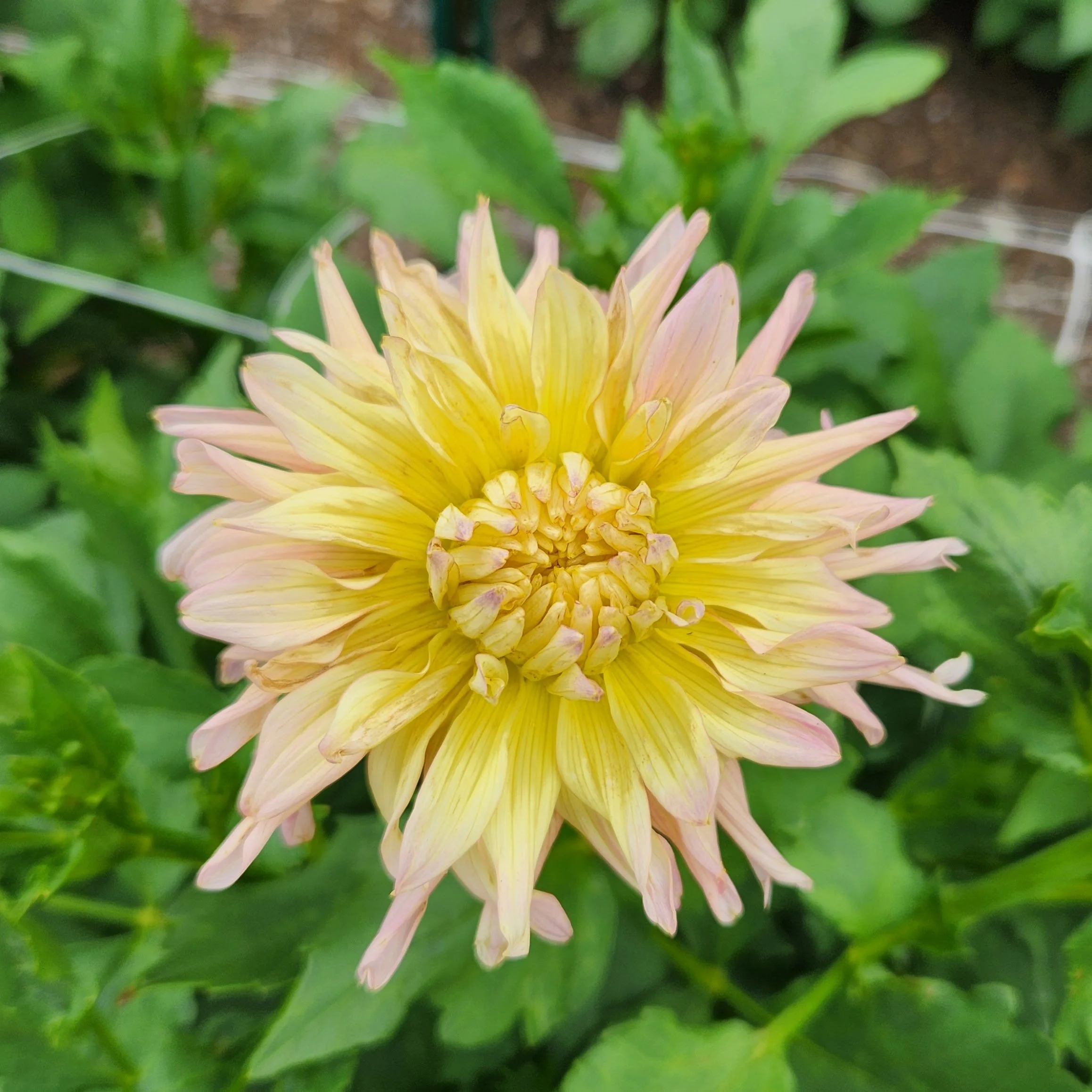
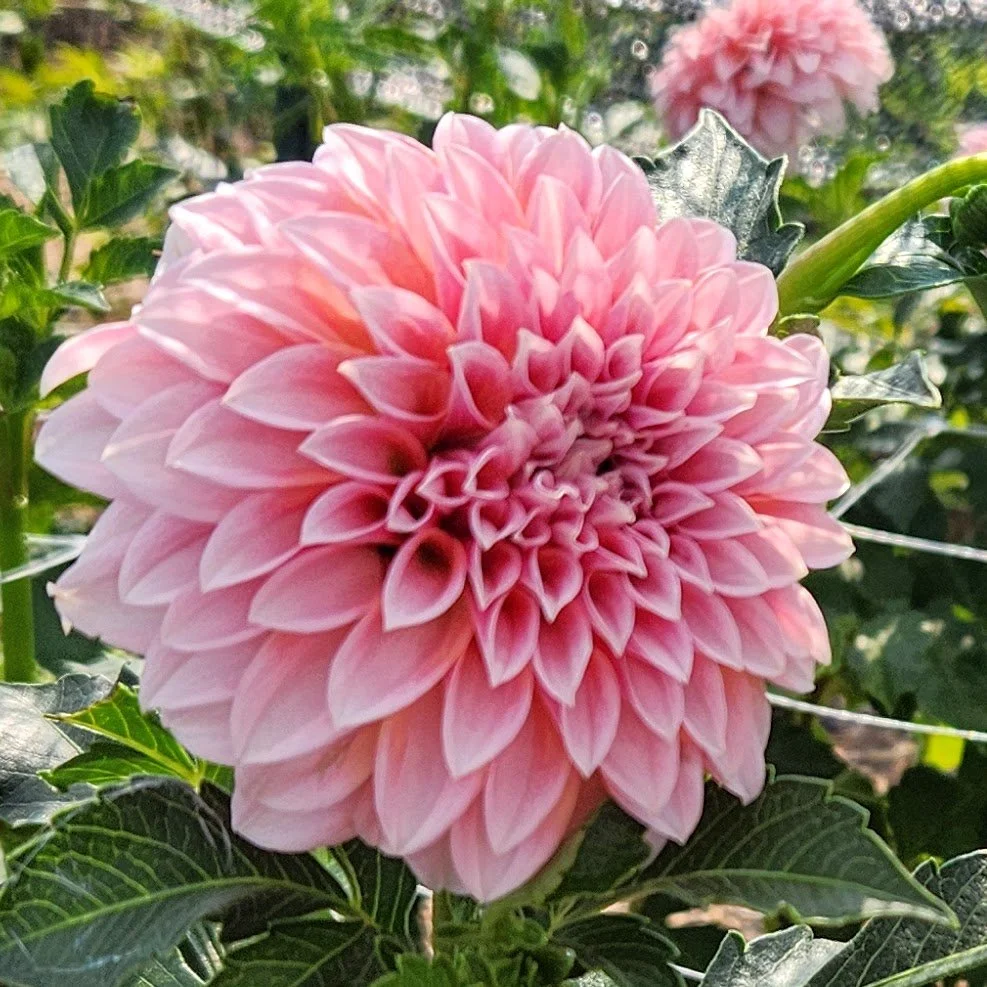
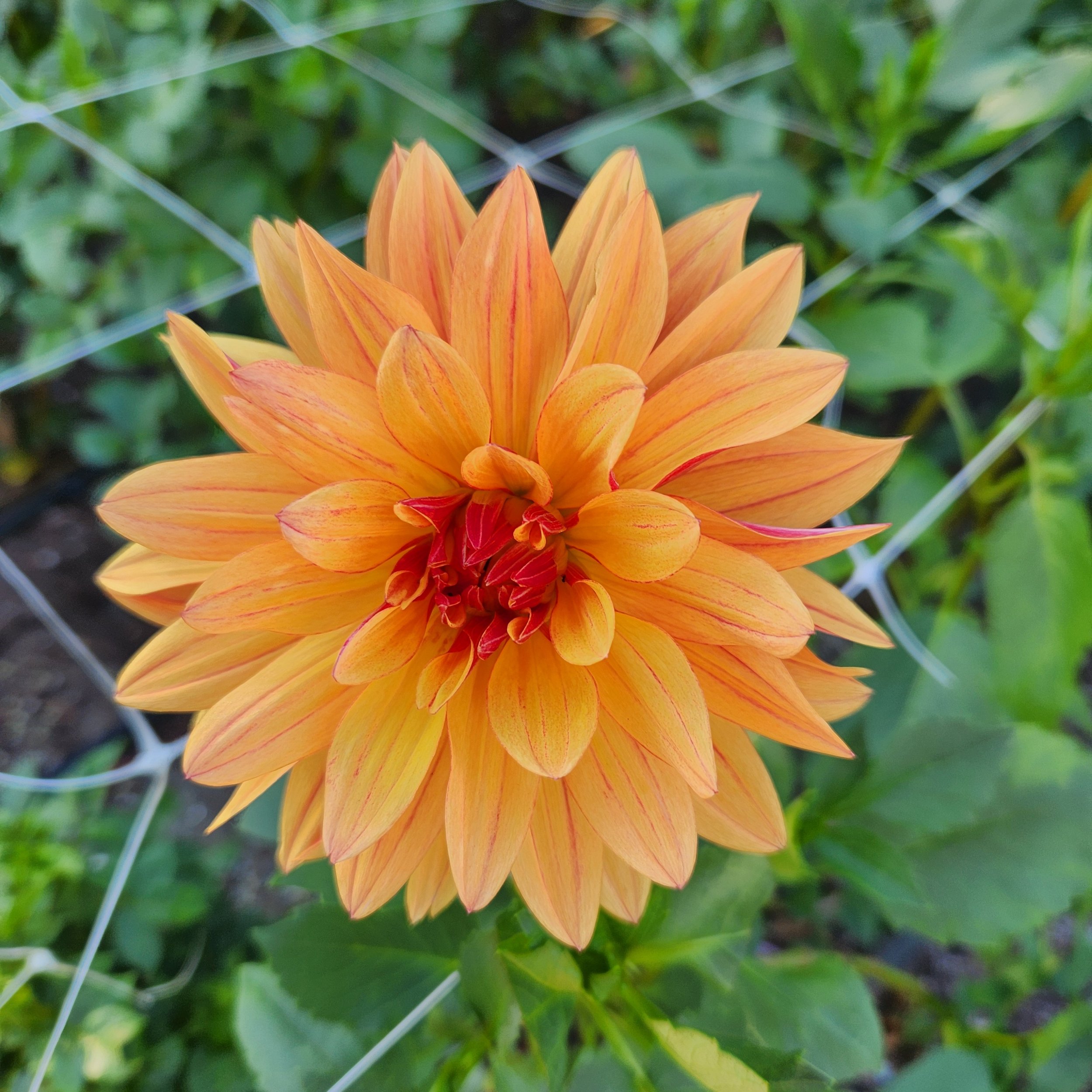
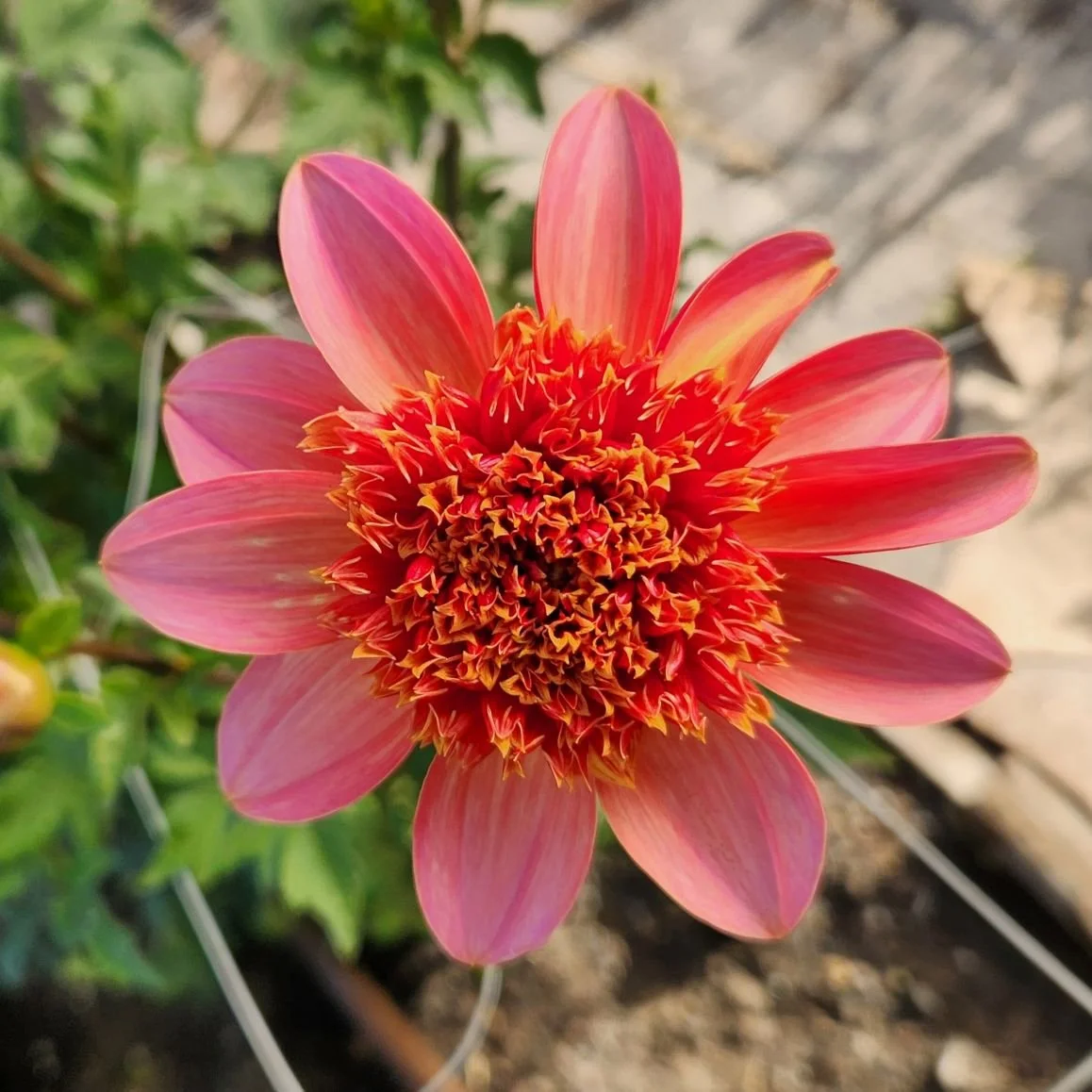
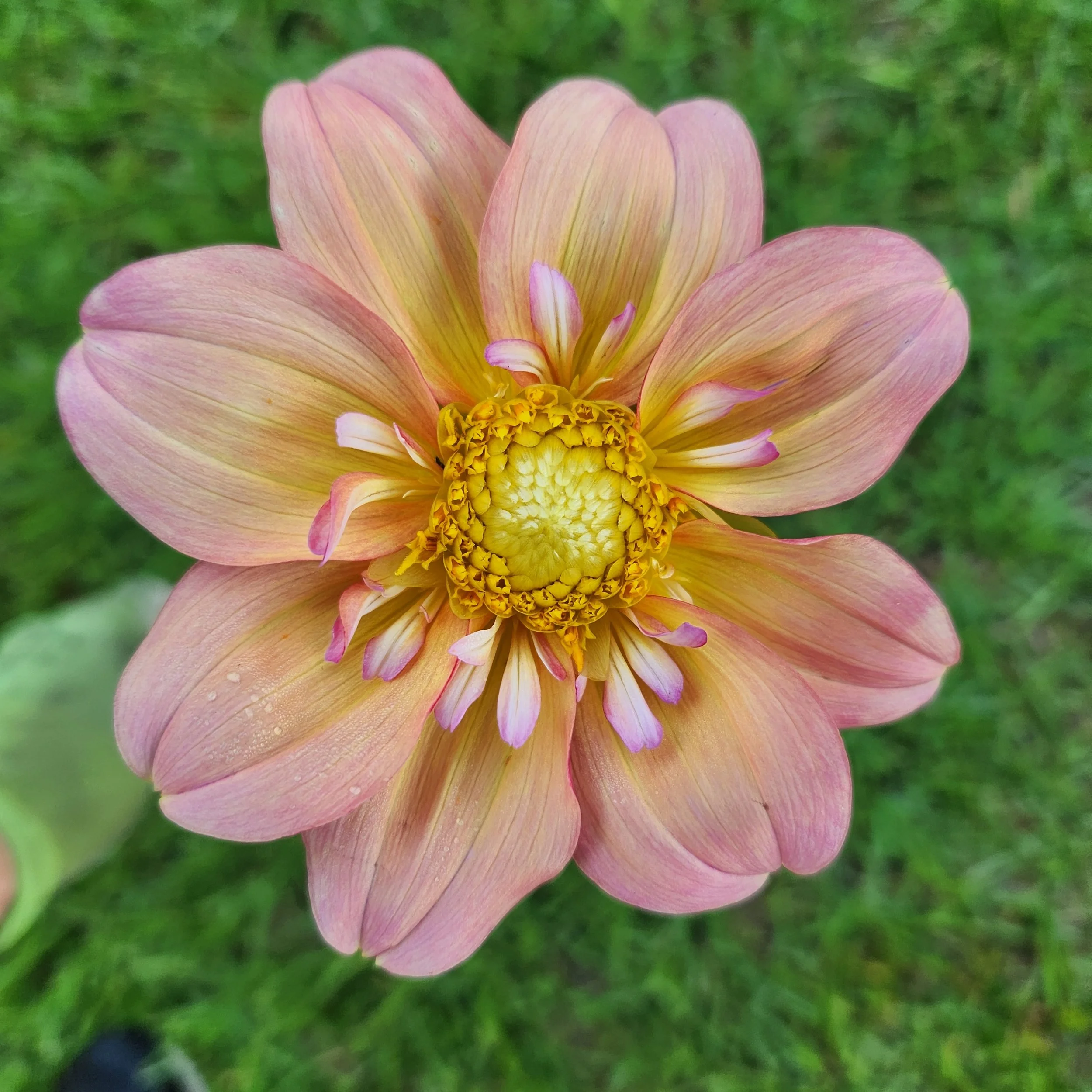
Dahlia flower forms vary in petal shape and structure. Understanding form helps you select varieties that perform well in Southern gardens and in arrangements. Forms show from left to right: Cactus, ball, decorative and anemone.
Dahlia Colors
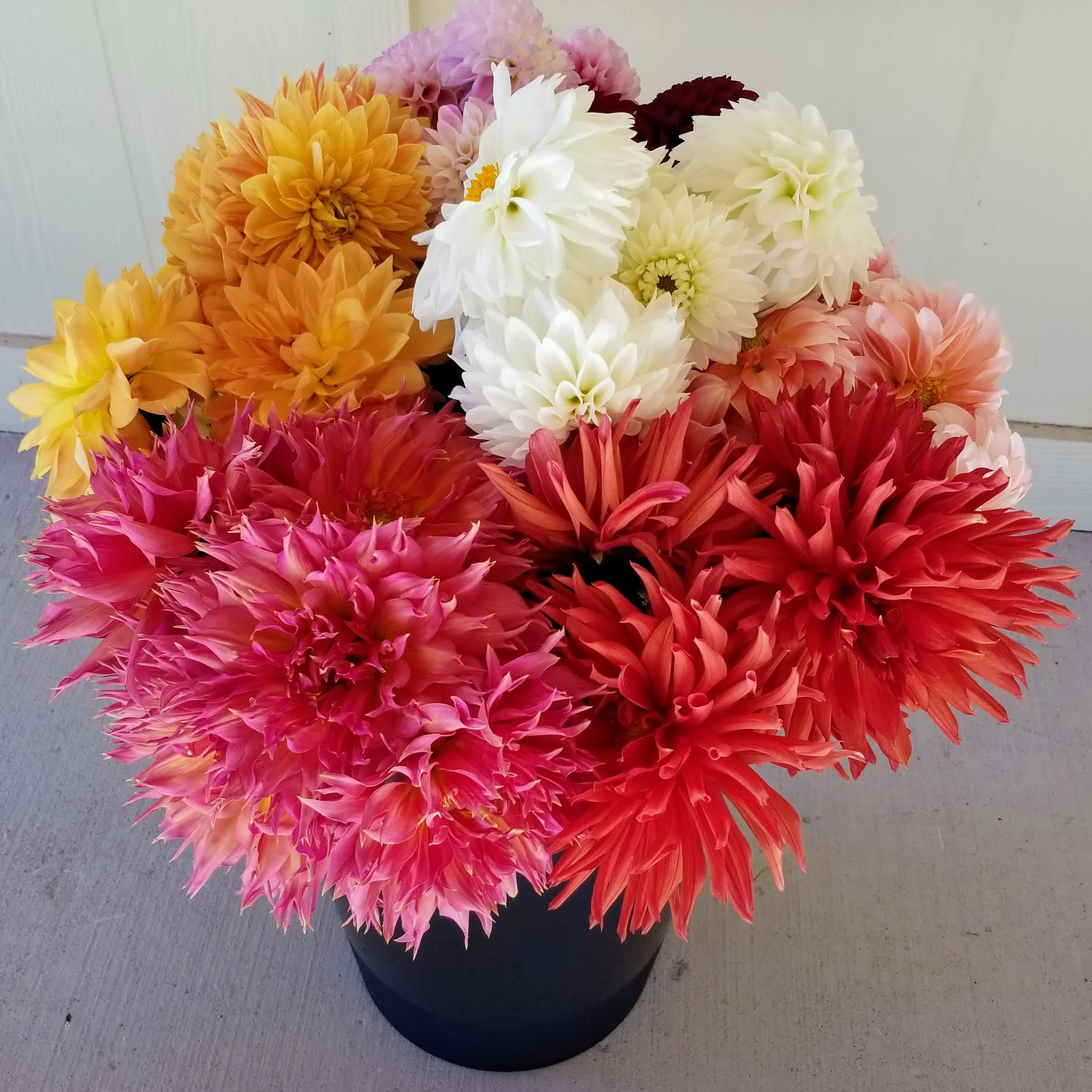
Dahlias span nearly the entire color spectrum:
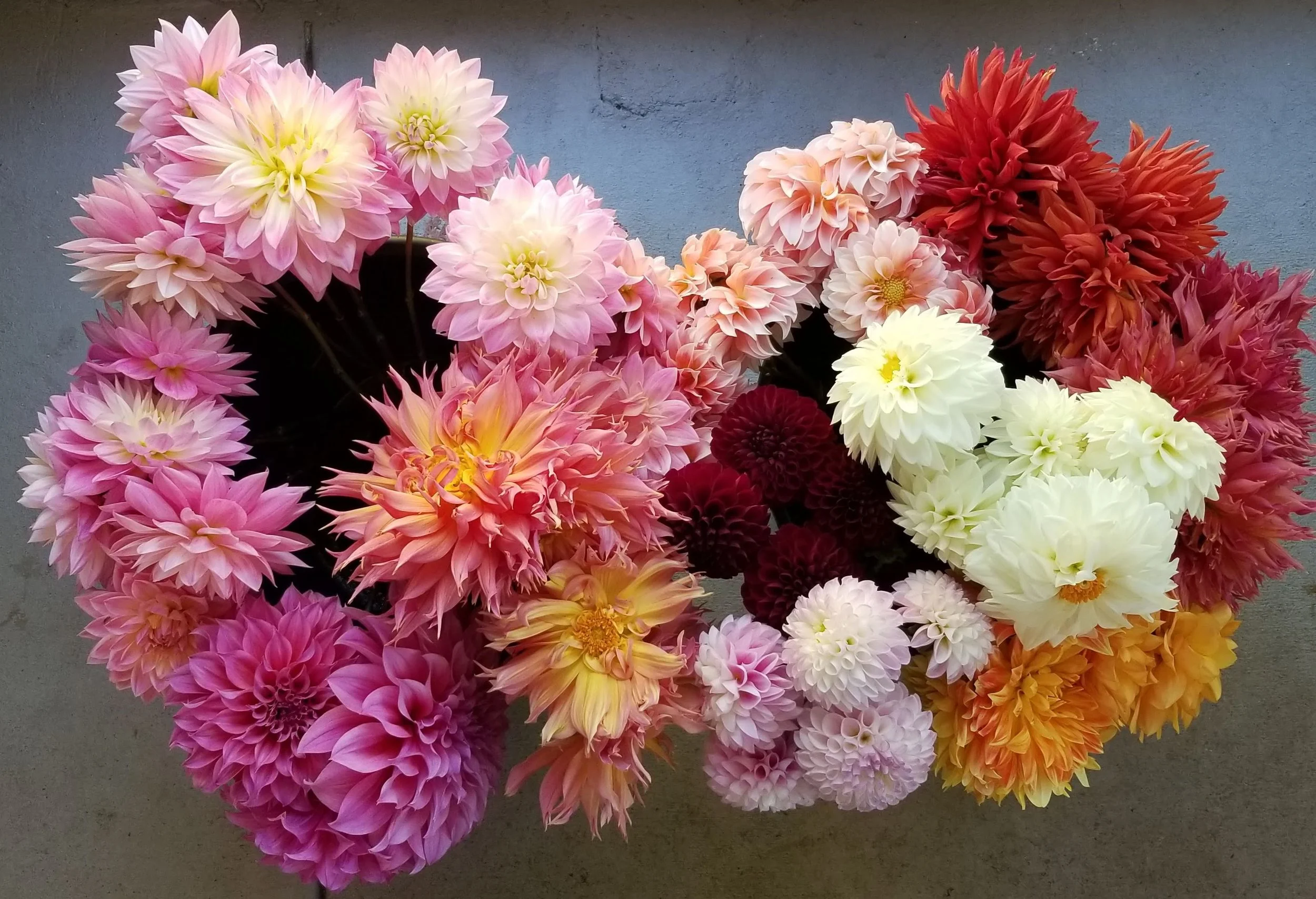
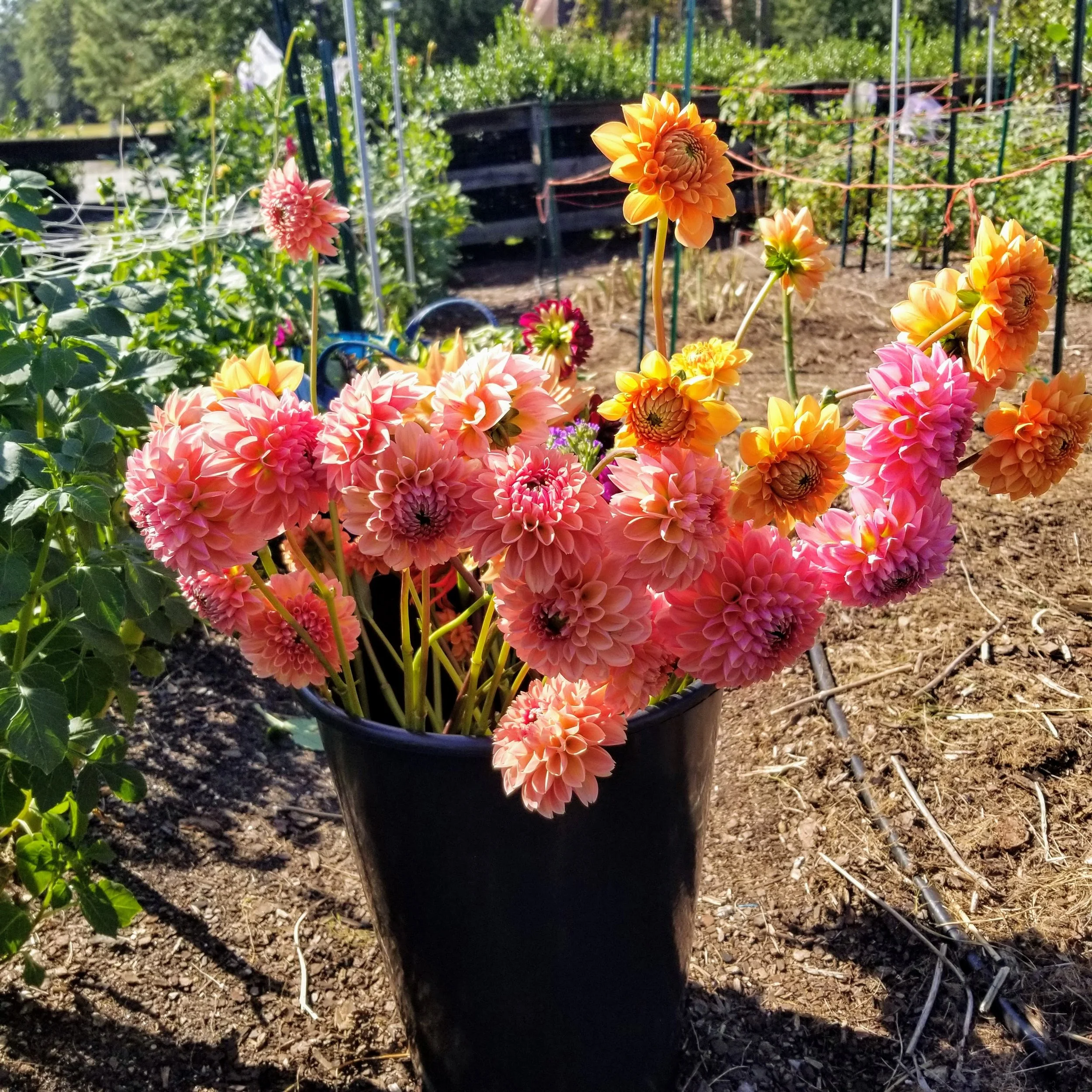
White, blush, yellow, peach, coral, pink (pale to bright), red, maroon, near-black, and beautiful bi-color blends.
There is no true blue dahlia at this time.
Color is often the easiest place to begin when selecting varieties.
Ideal Dahlia Growing Conditions
Dahlias are not difficult to grow, but they do need specific conditions:
Full sun
Excellent drainage (raised beds or containers if you have clay soil)
Slightly acidic soil (around pH 6.5)
Consistent moisture
In temperatures above 90°F, expect to water daily. Mulch heavily to retain moisture and regulate soil temperature.
Dahlias are heavy feeders. A soil test before planting is strongly recommended. Incorporate compost and fertilizer ahead of time so nutrients are available when plants begin active growth.
Plant only when soil temperatures are consistently above 60°F — about the same time you plant tomatoes.
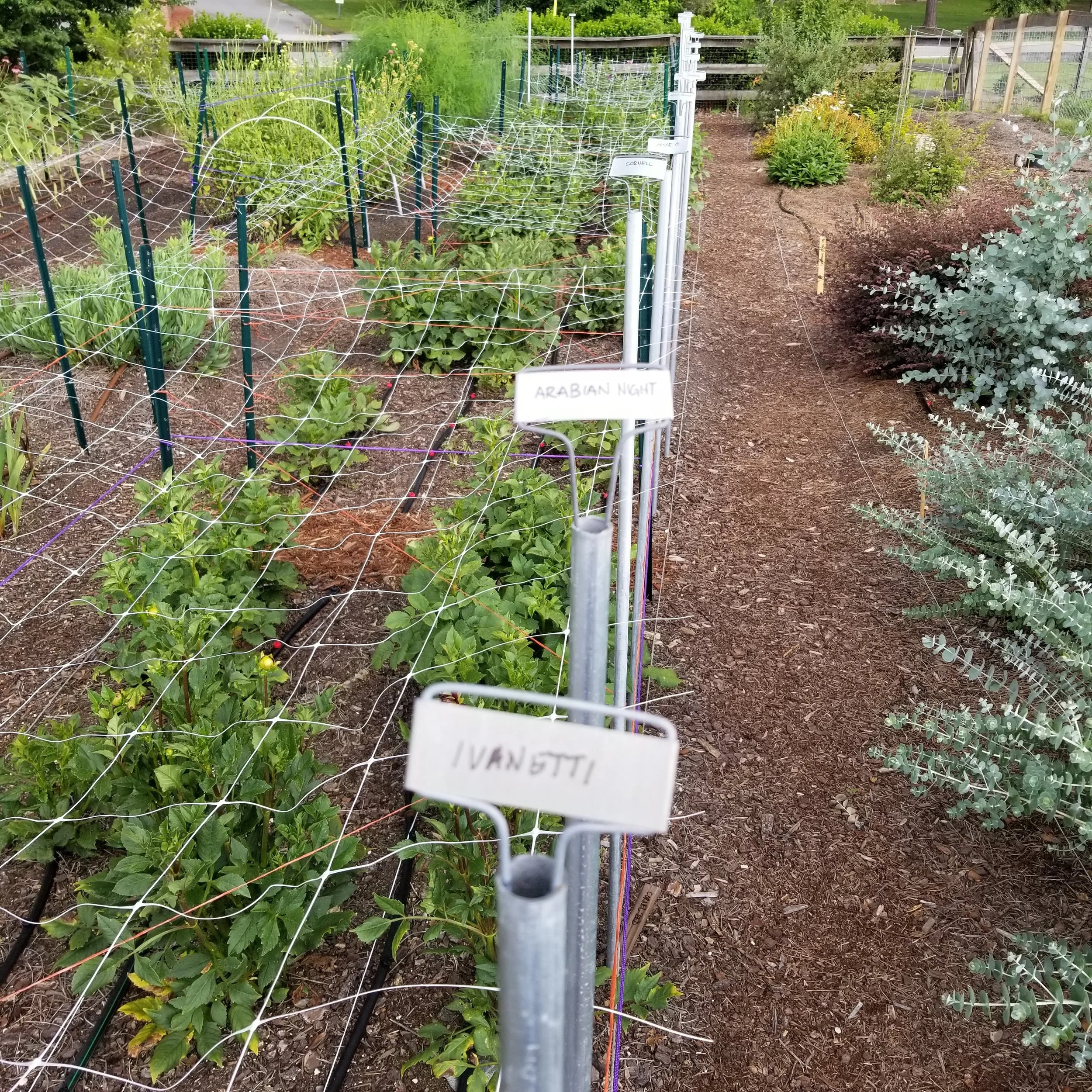
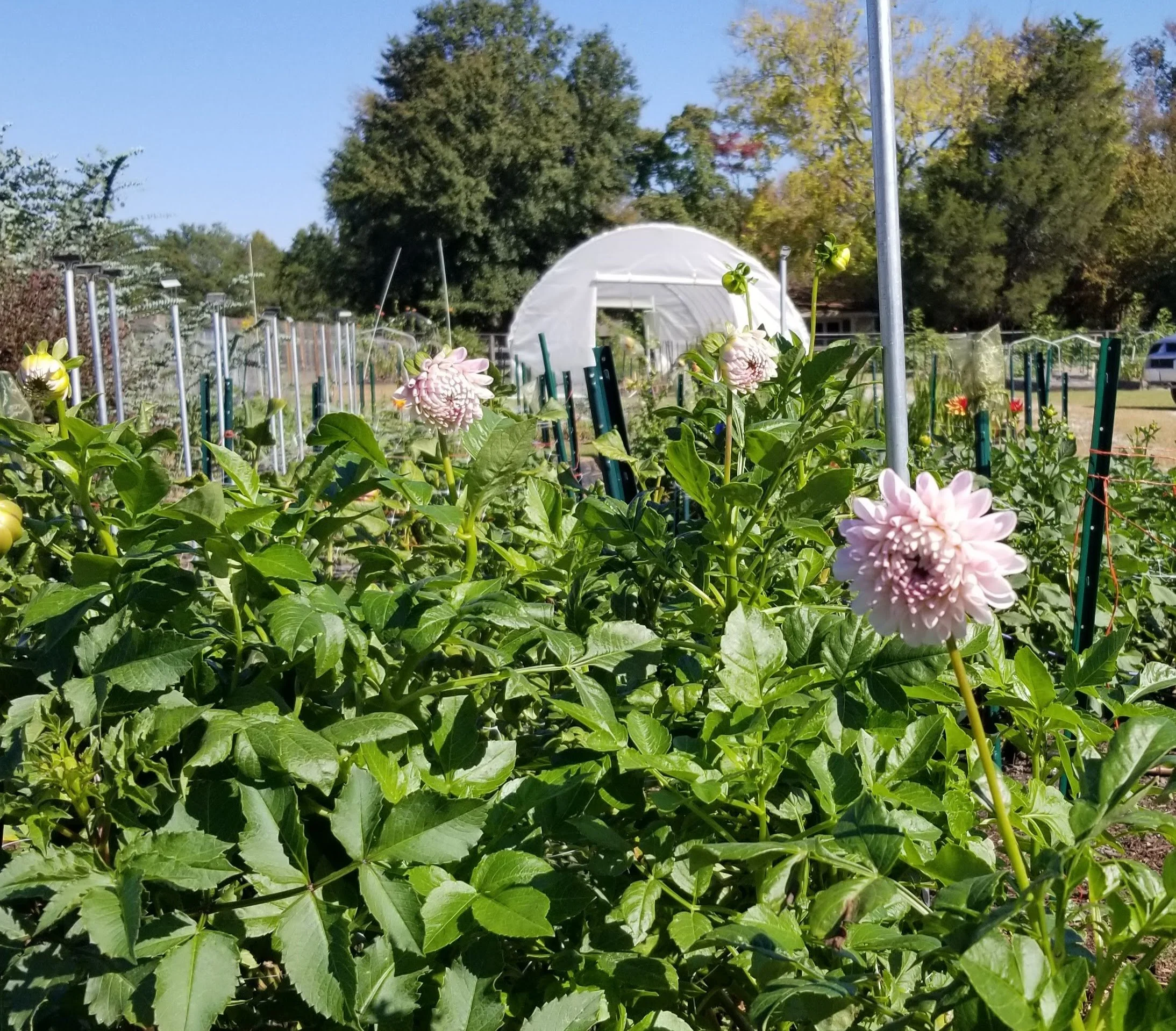
Growing Dahlias in Containers
Dahlias grow beautifully in pots when sized appropriately.
Minimum container size: 12 inches wide and 24 inches deep per tuber
Space tubers 12 inches apart
Select shorter varieties for containers
Because potting mix does not contain long-term nutrients, feed monthly and water frequently.
Growing from Seeds,Tubers or Rooted Cuttings
From Seed
Less expensive
Easy to start
Each plant is genetically unique
You will not know what the bloom looks like until it flowers. Seed-grown plants will form tubers by the end of the season.
From Tubers
Predictable results
Flowers match the parent plant
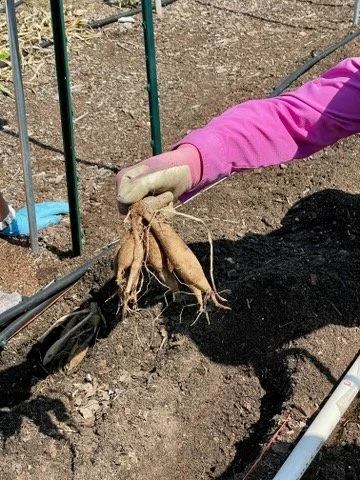
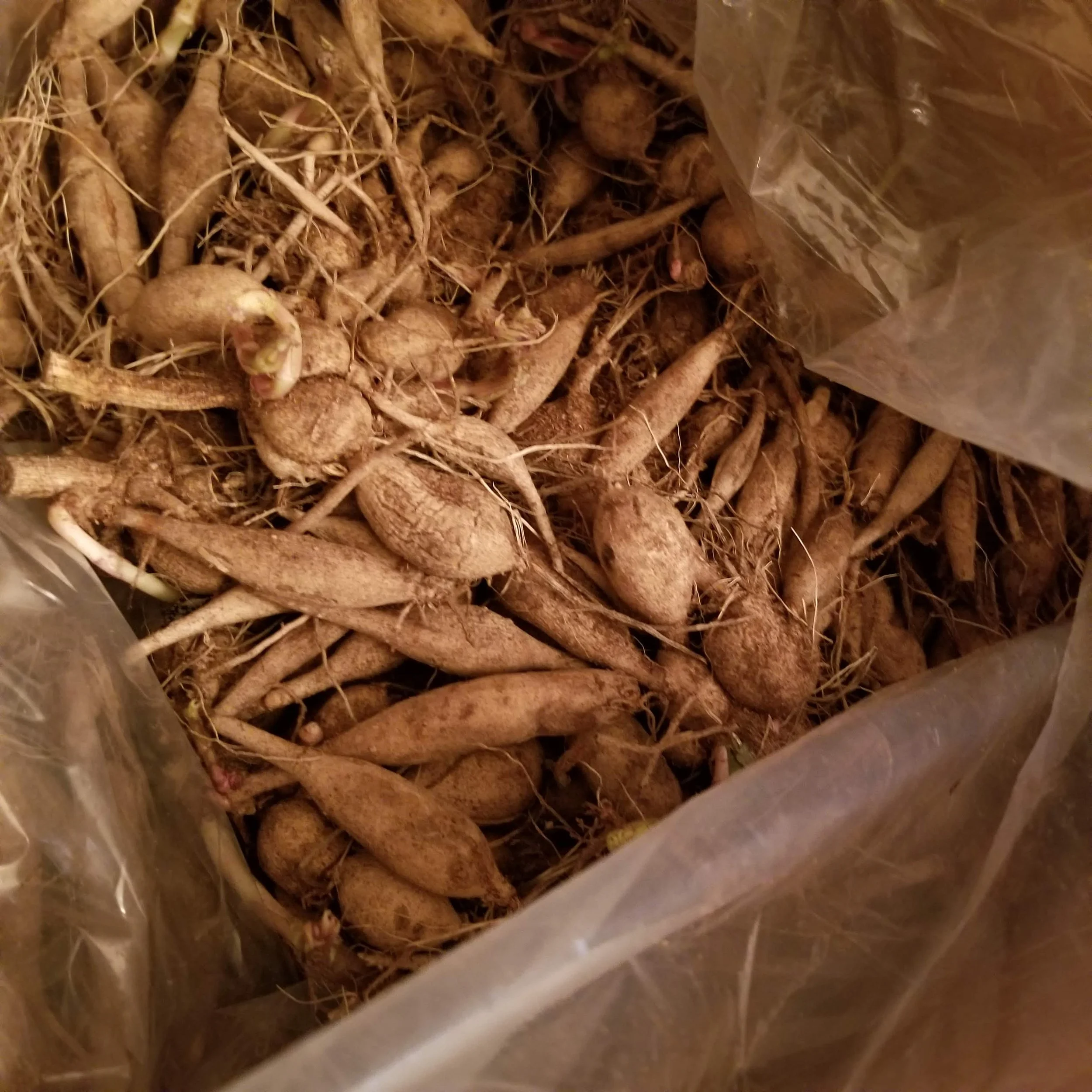
Tubers may be single or in clumps. Size and shape do not matter as long as they are firm and healthy.
From Rooted Cuttings
Predictable results
Flowers match parent plant
Cuttings are cloned from parent
Cuttings can bloom faster than tubers, and will form tubers by the end of the season.
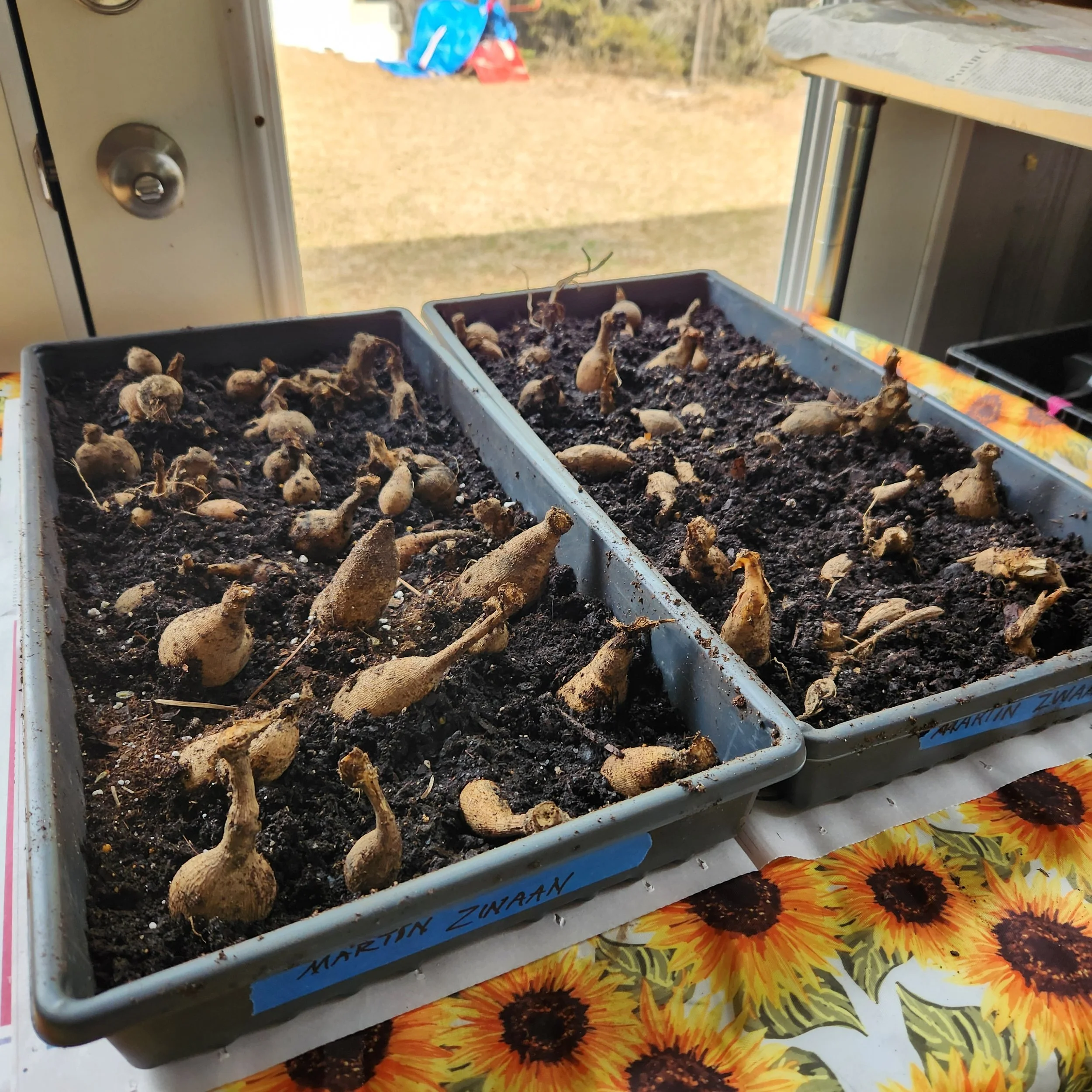
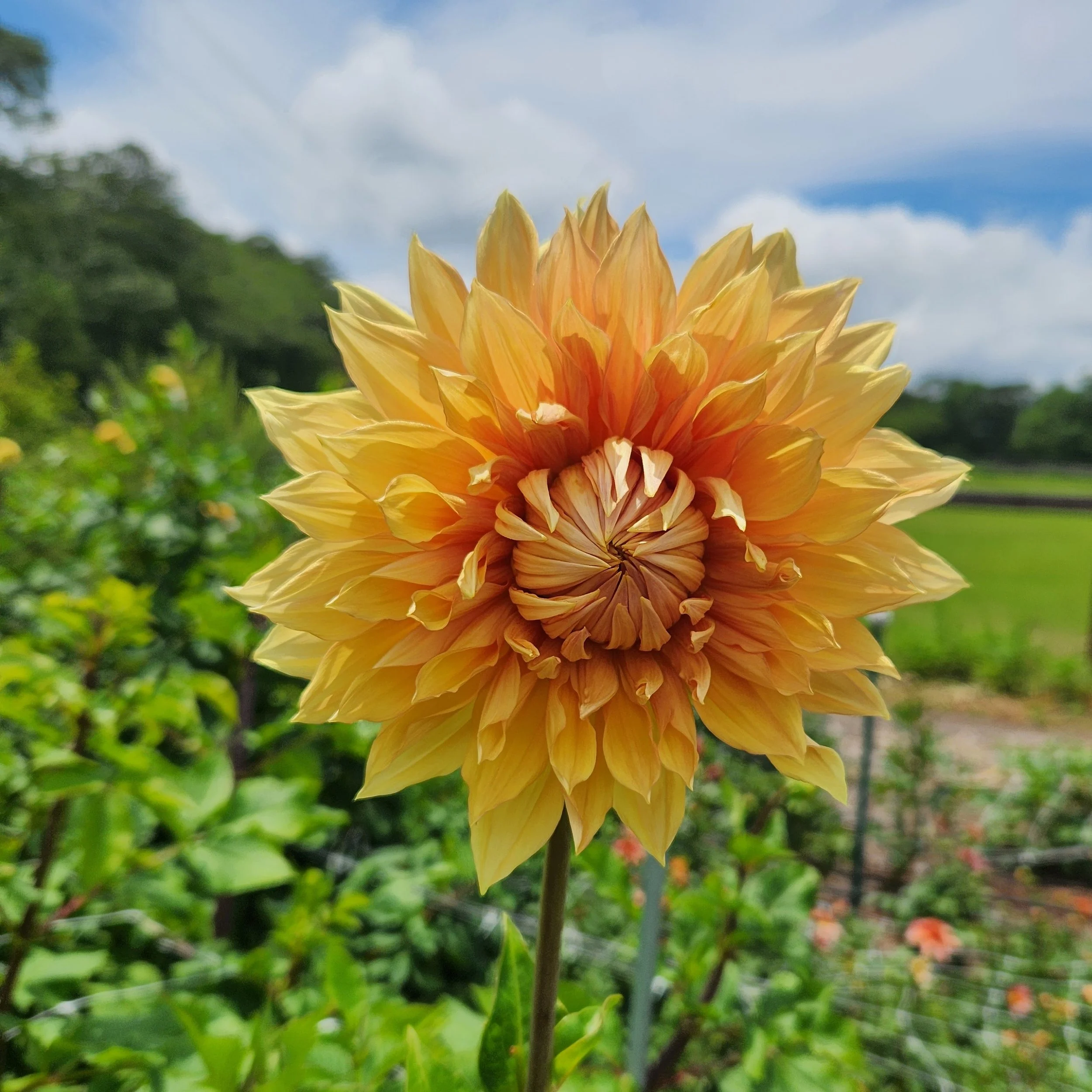
Dahlias grow best between 65-80F
Heat Tolerant Varieties
Tolerate our hot/humid conditions
Slow down in high heat (over 90F)
Work around this issue by planting in June for fall bloom
Sources for heat tolerant varieties
Georgia Dahlia Society
Southern Dahlia Growers Facebook group
Selecting Varieties for Southern Heat

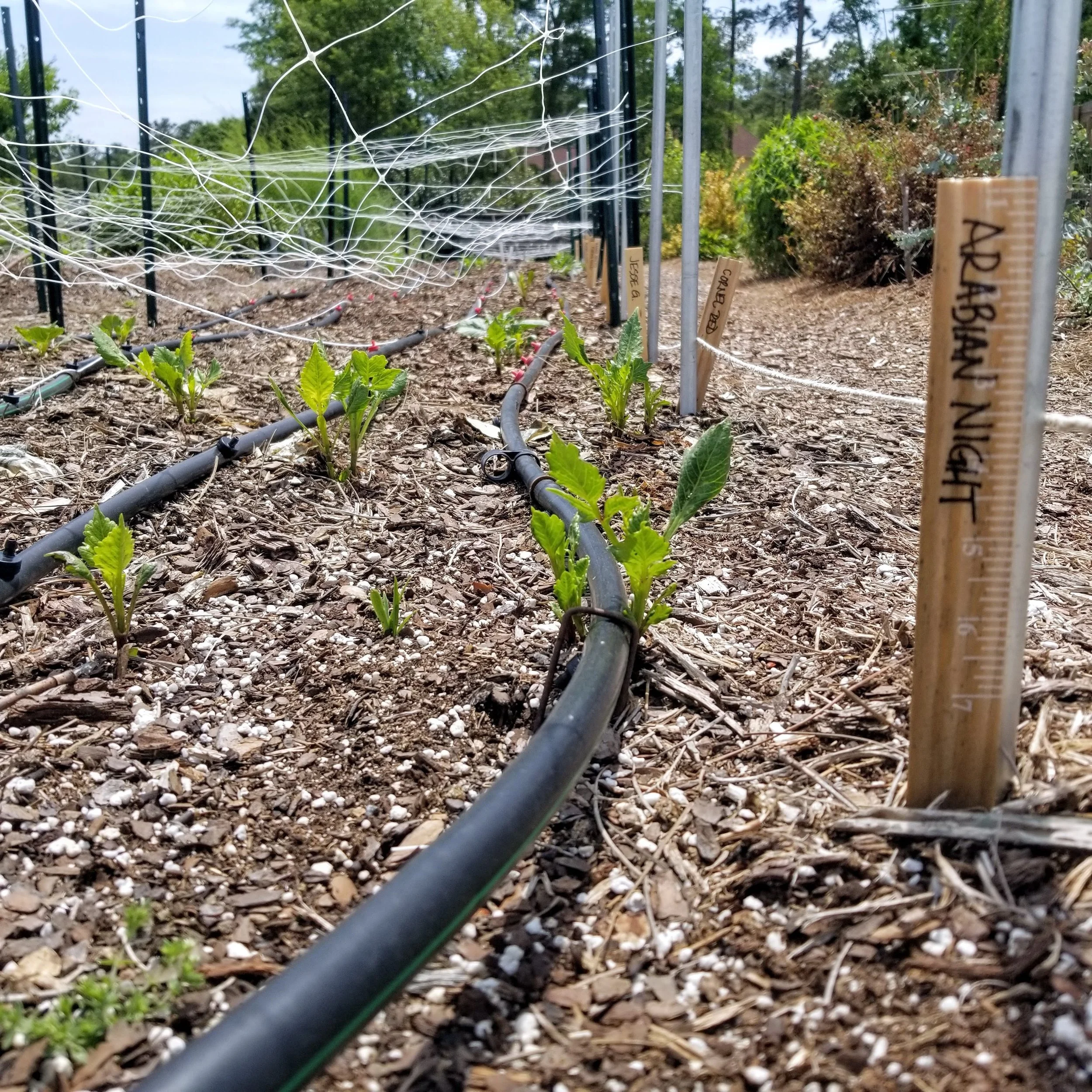
Space tubers 12–18 inches apart
Plant 4 inches deep
Lay tubers on their side
Position the eye upward if visible
Install stakes or cages before planting to avoid damaging tubers later.
Water deeply once at planting, then do not water again until growth appears above the soil.
Excessive moisture before sprouting can cause rot.
Planting Your Tubers
Caring for Growing Plants
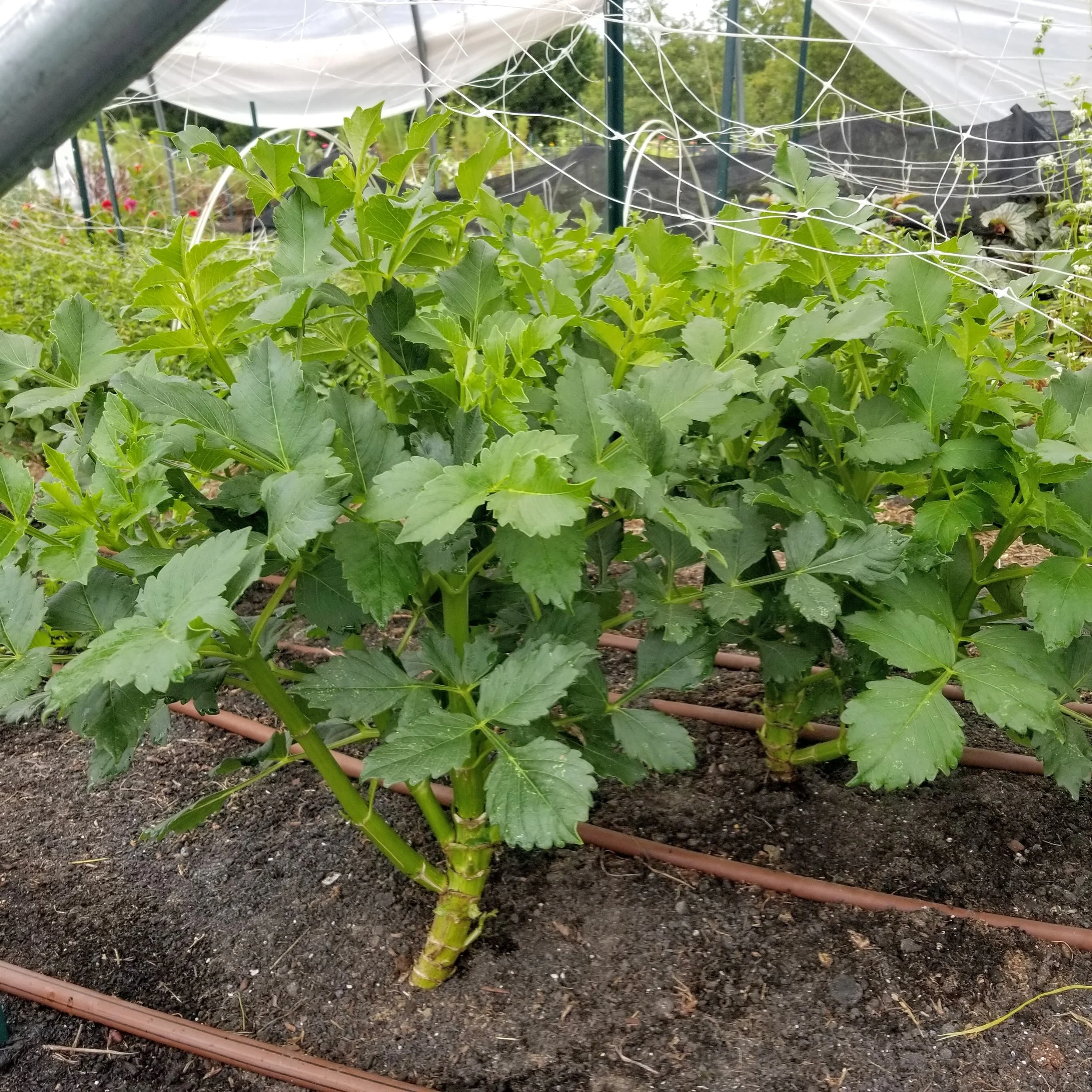
Feed weekly with a liquid fertilizer during active growth
Tie plants to stakes as they grow
Provide at least 1 inch of water per week
Strip lower leaves to improve airflow
Never allow plants to dry out
When cut, stems should make a crisp snapping sound similar to celery.
Dahlias typically begin blooming 12–16 weeks after planting and continue until the first frost.
Protecting Dahlias in the Heat
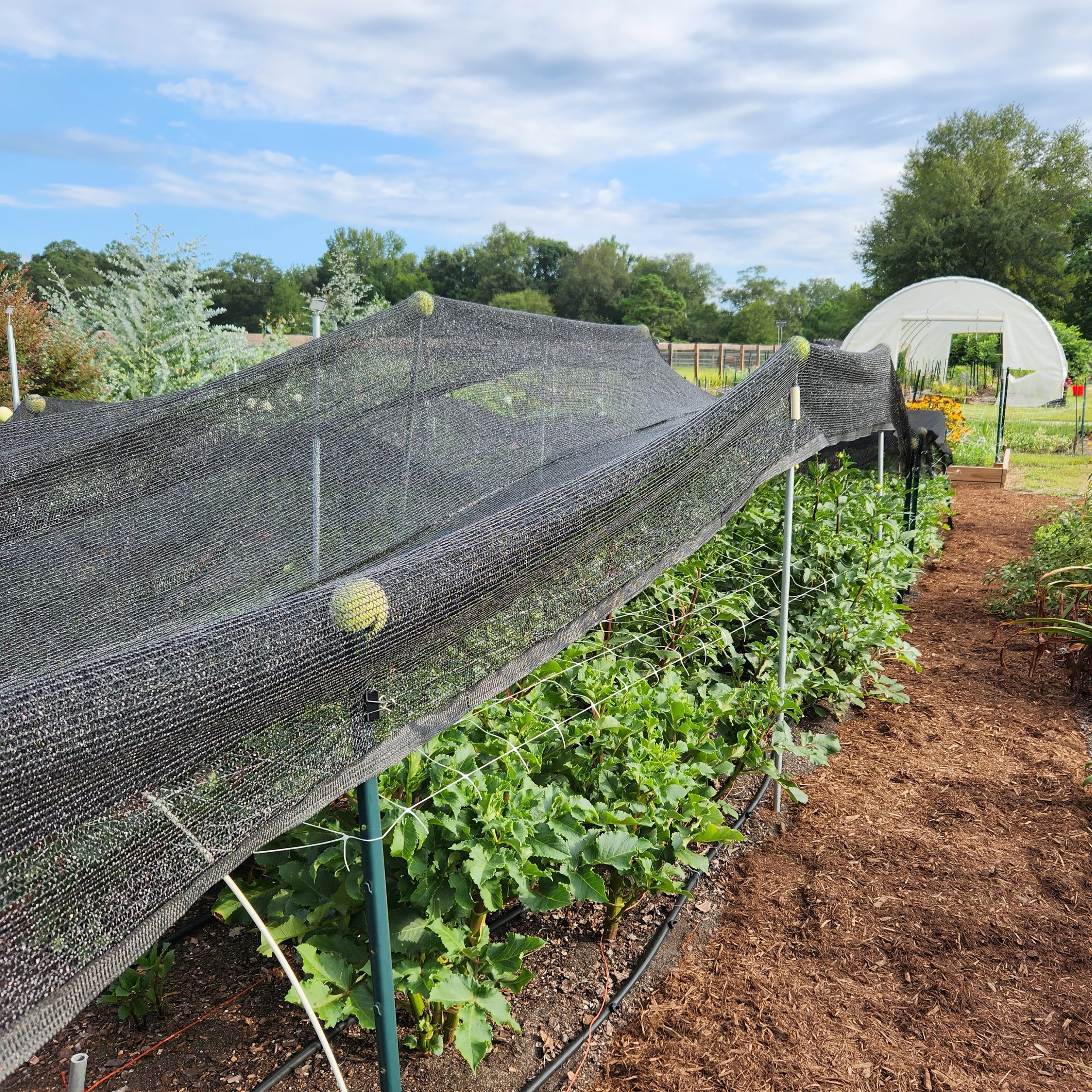
When temperatures reach the upper 90s or above 100°F, dahlias may slow blooming and show yellowing or wilted foliage.
To reduce stress:
Provide temporary afternoon shade
Water deeply and consistently (often daily during heat waves)
Mulch to keep roots cool
If heat damages the foliage, cut it back. The tuber will produce fresh growth once temperatures moderate.
Dahlias are resilient. In Southern climates, the strongest flush of blooms often comes after the heat breaks.
Cutting and Vaselife
Properly cut dahlias last about five days in a vase.
Cut early in the day
Place stems immediately into water
Strip all leaves below the waterline
Harvest when blooms are nearly fully open
Deadhead regularly
Cut long stems just above a leaf set to encourage future growth.
After the Frost
In our local growing zone, 8b, we have the option of leaving our tubers in the ground or taking them up and storing them over the winter. Below are some things to consider when deciding which way to go.
At Purple Tuteur farm, we dig up all the fall colored dahlias every year so they don’t bloom in late spring. Other colors are left in the ground, but on a rotating basis, we lift and divide about a third of them every three years.
Leaving Tubers in the Ground
Pros:
Earlier blooms the following season
Less work
Cons:
Risk of rot during wet winters
Mulch heavily and protect during prolonged rain.
Lift after frost
Process:
Allow to dry 1–2 days
Store at 45–60°F
Use cedar shavings or vermiculite
Check periodically for rot or mold
Dividing tubers in late winter or early spring allows you to multiply your plants