
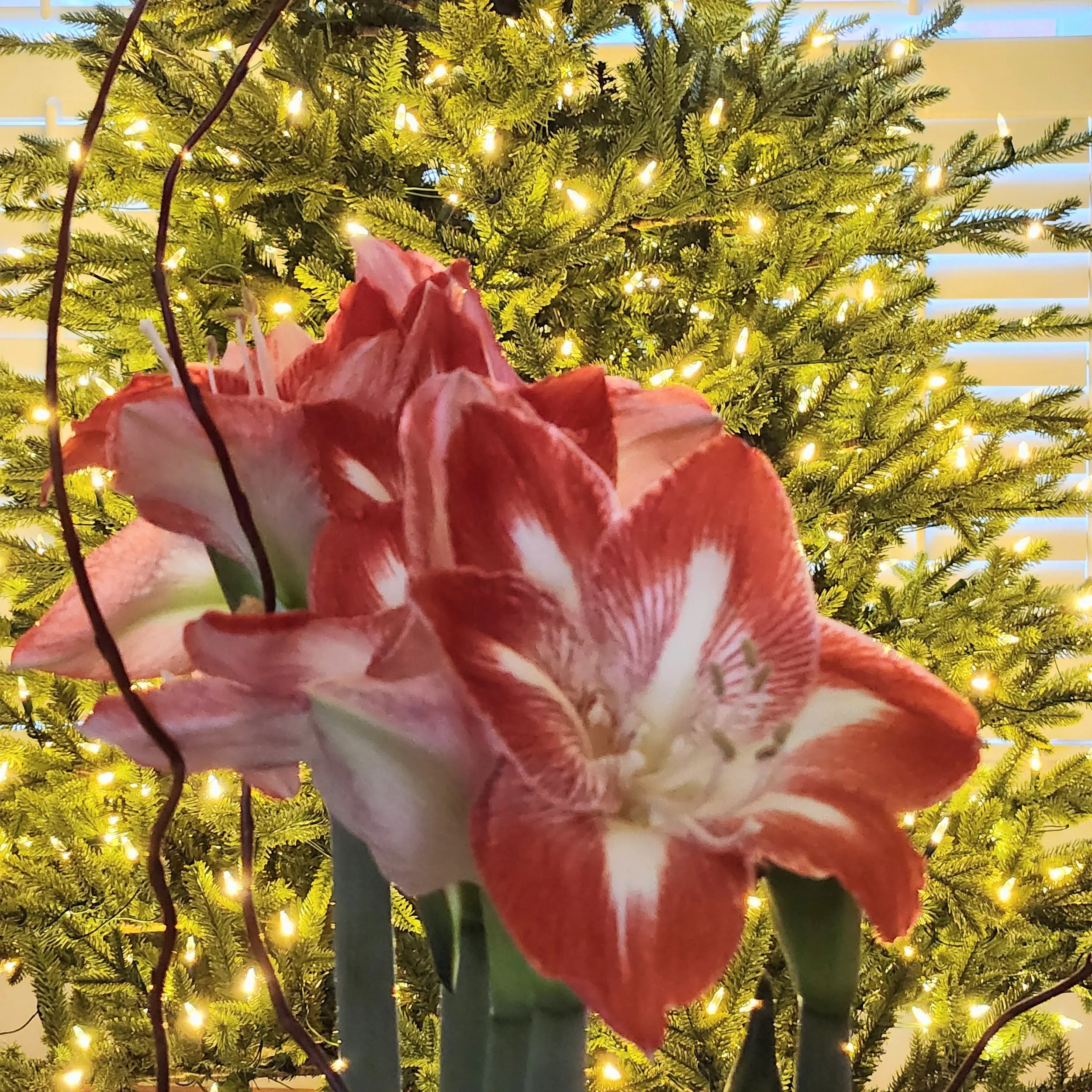
A Simple Guide to Growing Amaryllis
Indoors in winter, outdoors in the garden, and year after year
Amaryllis are treasured for their ability to produce large, vibrant flowers indoors during the coldest months of winter. With a little care, an amaryllis bulb can bloom for you year after year, indoors or out. This guide walks you through the full life cycle: from planting and blooming indoors, to summer care, dormancy, and reblooming—plus how to grow amaryllis outdoors here in the Columbia area (Zone 8b).
Choosing Your Amaryllis Bulbs
Start strong. Everything good begins with the bulb.
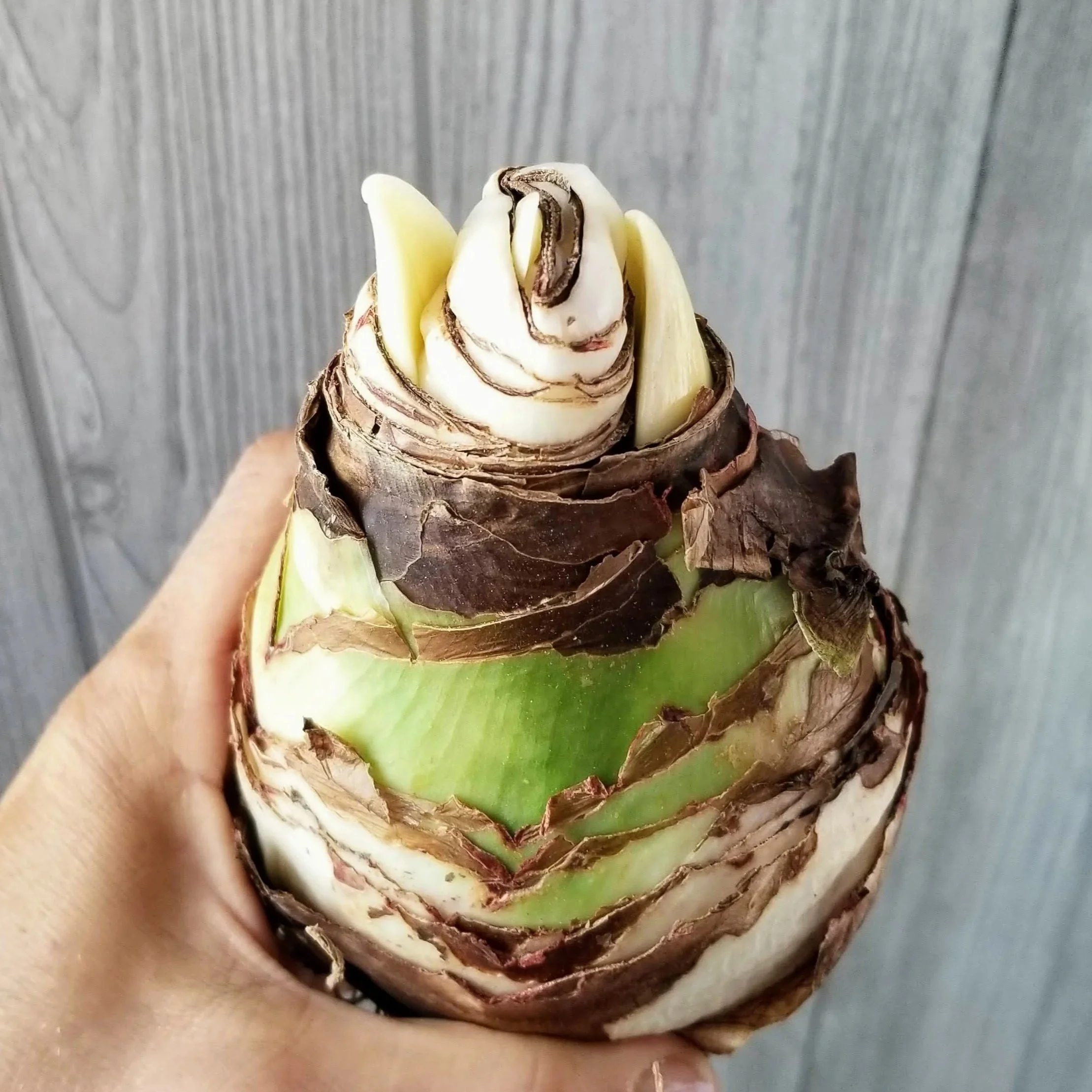
Choose firm, heavy bulbs with no soft spots or mold
Bigger bulbs = more flower stalks and more blooms
Color options go far beyond red and white: pinks, burgundy, peach, orange, even green-tinged varieties
A note on bloom timing (this matters)
Amaryllis bulbs come from two growing cycles:
Southern Hemisphere bulbs (“Christmas blooming”)
Bloom quickly—often in 4–6 weeks. Ideal for holiday displays.Northern Hemisphere bulbs (“shelf-stable”)
Take longer to adjust and typically bloom in 6–10 weeks.
Neither is better—just plan accordingly.
Planting Amaryllis Indoors
1. Wake the Bulb
Soak the roots (not the bulb itself) in warm water for about 1 hour, then drain.
2. Choose the Right Pot
Use a 6–7 inch pot for a single bulb
Amaryllis like being slightly root-bound
Always ensure good drainage
3. Plant Correctly
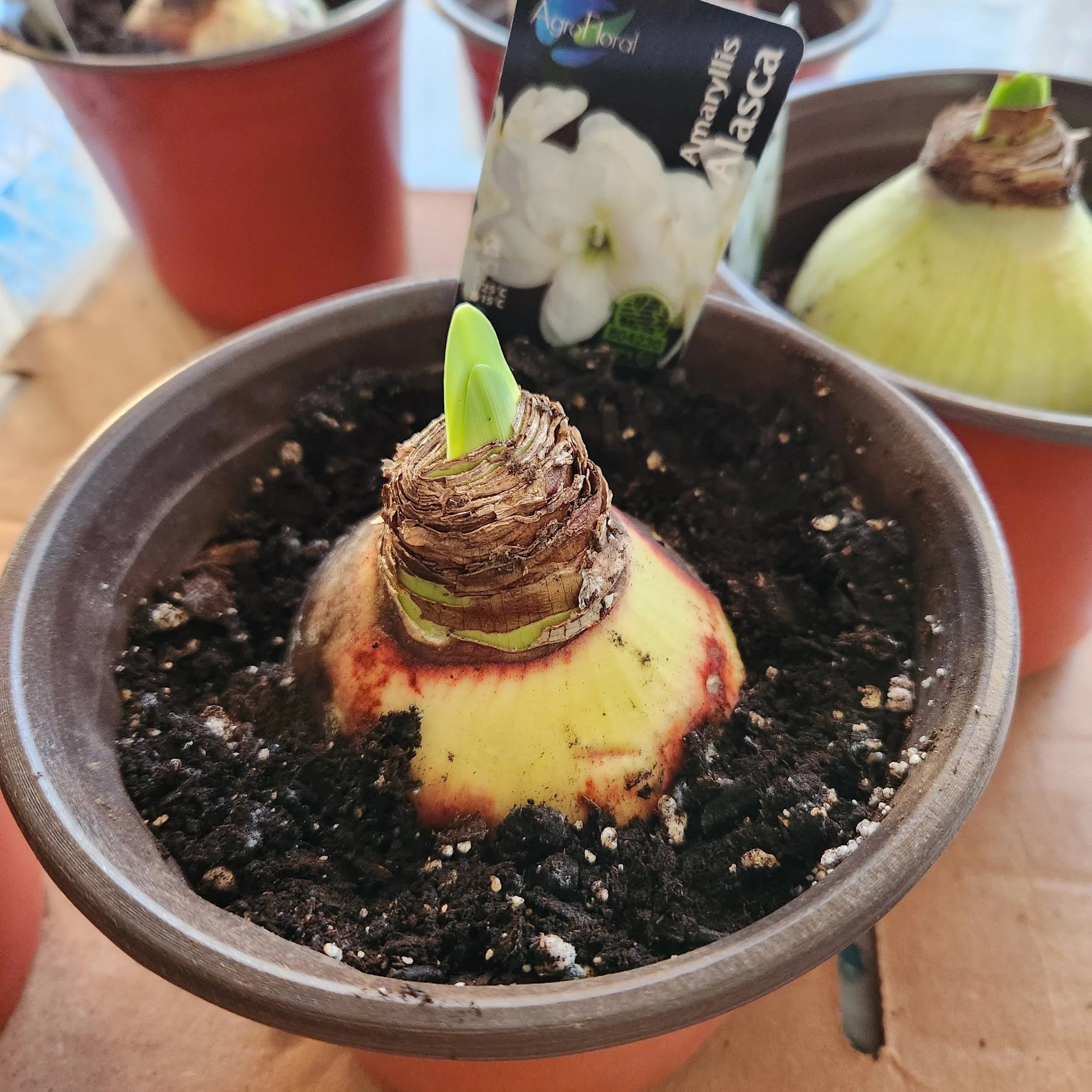
Use well-draining potting soil
Leave ⅓ to ½ of the bulb above the soil line
Firm soil gently—don’t pack it tight
4. Water Once, Then Wait
Water thoroughly after planting.
Then do not water again until green growth appears.
5. Warm, Quiet Start
Place the pot in a warm dark spot (70–75°F).
Low light encourages critical root development—roots come first.
Pro tip: If the bulb is already sprouting, relax. The stem will straighten as it grows.
Bringing Your Amaryllis Into Bloom
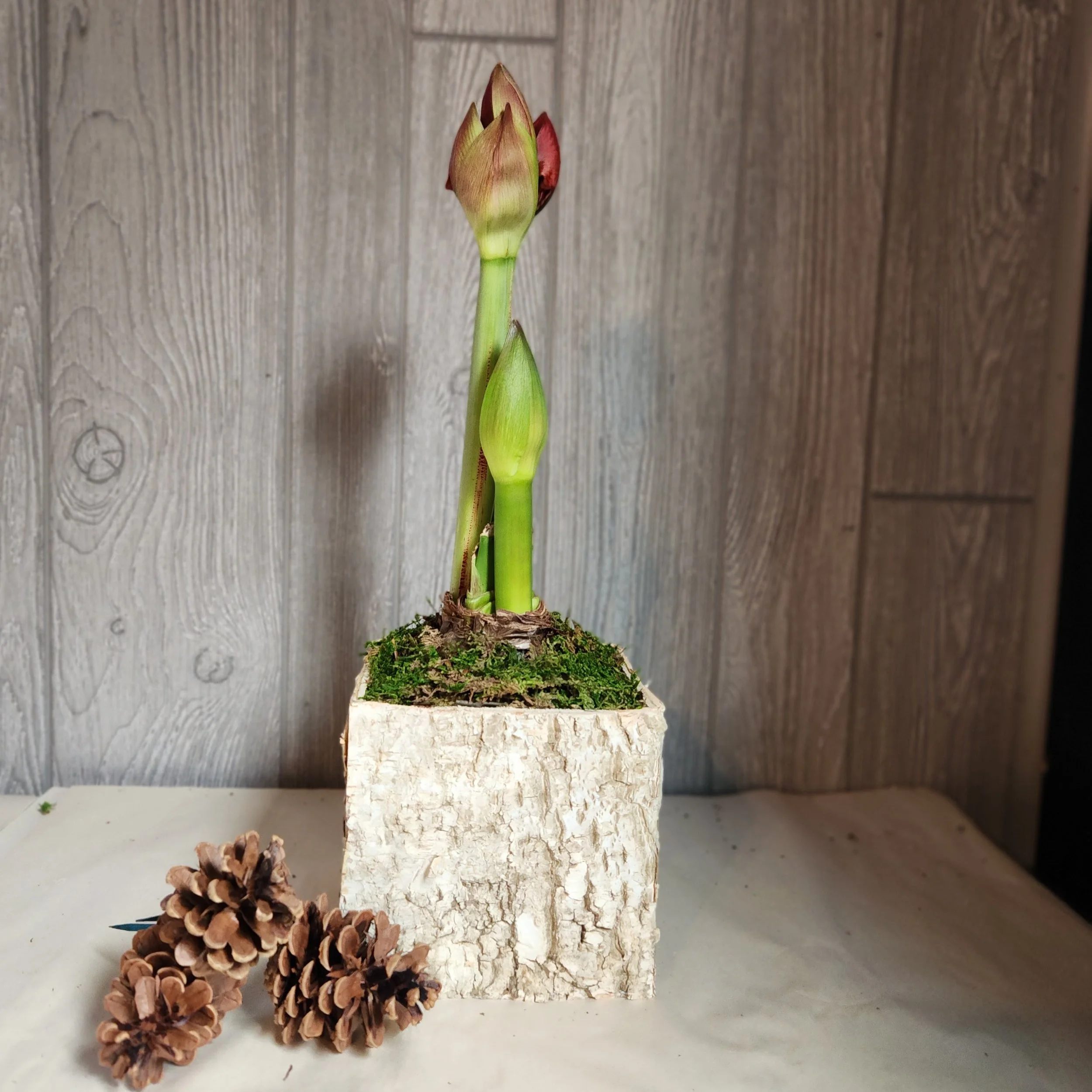
Move the pot into bright light once growth begins
Ideal temperature: 70–80°F
Water only when the top inch of soil is dry
Rotate the pot daily once the flower stalk appears to keep it straight
Patience pays off here. Overwatering is the fastest way to ruin an amaryllis.
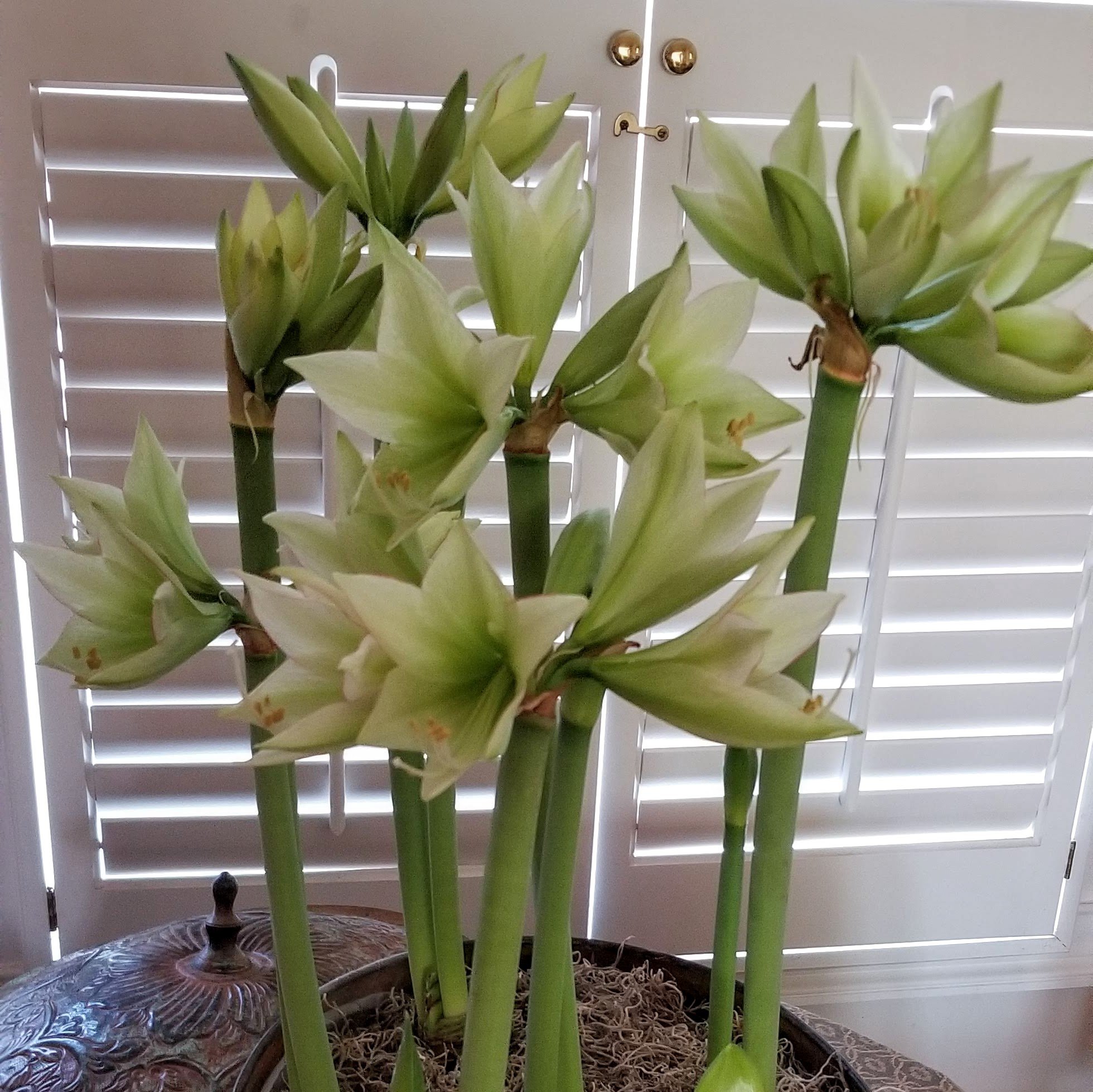
Caring for Amaryllis in Bloom
Move out of direct sun once flowers open to extend bloom time
Snip individual flowers as they fade
When a stalk finishes blooming, cut it back to 2 inches above the bulb
Do not remove the leaves—they recharge the bulb
The Life Cycle
Indoor Bloom → Summer Growth → Fall Dormancy → Winter Bloom
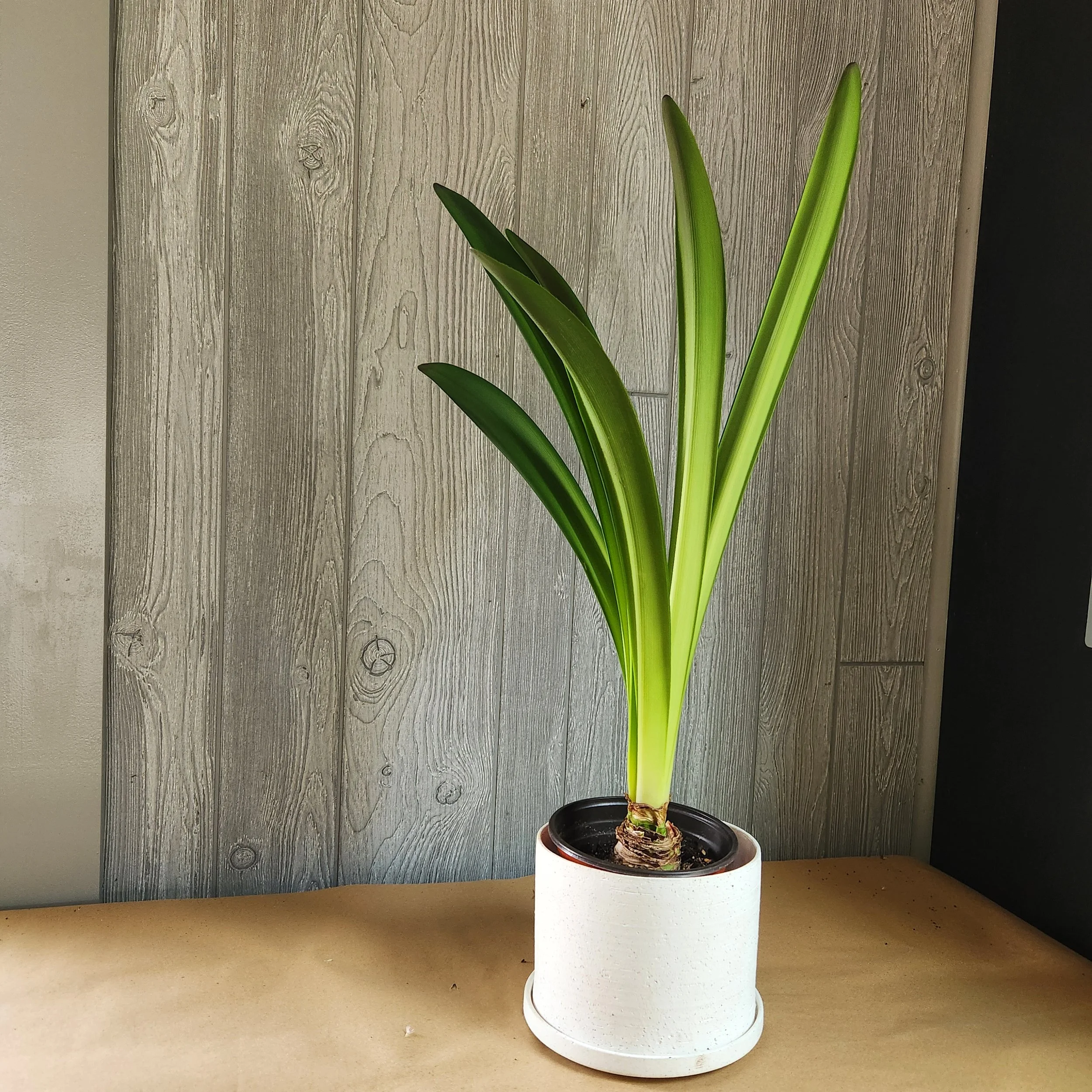
How to Save Amaryllis for Reblooming Indoors
This is where most people quit—and where you get the payoff.
After Blooming
Keep the plant in bright light
Water as needed
Fertilize monthly with a balanced fertilizer
Summer Outdoors
Once nighttime temperatures stay above 60°F (usually May):
Move pots outdoors to morning sun or filtered light
Leaves should grow long and healthy—this is energy storage
Full sun can cause outdoor blooms but may reduce winter flowering. Think strength, not speed.
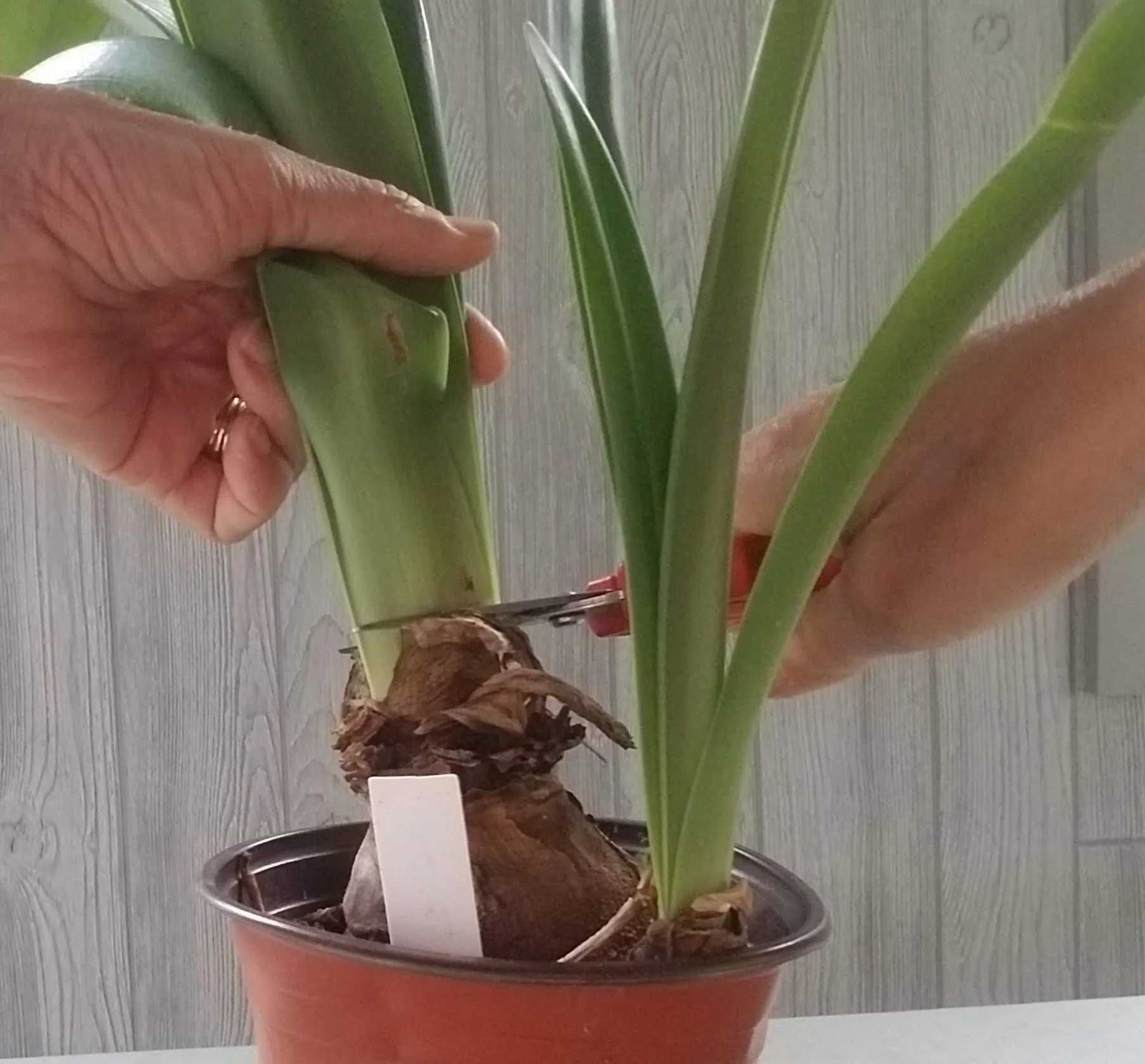
Dormancy is not optional—it’s how next year’s bloom forms.
In late summer or early fall, stop fertilizing
Gradually reduce watering
Once foliage yellows, cut leaves to 1 inch above the bulb
Store the pot in a cool, dark, dry place (50–60°F) for 8–10 weeks
No water during dormancy
Label the pot with the variety and storage date—you’ll thank yourself later.
Letting Amaryllis Go Dormant
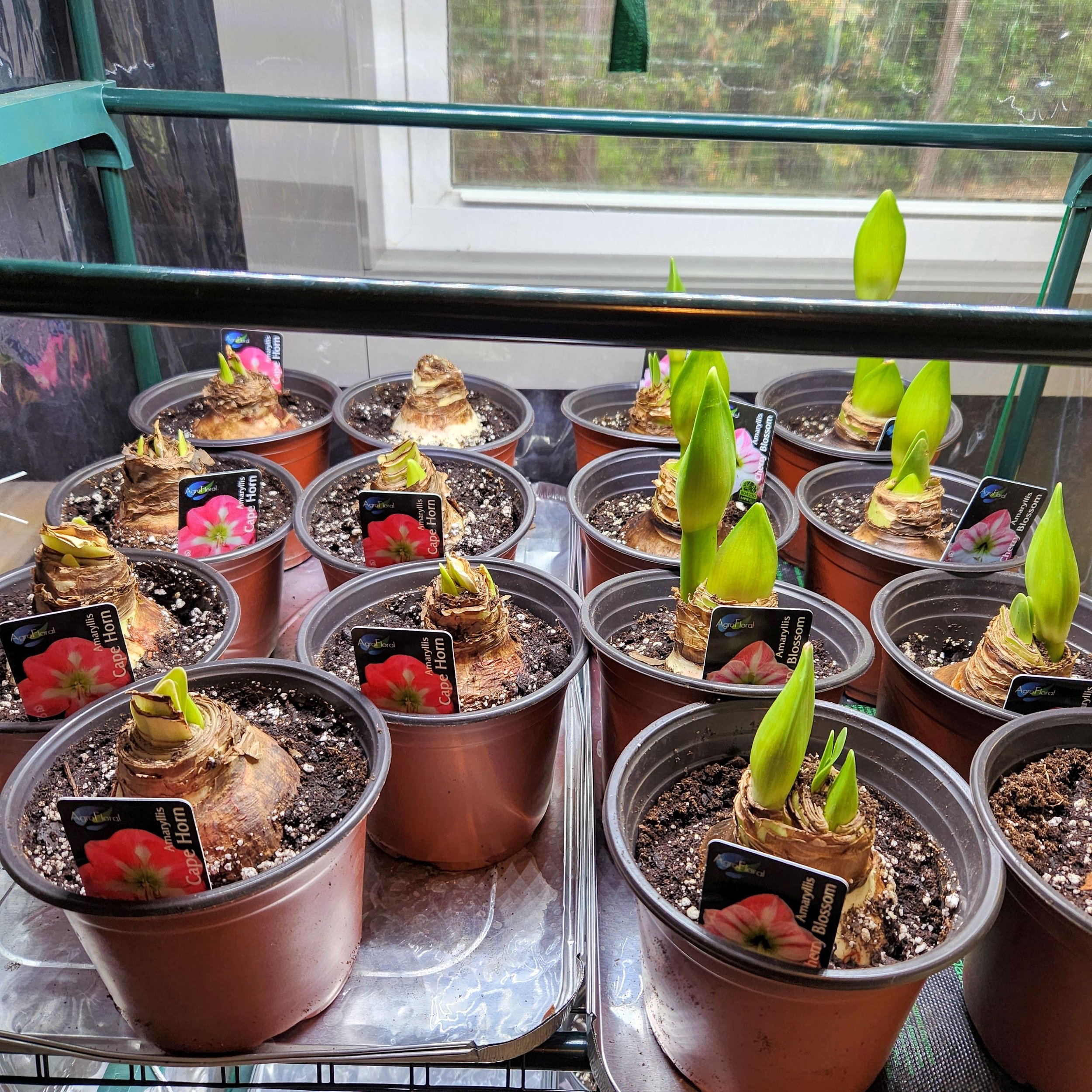
Restarting Growth After Dormancy
Bring the bulb back into warmth and light
Refresh the soil, leaving ⅓ of the bulb exposed
Repot only if the bulb is pressing hard against the pot sides
Water thoroughly once, then wait for growth
New growth usually appears in 1–3 weeks. Sometimes longer. As long as the bulb stays firm, it’s alive.
Growing Amaryllis Outdoors
in Zone 8b (Columbia Area)
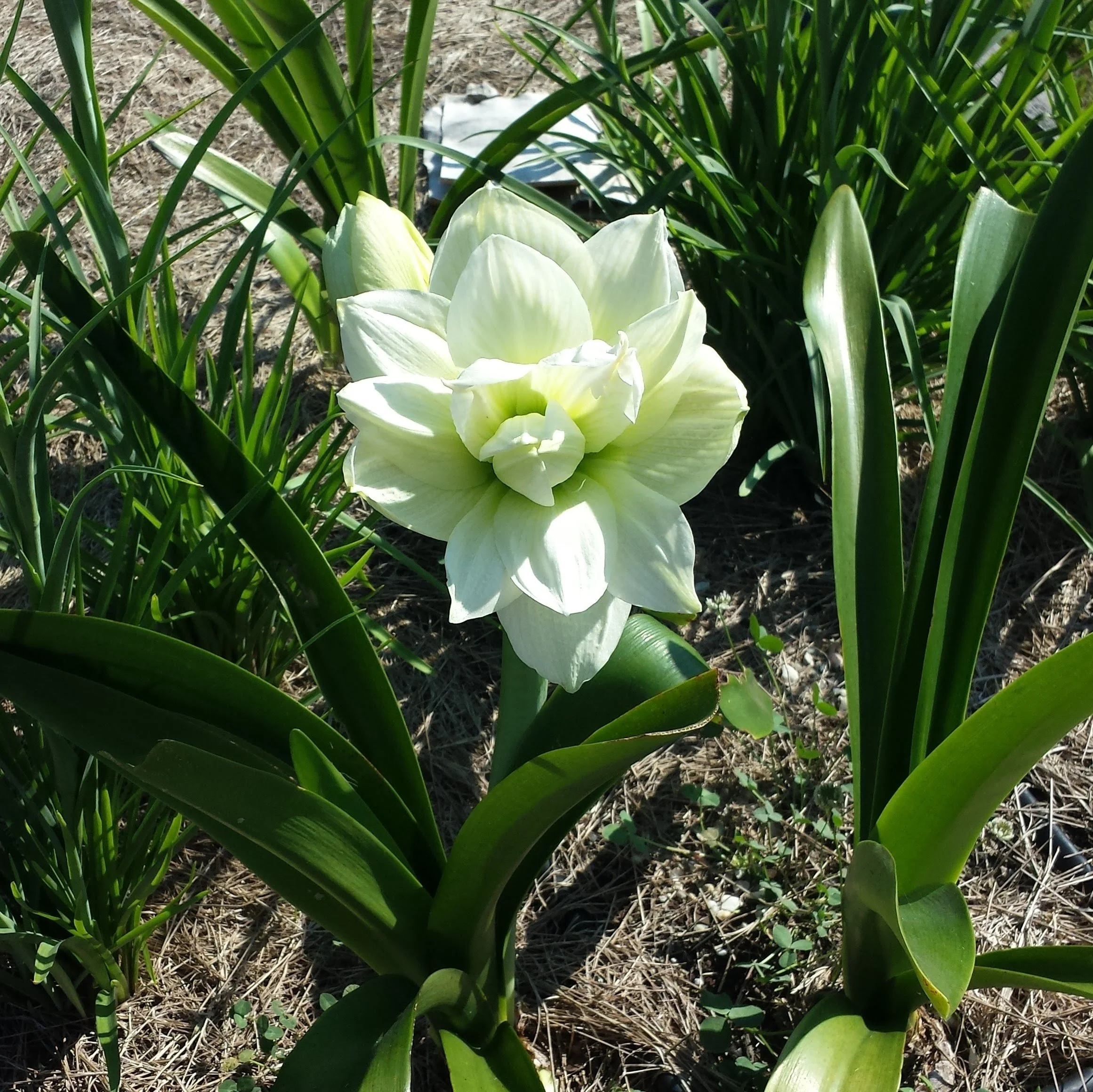
Amaryllis can be grown outdoors in Zones 8–10.
Plant after frost danger has passed (mid-April or later)
Choose sun to partial shade with excellent drainage
Plant with the bulb neck slightly above soil level
Water regularly but never let soil stay soggy
Fertilize monthly during the growing season
Outdoors, amaryllis focus on foliage. That’s good—it fuels future blooms.
Troubleshooting Common Issues
Fungus Gnats
Almost always caused by overwatering.
Fix it:
Let soil dry more between waterings
Neem oil drench or
Hydrogen peroxide solution (1 part 3% peroxide : 4 parts water)
Dormant Bulbs Not Sprouting
Some bulbs take up to six weeks to wake up.
Keep them warm
Do not water until a stem is at least 2 inches tall
Firm bulb = healthy bulb
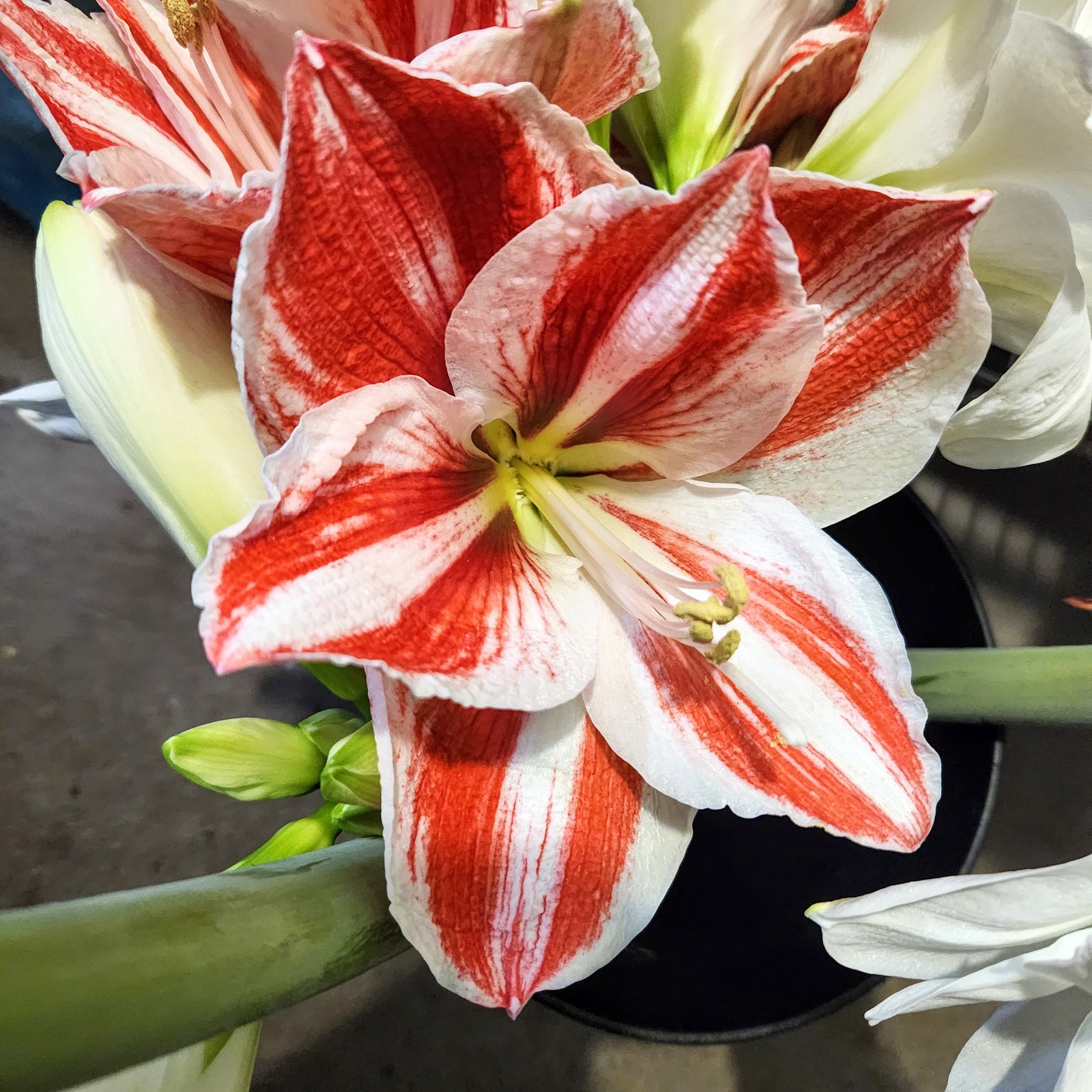
Amaryllis bring generous, dramatic blooms at a time of year when almost nothing else does. In the quiet of winter—especially in January, when we spend more time indoors—their flowers offer color, life, and something living to enjoy up close.
They also make exceptional gifts, and even better long-term companions. Amaryllis ask very little, yet reward a small amount of care with blooms year after year, becoming familiar and anticipated rather than disposable.
One winter, I gifted amaryllis forcing kits to friends and watched their excitement unfold through photos of blooms weeks later. That shared sense of anticipation and joy is what makes amaryllis so special—and why they continue to earn a place in our homes each winter.
Why Amaryllis are Worth It
Seasonal note: Amaryllis bulbs are available each year beginning in early November.