
Classes and Events Linda Bradley Classes and Events Linda Bradley

Our Spring Bulb Sale Begins On September 16

We are so excited to bring you our selection of spring blooming bulbs including Anemone, Daffodils and Ranunculus! These are the same bulbs that we grow at the farm, so you can be assured that they are appropriate for our climate. Growing instructions are included with your order.

New this year, in addition to our farm pick up option, we can ship your bulb order anywhere in the United States! We will start shipping orders in mid-October.

To begin planning your order, you can check out the information on our website now at https://www.purpletuteur.com/garden-bulbs

Inventories will be updated by 7:00 am on 9/16/2023. Please order early, quantities are limited.


ANEMONE

These are longer stemmed varieties and make excellent cut flowers. They have stems of 10 - 12 inches vs. the landscape de Caan varieties with 6 inch stems that are widely available. Growing instructions are included with your purchase. You can also check out our blog post on growing ranunculus and anemone here.


RANUNCULUS
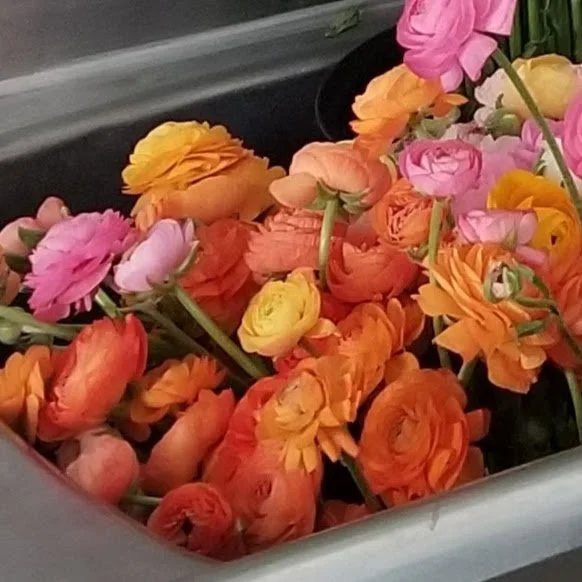
These are longer stemmed varieties and make excellent cut flowers. They grow well in pots or in the ground. Growing instructions are included with your purchase. You can also check out our blog post on growing ranunculus and anemone here.


NARCISSUS / DAFFODILS

Narcissus is one of the most economical and carefree bulbs that you can grow. Add a little bulb food each year in the fall. If you forget in the fall, add bulb food in the spring when new growth is emerging. Watch them multiply over time. Who said they have to be highlighter yellow? There are many specialty varieties that will grow in our area. This year, we are offering three longer stemmed beauties, all suitable for the South (through zone 8. Not suitable for higher zones). Pink varieties (like Cum Laude) need partial shade after blooming. Plant them under a deciduous tree, but avoid areas where large roots are showing. Growing instructions included with purchase.


PEONIES

The peonies are not available as planned for this sale. We hope to have them later in the year.


Read More
Cut Flowers Linda Bradley Cut Flowers Linda Bradley

Perennial Phlox

Does your garden have too much sun for Hydrangeas? You may want to try perennial Phlox, Phlox Paniculata.  The bloom has a shape that is similar to a hydrangea. They bloom this time of year and are available in a variety of colors. Be sure to select one that is resistant to powdery mildew and you are good to go!

These plants grow tall, with 2 – 4 foot stems, so find a spot in the back of your sunny bed. If you cut them to bring inside, cut the stem near the base of the plant. Often, a second smaller flush will come up before the season ends. As with many perennials, they die back to the ground over the winter. Green shoots start up early in spring.

If you have a bouquet subscription with us, you will see Phlox in the next bouquet. We grow David’s Lavender. In the garden the bloom is pink. When we put it into the cooler it turns purple. When it warms back up, it turns pink again. No other varieties have this chameleon-like characteristic.


Do you grow perennial Phlox in your garden? What is your favorite variety?


Other News:

Thanks to all of you who came to the farm for the Ag+Art Tour. We had between 250 and 300 visitors this year. We appreciate being able to share what we do and what the artisans do during this event.


I will be spending a few days in Massachusetts for the Association of Specialty Cut Flower Grower’s annual conference in early August. This is the first gathering in 3 years, due to Covid. I am looking forward to being face to face with like-minded growers who I usually communicate with over the phone or on social media. I am looking forward to a farm tour too! Five Forks Farm, in Upton Mass will open their farm to Association Members for a tour. You can learn a little bit about them and their story in the last printed issue of Martha Stewart Living.  Check it out here

https://www.marthastewart.com/8257345/fivefork-farms-flower-tour


Our summer bouquet season is coming to an end soon. We are offering a fall season of 6 weekly bouquets starting in late August and ending in early-mid October. We would love to deliver our fall bouquets to your door! You can learn more and sign up on our website: https://www.purpletuteur.com/subscription-information


Wishing you much joy in the abundance of summer!

Linda


Read More
Cut Flowers Linda Bradley Cut Flowers Linda Bradley

Growing Anemone and Ranunculus in the Midlands

Anemone

Anemone

Ranunculus

Ranunculus

If you want to have cutting-garden blooms in late winter and early spring here in Columbia S.C., Anemone and Ranunculus are two great options. While they are very different flowers, they are often discussed together because their growing conditions are similar. They take a little special handling to get started but once you have them in the ground, very little care is required. They will send up multiple stems from each plant, giving you beautiful flowers to bring indoors when not much else is in bloom. Even better, they come back year after year!

Growing Conditions

Both Anemone and Ranunculus need full sun and good drainage. They can be grown in the ground or in pots. If you have clay soil, you may want to use a pot or a raised bed. Too much water will cause the corms to rot.

Both like day temperatures in the 60 – 70 F degree range, with nights from 45 – 55F.  This means you can plant them in the fall or in January or February for early spring blooms. The soil temperatures around 55 F are optimal and once it gets warmer, they will go dormant.

Anemone will bloom about 90 days after planting. Ranunculus needs the 90 days and 8-12 hours of daylight. Both will begin to go dormant when daylength reaches 13 hours.  They need to be protected from freezing weather. Cover them with heavy mulch if we get freezing weather.

Prep and Planting

Corms : Top - Anemone  Bottom - Ranunculus

Corms : Top - Anemone Bottom - Ranunculus

Both Anemone and Ranunculus need to be pre-soaked for 4 hours before planting. This wakes up the corms. They are alive but dormant when you get them, so they need oxygen during the soak or they will suffocate. Put them in a bowl in a sink filled with water and keep the faucet running slowly, letting the water overflow. This ensures that there is oxygen in the water while the corms are submerged. You can also submerge an aquarium stone into the water to add oxygen and eliminate the water overflow.

Once they have been soaked, you can pre-sprout them to ensure that the corm is viable or you can go ahead and plant them. It is easier just to plant them, but pre-sprouting ensures that you don’t plant a corm that is not viable. 

 To pre-sprout, put them in a flat of damp vermiculite and keep them at 40-50F for two to three weeks. If you soak them and then leave them at 60 or above, they will rot since they stay dormant.  Try a refrigerator if you don’t have a cool enough space outdoors. White roots will emerge and need to be handled carefully when planting.

Plant the corms 6 inches apart with one inch of soil over the corm. Anemones should be planted with the point down. Some have odd shapes. If you are not sure which is the pointy end, plant them on their side. Ranunculus need their legs down in the soil. Make sure your soil drains well.

Care

Ranuncus in progress

Ranunculus in progress

Water them well when they are planted and then do not water again until leaves appear. After the green leaves are visible, feed them with a water-soluble fertilizer once a week until the blooms appear. Stop feeding when the blooming begins.

Cover the plants when weather gets below freezing. If the leaves freeze but the roots are OK, the plant will come back.

Harvesting Your Blooms

Anemone bloom ready to harvest

Anemone bloom ready to harvest

Anemone open during the day and close at night. They should open more than once before cutting. Cut at the base of the stem, being careful not to cut newly emerging stems. For the optimal cut, the collar should be about an inch from the base of the bloom.

Ranunculus bloom ready to harvest

Ranunculus bloom ready to harvest

Ranunculus petals open from a ball shaped bud. Let the blooms open about half way on the plant and cut the stem at the ground. You can also cut the stem when the bud is colored and soft when squeezed and it will open indoors. The second option is handy if rain or a late freeze is in the forecast and you don’t want to risk losing blooms to the weather.

When the days turn warm and daylight gets to 13 hours, ranunculus and anemone will go dormant. Let the greenery die back naturally, cleaning up the leaves after they are yellowed. Leave the corms in place and they will come back when the conditions are right the next year!

Ready to Give it a Try?

We will offer Anemone and Ranunculus corms on our website by October 20th. We are not shipping at this time, but will have farms pick up dates and we will offer delivery to our subscription zip codes. Watch for the announcement coming soon!

Read More
Cut Flowers Linda Bradley Cut Flowers Linda Bradley

The New Growing Year Begins Now!

If you want to have a spring cutting garden, fall is the time to plan and prepare for it. Now is the time to assess what is working and what is not working in your garden, so that you can make adjustments in the cooler fall weather. Here are a few things to consider:

Perennial Sedum Autumn Joy1.       Plant perennials and spring flowering shrubs – while you can do this in the spring also, fall is always best. In fall, the new plants have several months to get their roots established…

Perennial Sedum Autumn Joy

1.       Plant perennials and spring flowering shrubs – while you can do this in the spring also, fall is always best. In fall, the new plants have several months to get their roots established before blooming. We are adding two varieties of hydrangeas and a forsythia this year. October is a good month to plant in our area.

Hardy Annuals  Bachelor Buttons and Orlaya2.       Select hardy annuals that you want to grow and purchase the seed. You can start to prepare the beds now and then sow the seed in October. Hardy annuals are those that prefer cooler temperatures to grow. This includes Bachelor Buttons, Bells of Ireland and Larkspur to name a few. If you want to learn more about these flowers, I highly recommend the book “Cool Flowers” by Lisa Mason Zeigler. It is an excellent source of information and easy to read.

Hardy Annuals Bachelor Buttons and Orlaya

2.       Select hardy annuals that you want to grow and purchase the seed. You can start to prepare the beds now and then sow the seed in October. Hardy annuals are those that prefer cooler temperatures to grow. This includes Bachelor Buttons, Bells of Ireland and Larkspur to name a few. If you want to learn more about these flowers, I highly recommend the book “Cool Flowers” by Lisa Mason Zeigler. It is an excellent source of information and easy to read.

Spring bulbs Ranunculus and Daffodils3.       Order spring flowering bulbs and tubers – daffodils, iris, hyacinth, anemone, ranunculus and peonies. All of these produce lovely spring flowers. These can be grown in pots if you don’t have a lot of space or need to protect them from moles and voles in your yard.  We will be offering some of these for sale in the next couple of weeks – so stay tuned!

Spring bulbs Ranunculus and Daffodils

3.       Order spring flowering bulbs and tubers – daffodils, iris, hyacinth, anemone, ranunculus and peonies. All of these produce lovely spring flowers. These can be grown in pots if you don’t have a lot of space or need to protect them from moles and voles in your yard.  We will be offering some of these for sale in the next couple of weeks – so stay tuned!

To get everything off to a good start, now is the time to do a soil test. This will tell you whether or not nutrients need to be added to your soil when you plant.  Clemson offers this service to the public. It can be difficult to understand but you can call the lab and they will help you understand what you need to do. Read all about it here: https://www.clemson.edu/public/regulatory/ag-srvc-lab/soil-testing/index.html .

Happy Planting!

 
Read More
Cut Flowers, Bulbs and Tubers Linda Bradley Cut Flowers, Bulbs and Tubers Linda Bradley

Top Tips for Growing Peonies in the South

We all have certain flowers that connect us to happy memories. Peonies do that for me, so naturally I wanted to grow them on the farm. In our hot and humid climate, I tried a couple of times with limited success. Perseverance pays off and we have 3-year-old plants on the verge of blooming for the first time!

20210420_084452.jpg

Here are a few tips for growing peonies here in the Midlands:

1.       Peonies are expensive to purchase but they will live a very long time. Many people have told me that they have dug up the plants from their grandparent’s house and moved them to their own yard.  For our climate, select early season varieties. They need to bloom before the heat really sets in.

2.       Grow them in a raised bed or a pot. They need to be exposed to as much cold air as possible. Something above ground will stay cooler.

3.       Put them in full sun. They need sun to bloom well.

4.       They need a mixture of soil, minerals and compost. Mushroom compost is recommended since many other types of compost include pine bark and it carries something in it that makes peonies more vulnerable to disease.

20181102_102823 (1).jpg

5.       Bare roots are the best value. Find the biggest ones with the most eyes.  Plant them so that the tops are just one inch below the surface. If they are planted too deeply, they won’t bloom since this insulates them from the cold. In colder climates, they are planted deeper.

6.       If you purchase bare roots, expect to wait three years for flowers. They will not have any blooms the first year. They need their energy to develop a good root system. The second year, they may have some blooms but it is recommended that you deadhead them so that they can continue to focus on their roots. The third year will bring on the flowers.

7.       There are potted plants available at some of the local nurseries. These are good too but the selection is more limited. Expect to have a transition year in your garden if you plant a potted plant. They may need a year to adjust and you may not have blooms the first year so don’t give up.

8.       Each year add a thin layer of compost and some minerals (I use Azomite) to nourish them. Don’t put down a thick layer because you don’t want to bury the tuber.

9.       After the bloom period, I put some shade over them so that the foliage stays healthy longer, providing more energy for next year.  Expect the foliage to look ratty after the heat sets in. Everyone’s plants look less than lovely.

10.   When you do cut the foliage back, don’t put it in your compost pile. Throw it away as it may carry disease.

What tips do you have on growing peonies? I would love to hear them!

20210419_170734.jpg

If you want to order from a specialty nursery, I highly recommend Peony’s Envy (https://peonysenvy.com). They are so helpful and they have a great deal of information on their website if you want more education on these beauties.

We will be including our peonies in our subscriptions while they last. We still have a few Spring to Summer spaces available. Sign up at https://www.purpletuteur.com/subscription-information.

Happy Gardening!

Read More
Cut Flowers, Bulbs and Tubers Linda Bradley Cut Flowers, Bulbs and Tubers Linda Bradley

This is Ranunculus

Ranunculus (Anemone Coronaria) is commonly known as Buttercup. The corms (bulbs) come in yellow, orange, pink, red and white. Known as the “rose of spring”, the flower is shaped like a rose.  

20210312_103623.jpg
20210313_161840.jpg

Ranunculus starts blooming in mid-March in Columbia. If you want to add them to your garden, they are a perfect partner to anemone. The growing conditions are the same. The ranunculus corms can survive our winters in the ground. They do best when the daytime temps are in the mid-60’s and the nights are in the 40’s. They will keep blooming until the daytime temps are consistently in the 70’s. After the heat comes on, they fade away until November or so.  Then they green up and take up the sun until the March blooms appear.

Ranunculus blooms need protection from the rain. Each plant will bloom several times while in season, so even if a flower gets drenched, all is not lost. Just deadhead it and wait for the next one.

20210312_100902.jpg

In addition to these there is a variety known as butterfly ranunculus. These are more of a spray form and the flowers have wax coated petals that give them a shimmer. They come in soft pinks, yellows and a pale salmon color (pictured). From Italy, these are fairly new to the United States. Only two wholesalers can distribute them here which makes them more expensive.  We are growing some for the first time this year and experiencing some problems but still hopeful that some will make it into spring bouquets.

There is a proper time to cut every flower in order to maximize its vase life.  For ranunculus, the right time is when the flower petals are barely open. When properly cut, they will last a good week in a vase.  

What do you think of ranunculus?

Thanks to all of you who have ordered your subscriptions. Although the spring season is sold out, we still have some available for the spring to summer season. You can sign up on our website, www.purpletuteur.com.

As always, we appreciate all the love and support you show us here at our farm. It keeps us motivated to try and bring you the best and most beautiful blooms.

Many thanks,

Linda 

Read More
Cut Flowers, Subscriptions, Bulbs and Tubers Linda Bradley Cut Flowers, Subscriptions, Bulbs and Tubers Linda Bradley

This is Anemone

We are about a week away from getting enough blooms to begin delivery! Thanks to all who have signed up. We have just a couple of spots left for Friday delivery for the early spring season.

 This is the first in a series of blogs introducing some of the flowers we grow.

20210211_123022.jpg
20210220_154315.jpg
original_9b401745-525e-4867-afa8-281cbc163f87_20201230_095128.jpg

Anemone (Anemone Coronaria) is a late winter/early spring bloomer for us in Columbia. The corms (bulbs) come in many colors and in single double flower forms. In addition to the longer stemmed varieties that we use for cut flowers, there are short-stemmed versions that are nice to have in the garden.   

All types can survive our winters in the ground but the flowers don’t do well in the rain. If you don’t have time to be concerned about every bloom, you simply dead head those that have gotten wet. Otherwise, you can grow them under cover to protect them from our wet spring weather. Each plant will bloom several times while “in season”, so even if a flower gets drenched, all is not lost.

Anemone does best when the daytime temps are in the mid-60’s and the nights are in the 40’s. This translates to March for us. They will keep blooming until the daytime temps are consistently in the 70’s. After the heat comes on, they fade away until November or so.  Then they green up and take up the sun until the March blooms.

There is a proper time to cut every flower in order to maximize its vase life.  For Anemones, the right time is when the collar under the bloom is about a half an inch from the base of the bloom. They may wilt if you cut them sooner.  When properly cut, they will last a good week in a vase.

If you are thinking that you knew of anemone as another flower, you are right. There is a shrub-like perennial called Japanese Anemone (Anemone hupehensis). The blooms look very similar to the bulb form but they bloom in a spray in the fall.  This is why botanists revert to Latin names for flowers. Many common names apply to multiple plants but each has its own unique Latin name.  

What do you think of this flower? Have you grown it? Is there another flower that you like to see this time of year?

I hope you are as excited for Spring as I am!

Best,

Linda

Read More
Cut Flowers Linda Bradley Cut Flowers Linda Bradley

5 Annual Cut Flowers That Flourish in Our Hot and Humid Summers

Its still summer. Sigh. Our “famously hot” summers are no joke.  The hot and humid weather is a challenge to us and to most of the plants that we try to nurture through to fall. There are those, however, that do well or do their best in these conditions. Here are my top 5:

 1.       Zinnias

Zinnias

Zinnias

Who can resist these happy blooms? They come in every color but blue. There are multiple sizes and shapes available. They can be started fairly easily from seed and if you cut and feed them weekly, they will produce flowers for your home for weeks.  They are prone to powdery mildew, so here in Columbia, plant them further apart than the seed pack recommends. I plant mine a foot apart (Benary’s Giants) so there is plenty of airflow between the plants. Cutting them frequently also keeps the vegetation thinned out, further improving the airflow.

2.       Basil

Basil

Basil

Yup, you read that right. All bouquets need greenery to make the blooms pop. Basil does the trick. Using Mrs. Meyer’s Lemon or Cinnamon also adds a lovely fragrance to your bouquet. When growing basil as a cut flower, you need to let the plant bloom and let the stem get woody before you cut it.  This is the opposite of what you would do if you are growing it to eat. Basil grows well in full sun in the spring, but in the summer give it a little bit of shade to keep it happy.

3.       Globe amaranth

Globe Amaranth

Globe Amaranth

This sweet bloom doesn’t even get going well until it gets hot. Really hot. It may seem like it isn’t going to do anything, but when the heat rises, it produces a profusion of blooms from a single plant.  It will keep producing until the fall frosts arrive. It comes in white, light and dark pink, red and orange.

4.       Sunflowers

Sunflowers

Sunflowers

These magical blooms are not bothered by the heat. We grow the pollenless single stem varieties for bouquets, but the branching varieties will also do fine when we’re wilting.  Did you know that you can affect the size of the blooms by how you space the plants? Planting them 6 inches apart will give you blooms that are right-sized for a bouquet. At 12 inches apart, the larger, more typical flower head with form from the same seed. Be sure to cut them before they are fully open so that bugs don’t ruin the blooms.

5.       Celosia

Celosia

Celosia

This comes in many forms – spike, fan or brain and wheat. They all add texture and color to your bouquet. They come in good variety of colors so you can use this to round out the mix. Be sure to pick this one before the seed forms or you will find little black droppings on the table under your bouquet.


If you want to have something to cut in your garden in the hottest part of summer, these plants can fill the bill. Do you have any other favorite annuals that do well in this heat?

 Happy Gardening!

Linda

Read More
Farm Updates Linda Bradley Farm Updates Linda Bradley

Hello Spring!

Spring arrived a couple of days ago but today really felt like spring. The cherry trees are blooming and the sky is thankfully clear. The temperatures are warming up and the day length is now longer than the night. These are excellent conditions for getting the fall-planted flowers out of dormancy. The covers are off the beds and we can begin feeding to further encourage growth. In another month to six weeks, we will be able to have blooms like these available on a consistent basis.

Wishing you a wonderful season!

20180530_110651.jpg
20190323_123822.jpg
Read More
Farm Updates Linda Bradley Farm Updates Linda Bradley

Getting Ready for Spring

Larkspur

Larkspur

In warm climates like South Carolina’s, spring flower preparation starts in the fall. We plant ‘hardy annuals’ in the fall to provide them with enough cool weather to thrive. This group of flowers blooms profusely in the cooler spring and then they fade in our summer heat. This includes things like Bells of Ireland, Bachelor Buttons, Corn Cockle and Larkspur. Most are started from seed sown directly in the garden.

Here at the farm, we have been nurturing many of these varieties since last September. They have needed the heat of late summer to germinate and get established. Then, as the days got shorter and the temperatures dropped, they slowed down above ground but continue to develop strong roots. As the weather has warmed up, the plant growth has resumed. When we get the magic combination of longer days and consistently warmer temperatures they will burst forth, revealing the miracle that they are.

20190122_154116.jpg

 Between now and then, the fluctuating temperatures call for some special attention. The plants are getting larger and the vegetation is more vulnerable to cold. Frost cloth is used to protect them when we get temperatures below freezing. A freeze is in the forecast for next week, so everything is being covered so that it is protected.  

Looking forward to the end of winter and the day when we can share the spring blooms with you! If you are considering a bouquet subscription, there is still time. You can sign up at www.purpletuteur.com

Dianthus under cover

Dianthus under cover

Read More