
The fair came to town and the weather cooled down. Seems like clockwork, the way this happens every year. This year, it still happened, but it is relatively warmer than in years past.
There is no frost in the forecast, and we typically have one by Halloween. The marigolds are still blooming, but the stems are shorter. The last succession of zinnias has just been cut down. We may have dahlias a little longer, but the days are getting shorter, which causes them to slow down. And the first whisper of frost will knock them out for the season.
Fall Mums are Getting Started
The shorter days are what trigger the chrysanthemums to bud up and bloom. And they are doing just that. It will probably be 3–4 more weeks before we see them in their full glory, but we are already seeing the early varieties in bloom.
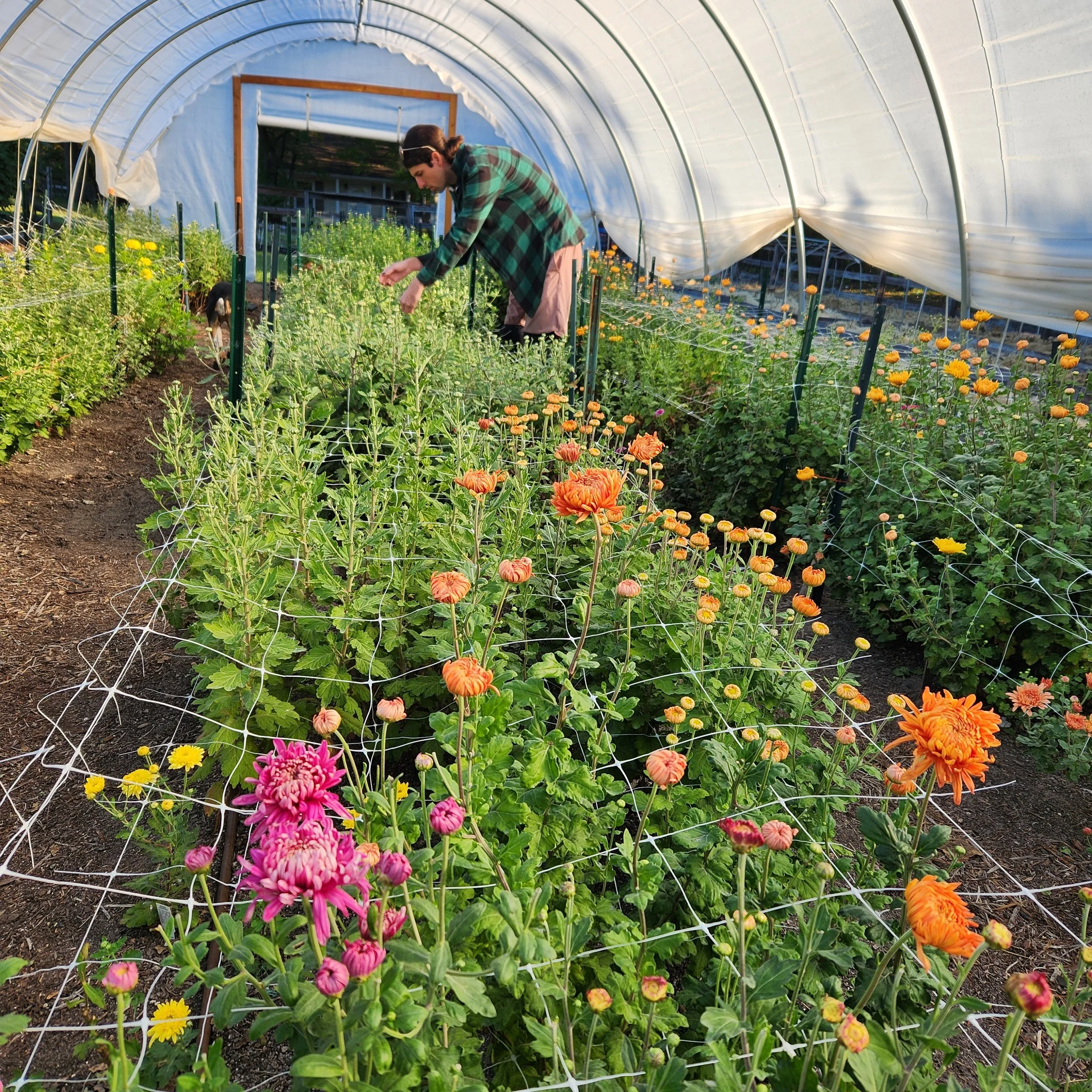
Our trial bed of new (to us) varieties is showing alot of color. Rhy, our newest team member, disbudding in the background.
We will be offering Thanksgiving week bouquets this year, with pickup on Monday, November 23, and delivery on Tuesday, November 24. You will be able to pre-order from our website. More to come on this.
Spring Starts in Fall
In the meantime, we are very busy getting all of our spring-blooming plants in the ground. It can feel overwhelming to think about everything for spring at once. We break it all down into short, consecutive projects that allow us to focus and feel like we are making progress.
Last week, Rhy planted 400 new daffodil bulbs and relocated our patch of Bridal Crowns. If your daffodils are not blooming, it may be that they need to be lifted and spaced out. As they produce new bulbs, crowding is inevitable, so every three years or so they need adjusting.
We moved ours to an area along the fence so all of our daffodils are together. Probably not what you want to do in your home garden, but for us, harvest efficiency is key. They are also planted near the spirea bushes, which come into bloom around the same time. It should be quite a show in March! Pictures to follow.
Anemone and Ranunculus Prep
This past weekend, I soaked the anemone and ranunculus corms and will leave them in the cooler for 2–3 weeks to pre-sprout before planting them. The rootlets allow the plants to get a quicker start, giving us earlier blooms next spring.
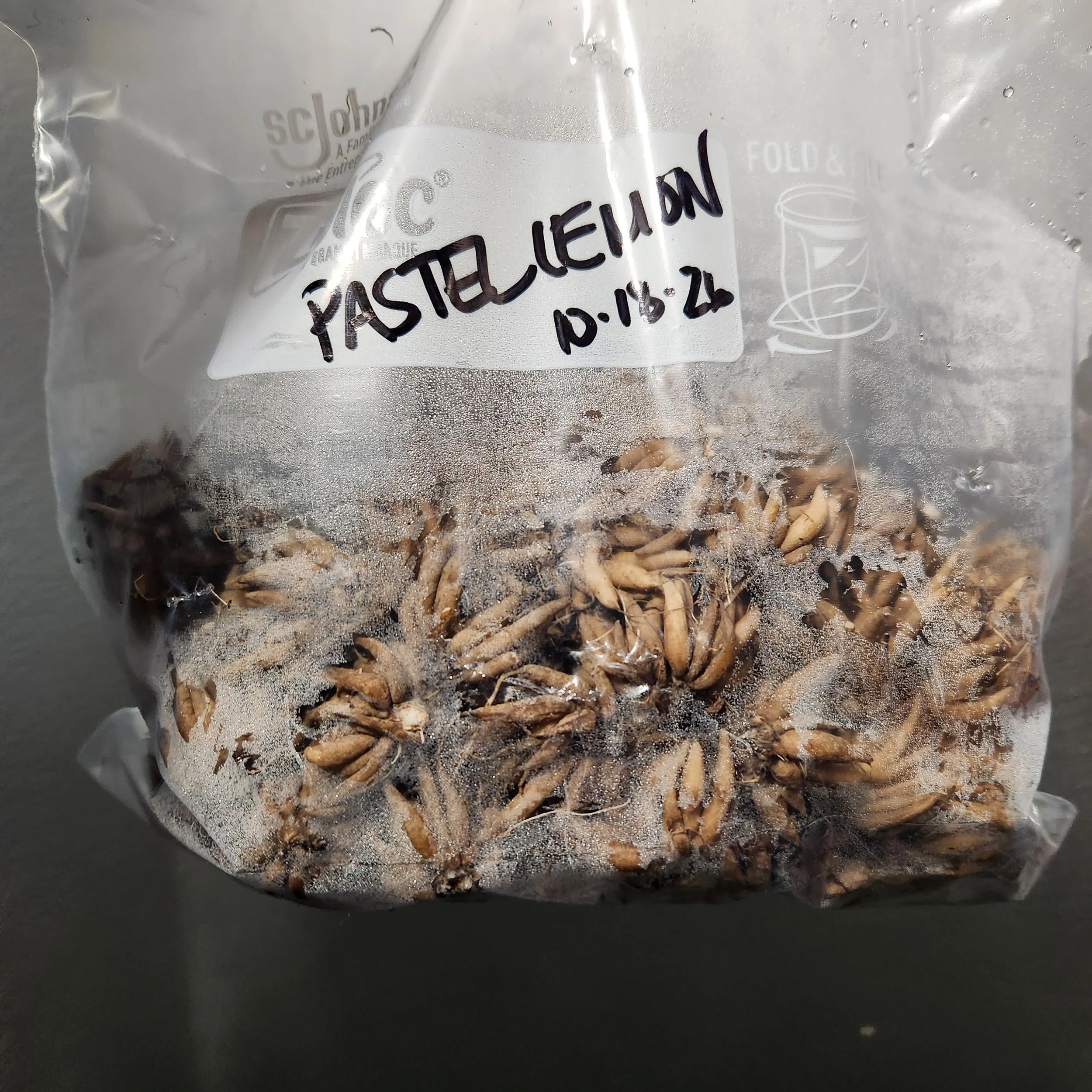
If you want to pre-sprout ranunculus after soaking, simply put the corms into a plastic baggie that you’ve punched air holes into and let them stay in a cooler or refrigerator at 50 degrees for 2–3 weeks. No soil needed, just the bare corms.
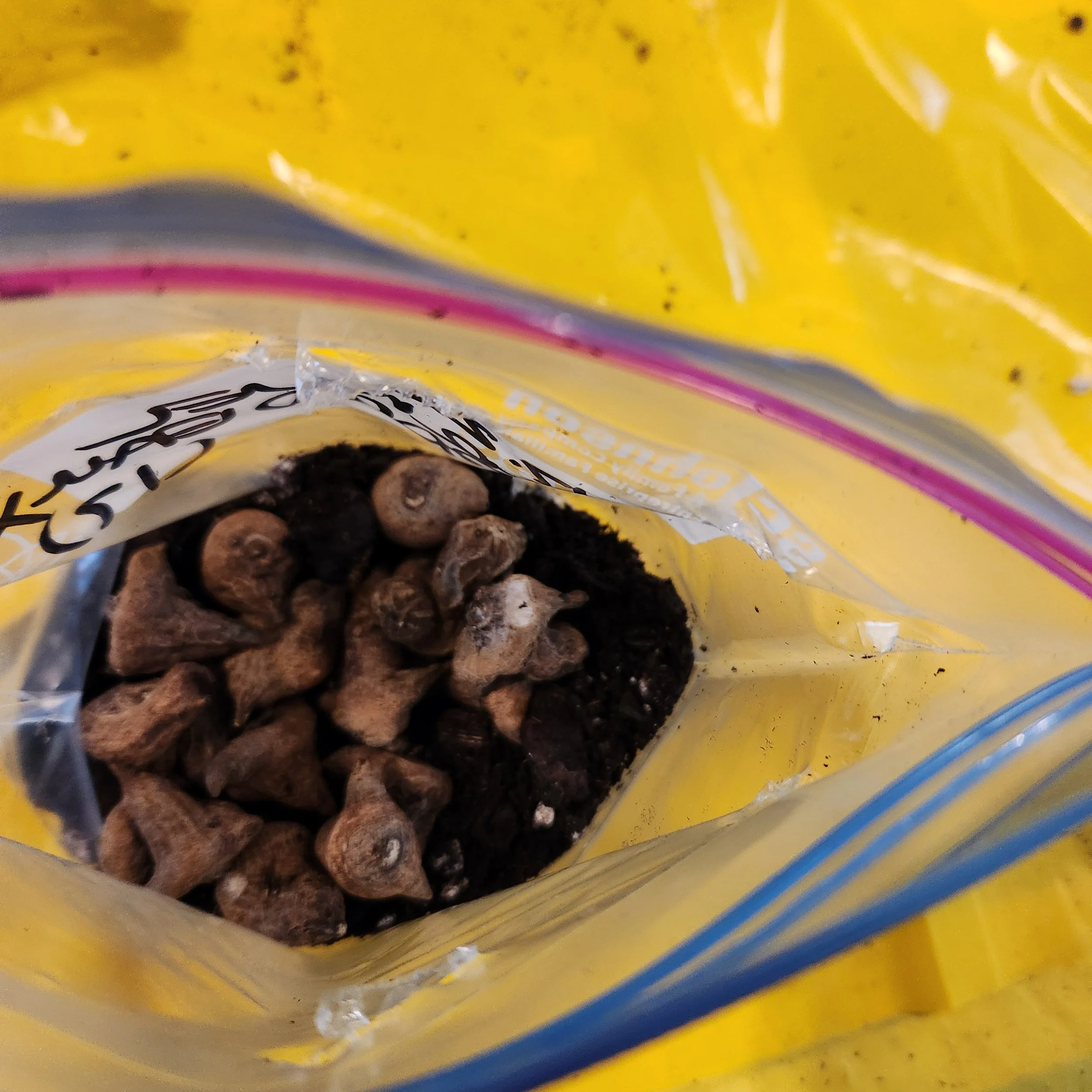
I have tried doing anemone this way also but did not have success, so I am back to pre-sprouting them in potting soil. This is the same process as the ranunculus, but first add a layer of damp potting soil to your bag, then add your soaked corms, followed by another layer of damp soil.
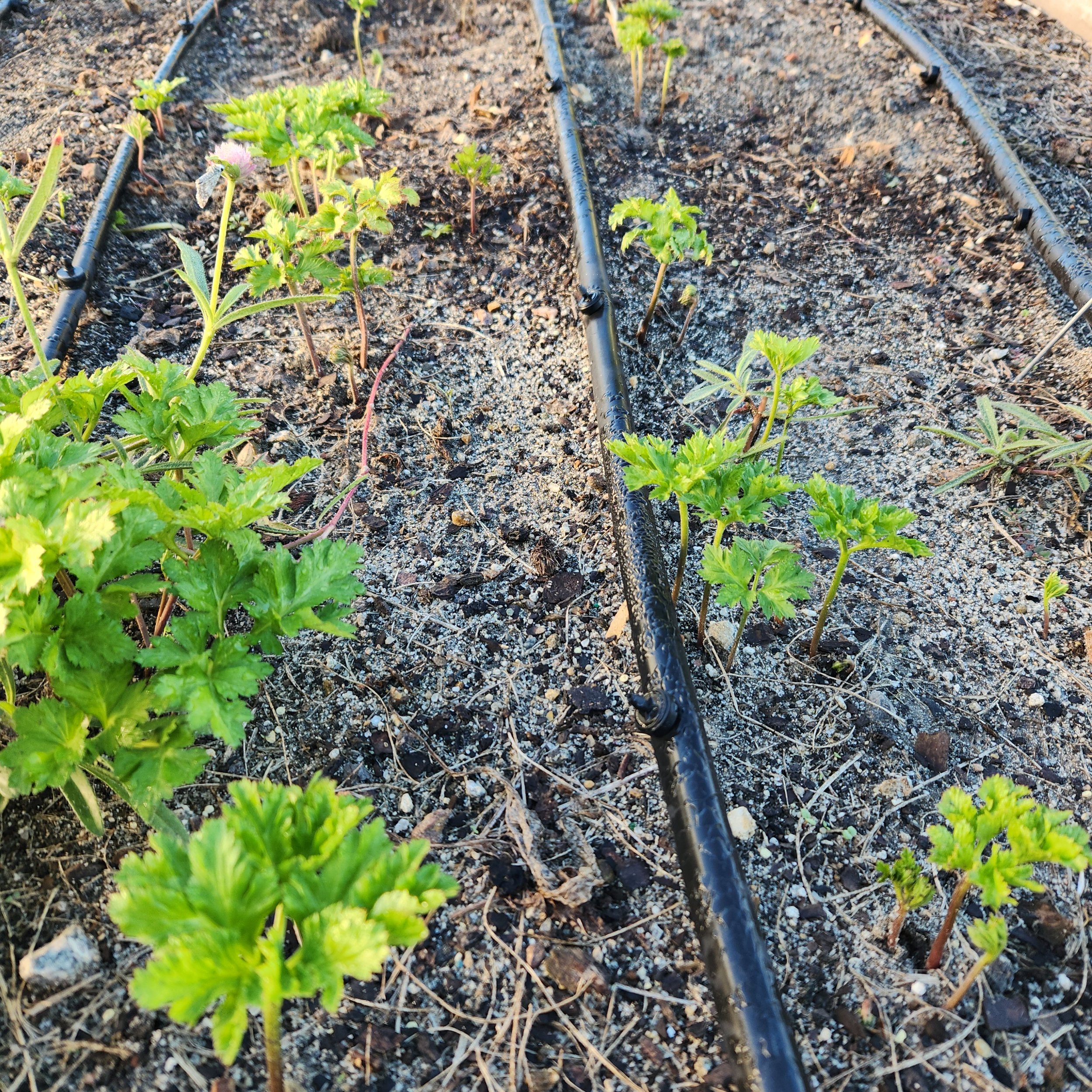
Anemone and ranunculus can be left in the ground once they go dormant in late spring. They will come up naturally when the conditions are right. Here are some Anemones that have emerged this month in our anemone bed planted last year. They take about 90 days to bloom, but flowering is also influenced by temperature. They prefer cool conditions, with optimal daytime temperatures around 65°F and nights around 50°F. Based on that, we expect to see blooms from this group naturally in March, if all goes well.
We don’t put these in our hoop house because they tolerate temperature variations better than some of the other plants we grow for early spring blooms. We will, however, cover them with frost cloth as temperatures get closer to freezing, whether they are blooming or not. The frost cloth provides some protection from the cold and creates a slightly warmer environment around the plants.
At home, you can make a simple support frame from wire hangers and cover your plants with frost cloth, a sheet or even a pillowcase. Supporting the covering above the plants helps create a pocket of warmer air and keeps heavier, wet fabric from resting directly on the foliage. Be sure to secure the covering around the edges to help hold some of the warmth from the soil underneath.
Even if the foliage does suffer some cold damage, all is not lost. As long as the ground isn’t frozen (which doesn’t happen in the Midlands), the roots can push up more leaves and the plant will carry on. It may just bloom a little later.
We have more corms available if you want to try growing these beautiful early spring flowers.
Spring - The Season With The Most Variety
The bulbs and corms are just a small part of what we are planting for spring. We are also planting starter plants and sowing seed for cold-hardy annuals like campanula, delphinium, snapdragons, bupleurum, and tulips. All of this will help provide the flowers for our 2027 season, including our Bouquet Subscriptions.
We will open the subscription shop in mid-November, and our newsletter readers will be the first to know when ordering begins.
We hope you are enjoying this beautiful weather and not rushing past these special days, the brief stretch between summer heat and the first frost. We are loving these days on the farm, preparing for and anticipating good things to come.
Best,
Linda