Final Fall Notes and A Holiday Event!

The dahlias ended their bloom period with an early frost in the middle of October. It is always a bittersweet time because the flowers are so beautiful that we hate to see them go, but their end means that we can shift our focus to our bulb sale and the work needed to prepare for spring.
Once we shift gears and begin this work in earnest, we make a lot of progress on tasks that have to wait until this time of year. Soil tests are done in the fall and beds are amended accordingly before planting begins.
Most of our early season blooms are either direct seeded or planted as small plants, aka plugs, that grow into their space. We are actively working in 78 4x8 beds and working on adding a few more.
Irrigation is also checked for needed repairs while the beds are empty or contain seedlings. It is much easier to see any issues now.

Nigella aka Love in a Mist
As of today, we have gotten all of the cold hardy annuals in place. These are things like Larkspur, Nigella, Bachelor Buttons, Orlaya and Saponaria. The rain we have been getting has really helped with seed germination so things are shaping up nicely so far.

Tuberose
Perennials that have been in place for three years typically need to be divided. You can tell if they stop or slow down producing blooms. Yarrow and Echinacea were done last week. Phlox and Tuberose are on the list for early spring.
Fall is also a great time to plant shrubs and trees. We planted a new hydrangea hedge that I am thrilled to finally have in place. We also planted a pussy willow which was rooted from some of our early spring bouquet material.

The spring bulbs are also in progress. Narcissus has all been planted. The anemone and ranunculus are being soaked and rooted for planting in early December.
So, these last four weeks have been very busy. Our early spring subscription season looks very promising.
Next, we are going to be on vacation for a couple of weeks. This time to see friends and family is something we have really been looking forward to.

A New Event at the Farm
After vacation, it will be great to focus on the current holiday season!
On December 1st from 10:00am – 1:00 pm, we are going to host a holiday market at the farm and you are invited!
We will be doing demonstrations on how to grow Paperwhites and Amaryllis.
We will have amaryllis and paperwhites available for sale as bulbs, forcing kits and ready to go decorations. These make great gifts too. If you have a container that you want to use, bring it and we can help you get it planted.
We will also have Angel Wing Begonia, which is a wonderful houseplant, yarrow for planting in your garden and a few other surprises.
Mary Ann Adams from One Hubcap farm will also be there with her beautiful fresh wreaths.
So take a break and come on out to the farm for your holiday greenery. We would love to see you!
Happy Fall! Updates From The Farm
We are enjoying the start of cooler weather and hope that you are too! Here are a few updates that we wanted to share.
Amanda McNulty and I Talk Cut Flowers on Making it Grow
It was such a pleasure to be able to meet one of my gardening heroes and talk cut flowers with her. This being my first time on a TV set, I really didn’t know what to expect. Amanda and the crew made it very easy. Once we had mics on, I couldn’t move around, which is a challenge for me, but she kept me focused on her and the topic at hand.
The set is so comfortable and I felt right at home. After we finished, I dumped some water into the sink that you can see in the background. Oops! There is no plumbing there. There was a mad dash to wipe it up. A learning experience for sure.
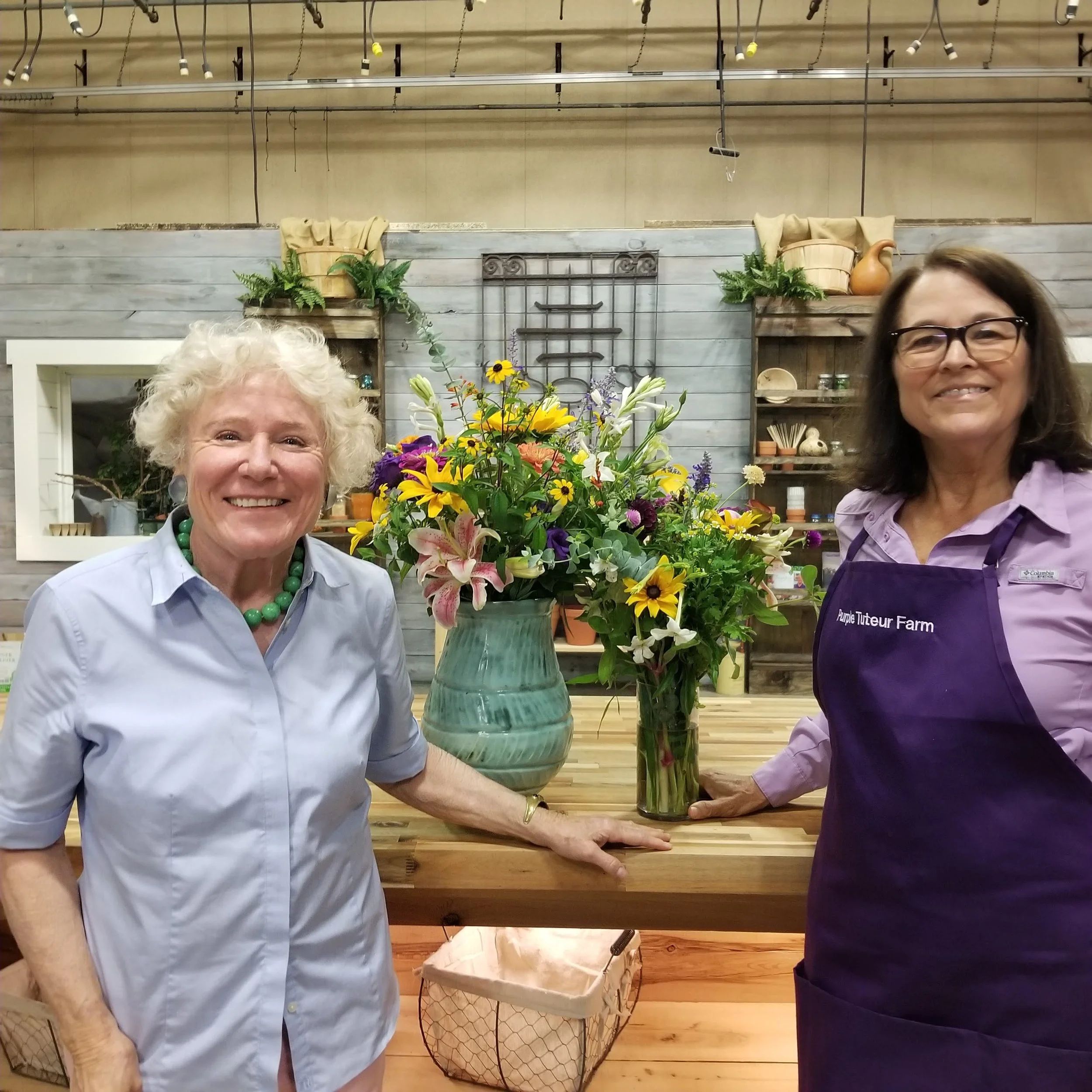
The segment will be aired on Tuesday, September 27 at 7:00 pm on SCETV.

Fall Bulb Sale
We are excited to bring you specialty bulbs for your garden and home again this year! You can order anemone, ranunculus, a few specialty daffodils, amaryllis and paperwhites from the website starting about October 15th. There are still supply chain delivery delayss so we will announce again when e have the bulbs.
Bouquet Subscriptions Wrap For 2022
Our subscription season is coming to a close for the year. I want to thank each of you who participates in this service. It does my heart good to bring you flowers and I enjoy your feedback. We will start deliveries back up next March and from now until then we will be prepping the soil, sowing seed, planting bulbs and protecting the plants from the weather as best we can.
Here’s to a lovely holiday season!
Linda
The Start of a New Year - The Subscription Shop is Open!
I hope that your 2022 has gotten off to a good and happy start. We have been enjoying some time with friends and family while the growing is slow-going. For me, this is a time of reflection and for home projects that I don’t have time to do when the farm is in full swing.

Sign up at www.purpletuteur.com
We are ready to open the subscription shop for Early Spring and for Spring to Summer! Here is the link to the website: www.purpletuteur.com . I will make a public announcement a few days after this email goes out. This gives our subscribers an opportunity to sign up first.
Fall will be opened up in June. Thanks to all who made our first offering a success iin 2020.
I’ve had the opportunity to meet with several garden clubs and speak on various growing topics over the winter. It has been fun to meet some of you and others, and I look forward to meeting with two more groups in February. Its great to know that the love of gardening is alive and well here in the Midlands of South Carolina!


Thanks to all of you who supported our bulb sales in the fall. If you got your ranunculus and anemones into the ground in the fall, you should be seeing the early signs of blooms, if not flowers. Ours have both started but are growing slowly during these cold days.

Photo: Becky Haggard
I always enjoy the photos that you send to me of your amaryllis and paperwhite bulbs. It does my heart good to know that you are enjoying them. They are such a ray of sunshine while we are indoors. Our second-year bulbs are poised for the early spring subscriptions. I have been keeping them at 60F to keep them from blooming too early. It is time to turn the heat up to 70F so that they will have the temperatures they need to bloom.
We had such a warm fall that everything we planted to overwinter for spring has had a robust start. As a result, when the weather warms consistently, everything will pop! The extra green/larger plants make them more vulnerable to freezing so keeping them covered is critical. Our hoop house does the job for us.
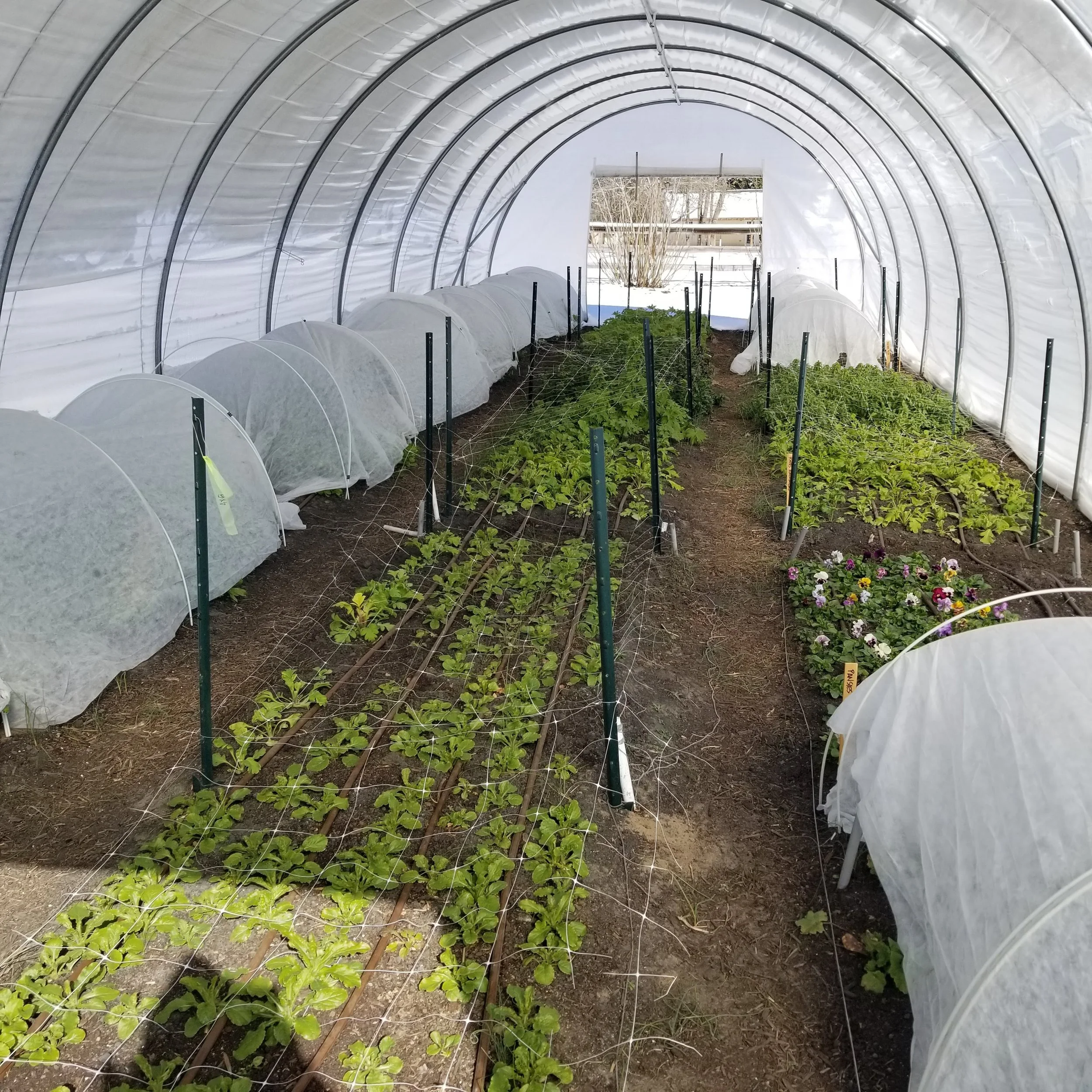

The snow is a welcome sight for many of our cold-loving plants. We’re hoping this bodes well for great daffodils and peonies this year! We’ve added another 48 peonies this winter. It’s a big job to get them set up but we’ll be so glad to see them in bloom three years from now.

We will be a host farm again this year for the Richland County Ag+Art tour. This year, the dates are June 11th and 12th. This is our annual open house and it is free to the public so come on out!
Thanks so much for all you do to support our farm. We are truly blessed.
Linda
Growing Anemone and Ranunculus in the Midlands
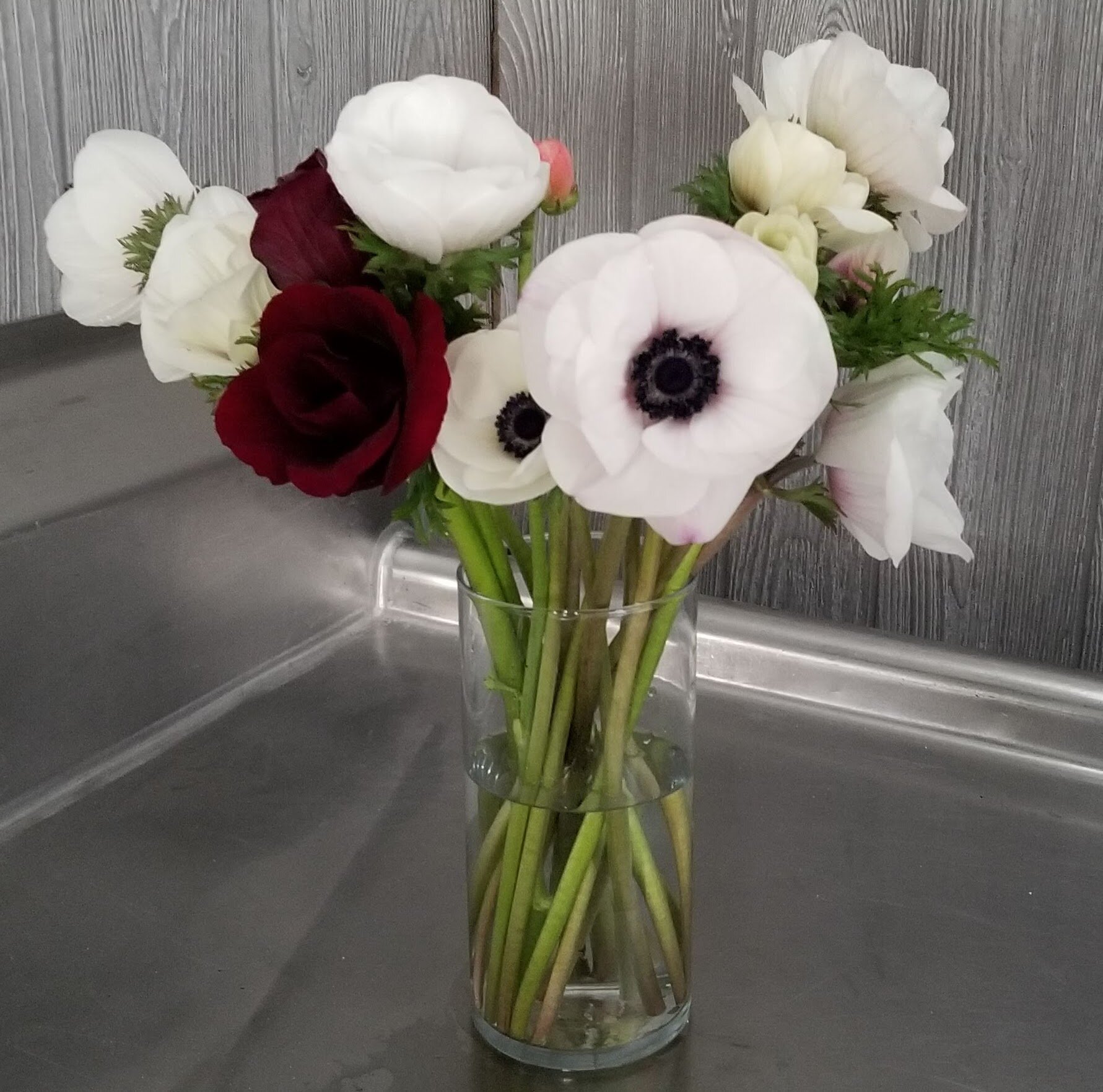
Anemone
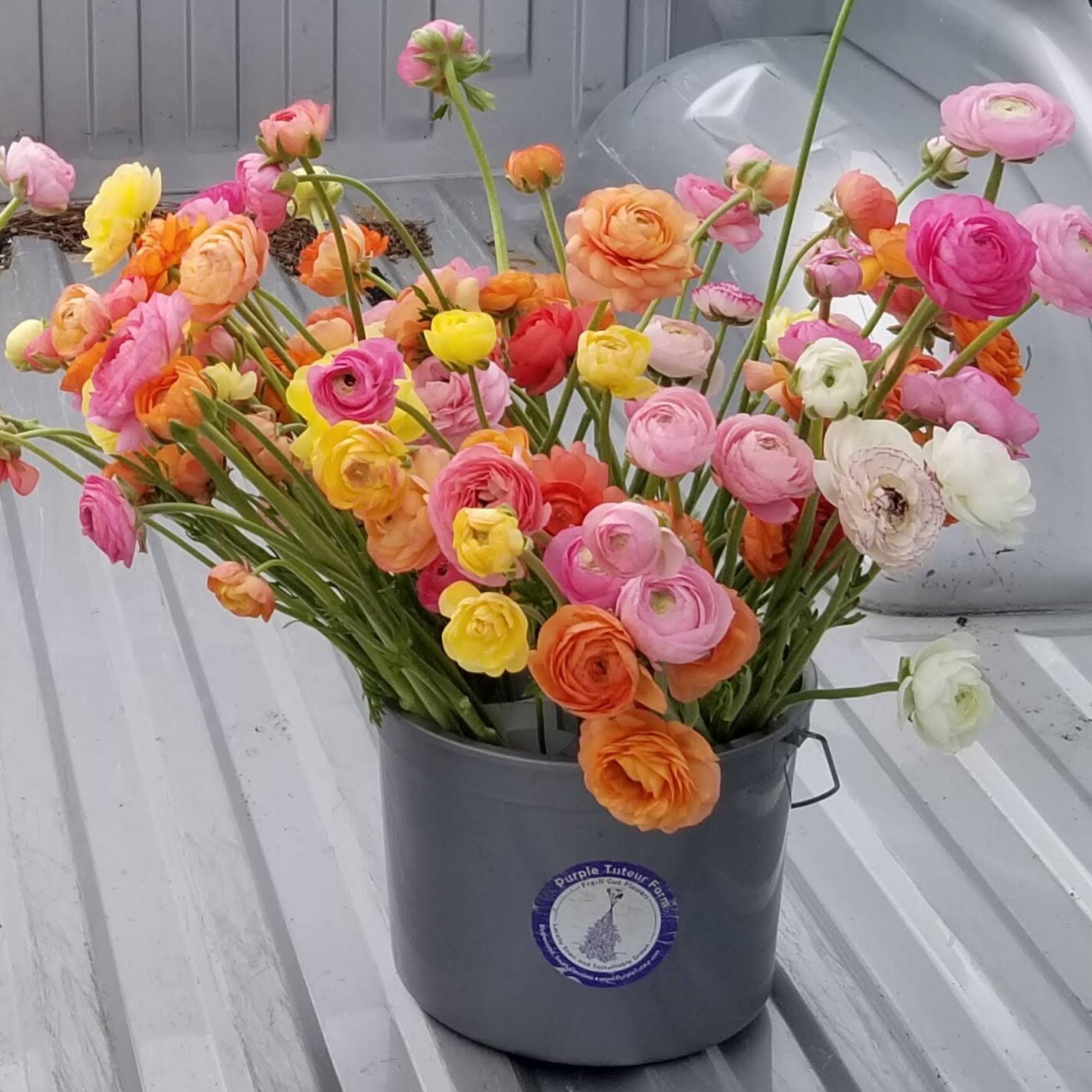
Ranunculus
If you want to have cutting-garden blooms in late winter and early spring here in Columbia S.C., Anemone and Ranunculus are two great options. While they are very different flowers, they are often discussed together because their growing conditions are similar. They take a little special handling to get started but once you have them in the ground, very little care is required. They will send up multiple stems from each plant, giving you beautiful flowers to bring indoors when not much else is in bloom. Even better, they come back year after year!
Growing Conditions
Both Anemone and Ranunculus need full sun and good drainage. They can be grown in the ground or in pots. If you have clay soil, you may want to use a pot or a raised bed. Too much water will cause the corms to rot.
Both like day temperatures in the 60 – 70 F degree range, with nights from 45 – 55F. This means you can plant them in the fall or in January or February for early spring blooms. The soil temperatures around 55 F are optimal and once it gets warmer, they will go dormant.
Anemone will bloom about 90 days after planting. Ranunculus needs the 90 days and 8-12 hours of daylight. Both will begin to go dormant when daylength reaches 13 hours. They need to be protected from freezing weather. Cover them with heavy mulch if we get freezing weather.
Prep and Planting

Corms : Top - Anemone Bottom - Ranunculus
Both Anemone and Ranunculus need to be pre-soaked for 4 hours before planting. This wakes up the corms. They are alive but dormant when you get them, so they need oxygen during the soak or they will suffocate. Put them in a bowl in a sink filled with water and keep the faucet running slowly, letting the water overflow. This ensures that there is oxygen in the water while the corms are submerged. You can also submerge an aquarium stone into the water to add oxygen and eliminate the water overflow.
Once they have been soaked, you can pre-sprout them to ensure that the corm is viable or you can go ahead and plant them. It is easier just to plant them, but pre-sprouting ensures that you don’t plant a corm that is not viable.
To pre-sprout, put them in a flat of damp vermiculite and keep them at 40-50F for two to three weeks. If you soak them and then leave them at 60 or above, they will rot since they stay dormant. Try a refrigerator if you don’t have a cool enough space outdoors. White roots will emerge and need to be handled carefully when planting.
Plant the corms 6 inches apart with one inch of soil over the corm. Anemones should be planted with the point down. Some have odd shapes. If you are not sure which is the pointy end, plant them on their side. Ranunculus need their legs down in the soil. Make sure your soil drains well.
Care
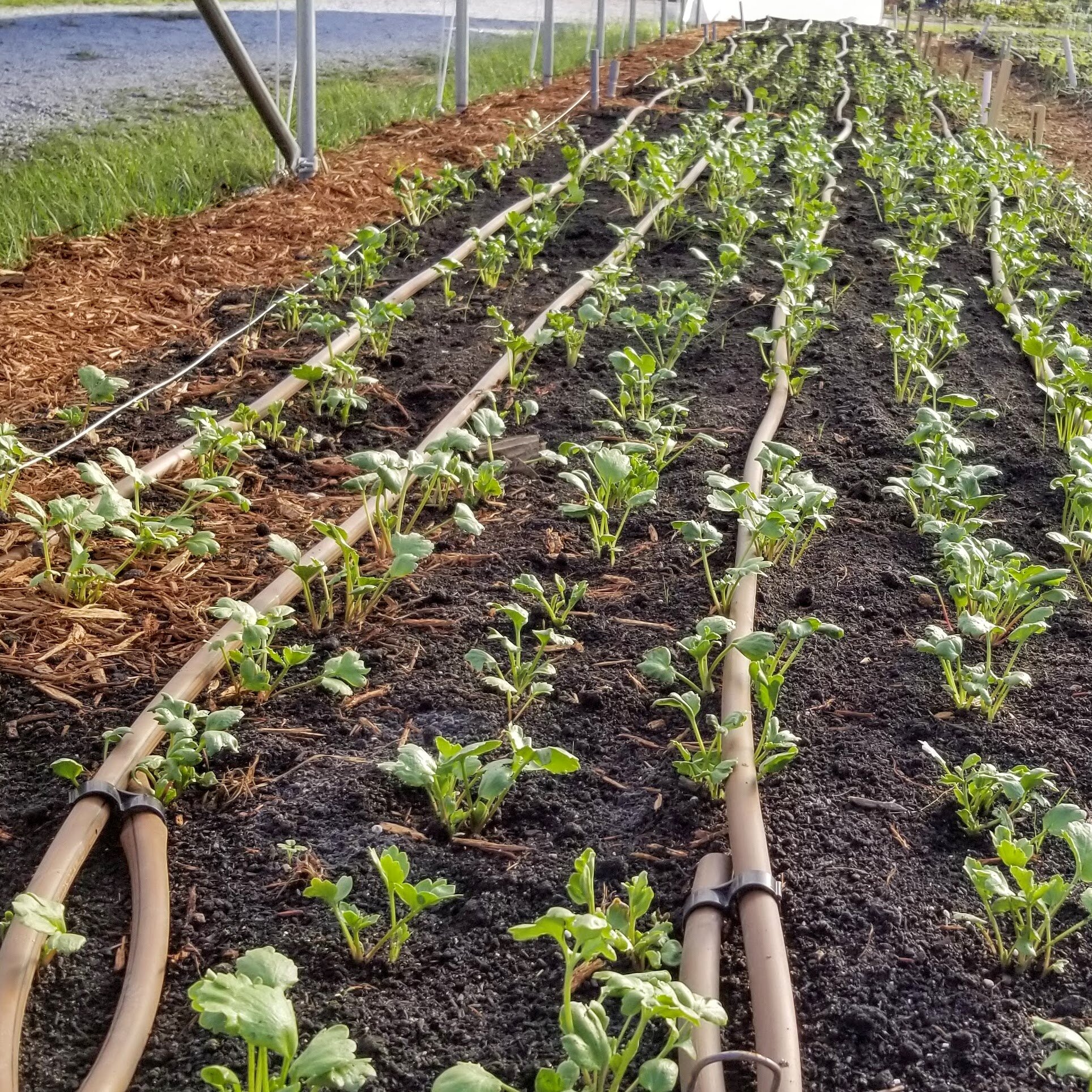
Ranunculus in progress
Water them well when they are planted and then do not water again until leaves appear. After the green leaves are visible, feed them with a water-soluble fertilizer once a week until the blooms appear. Stop feeding when the blooming begins.
Cover the plants when weather gets below freezing. If the leaves freeze but the roots are OK, the plant will come back.
Harvesting Your Blooms
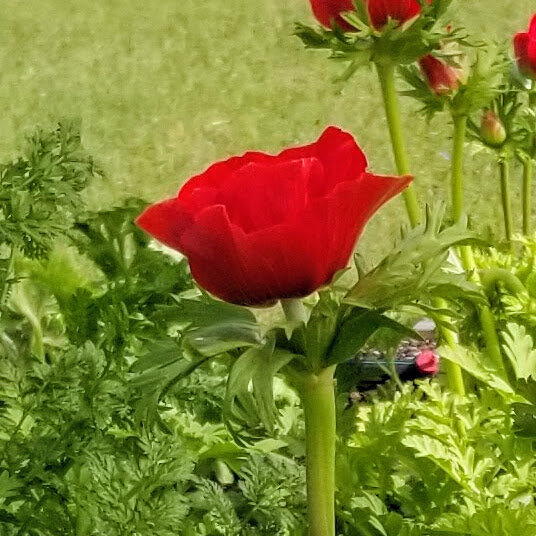
Anemone bloom ready to harvest
Anemone open during the day and close at night. They should open more than once before cutting. Cut at the base of the stem, being careful not to cut newly emerging stems. For the optimal cut, the collar should be about an inch from the base of the bloom.

Ranunculus bloom ready to harvest
Ranunculus petals open from a ball shaped bud. Let the blooms open about half way on the plant and cut the stem at the ground. You can also cut the stem when the bud is colored and soft when squeezed and it will open indoors. The second option is handy if rain or a late freeze is in the forecast and you don’t want to risk losing blooms to the weather.
When the days turn warm and daylight gets to 13 hours, ranunculus and anemone will go dormant. Let the greenery die back naturally, cleaning up the leaves after they are yellowed. Leave the corms in place and they will come back when the conditions are right the next year!
Ready to Give it a Try?
We will offer Anemone and Ranunculus corms on our website by October 20th. We are not shipping at this time, but will have farms pick up dates and we will offer delivery to our subscription zip codes. Watch for the announcement coming soon!
The New Growing Year Begins Now!
If you want to have a spring cutting garden, fall is the time to plan and prepare for it. Now is the time to assess what is working and what is not working in your garden, so that you can make adjustments in the cooler fall weather. Here are a few things to consider:

Perennial Sedum Autumn Joy
1. Plant perennials and spring flowering shrubs – while you can do this in the spring also, fall is always best. In fall, the new plants have several months to get their roots established before blooming. We are adding two varieties of hydrangeas and a forsythia this year. October is a good month to plant in our area.

Hardy Annuals Bachelor Buttons and Orlaya
2. Select hardy annuals that you want to grow and purchase the seed. You can start to prepare the beds now and then sow the seed in October. Hardy annuals are those that prefer cooler temperatures to grow. This includes Bachelor Buttons, Bells of Ireland and Larkspur to name a few. If you want to learn more about these flowers, I highly recommend the book “Cool Flowers” by Lisa Mason Zeigler. It is an excellent source of information and easy to read.

Spring bulbs Ranunculus and Daffodils
3. Order spring flowering bulbs and tubers – daffodils, iris, hyacinth, anemone, ranunculus and peonies. All of these produce lovely spring flowers. These can be grown in pots if you don’t have a lot of space or need to protect them from moles and voles in your yard. We will be offering some of these for sale in the next couple of weeks – so stay tuned!
To get everything off to a good start, now is the time to do a soil test. This will tell you whether or not nutrients need to be added to your soil when you plant. Clemson offers this service to the public. It can be difficult to understand but you can call the lab and they will help you understand what you need to do. Read all about it here: https://www.clemson.edu/public/regulatory/ag-srvc-lab/soil-testing/index.html .
Happy Planting!
These are Amaryllis and Delphinium
Doubling up now since the season is changing and soon many new flowers will be showing up in the bouquets!
This is Amaryllis
Amaryllis is something that most of us are familiar with for the Christmas holidays. At that time of year, they are most often red, white or a combination of both. Beyond the traditional, amaryllis come in many colors and some alternative flower shapes as well. They make an excellent, long lasting cut flower.
We grow them just as you do for the holidays: indoors in a warm climate. See our blog post on how to grow them here. This year for bouquet season, we have used hot pink, white, burgundy and red striped varieties. They also come in green, orange and yellow. We will probably try some of those as well in the future!

This is Delphinium
Delphinium is actually a whole genus of plants but what we use specifically is the Guardian variety. The colors are gorgeous shades of blue and white. We grow these from plugs (baby plants grown in a greenhouse) since they are difficult to germinate. As they require cooler temperatures to grow well, we plant these in the fall. They overwinter in the garden and break out into bloom in early spring.
There are other great varieties to grow. Belladonna has more of a spray growth habit and is also nice for cutting. Pacific Giant is the same shape as the Guardian but much taller. These are well suited for the back of the garden border where they add height and drama. Probably too tall for bouquets.
In some areas delphiniums are perennial but we treat them as annuals since they typically can’t make it through our “famously hot” summers. They are repeat bloomers, so when you cut them, cut close to the ground. The stems start off a little short and get longer with each cutting.


Our spring season subscriptions are winding down. If you missed them and want farm fresh flowers delivered to your home or business we still have openings for our spring to summer subscriptions. For more information, see our website at : https://www.purpletuteur.com/subscription-information
Happy flowering,
Linda
This is Ranunculus
Ranunculus (Anemone Coronaria) is commonly known as Buttercup. The corms (bulbs) come in yellow, orange, pink, red and white. Known as the “rose of spring”, the flower is shaped like a rose.
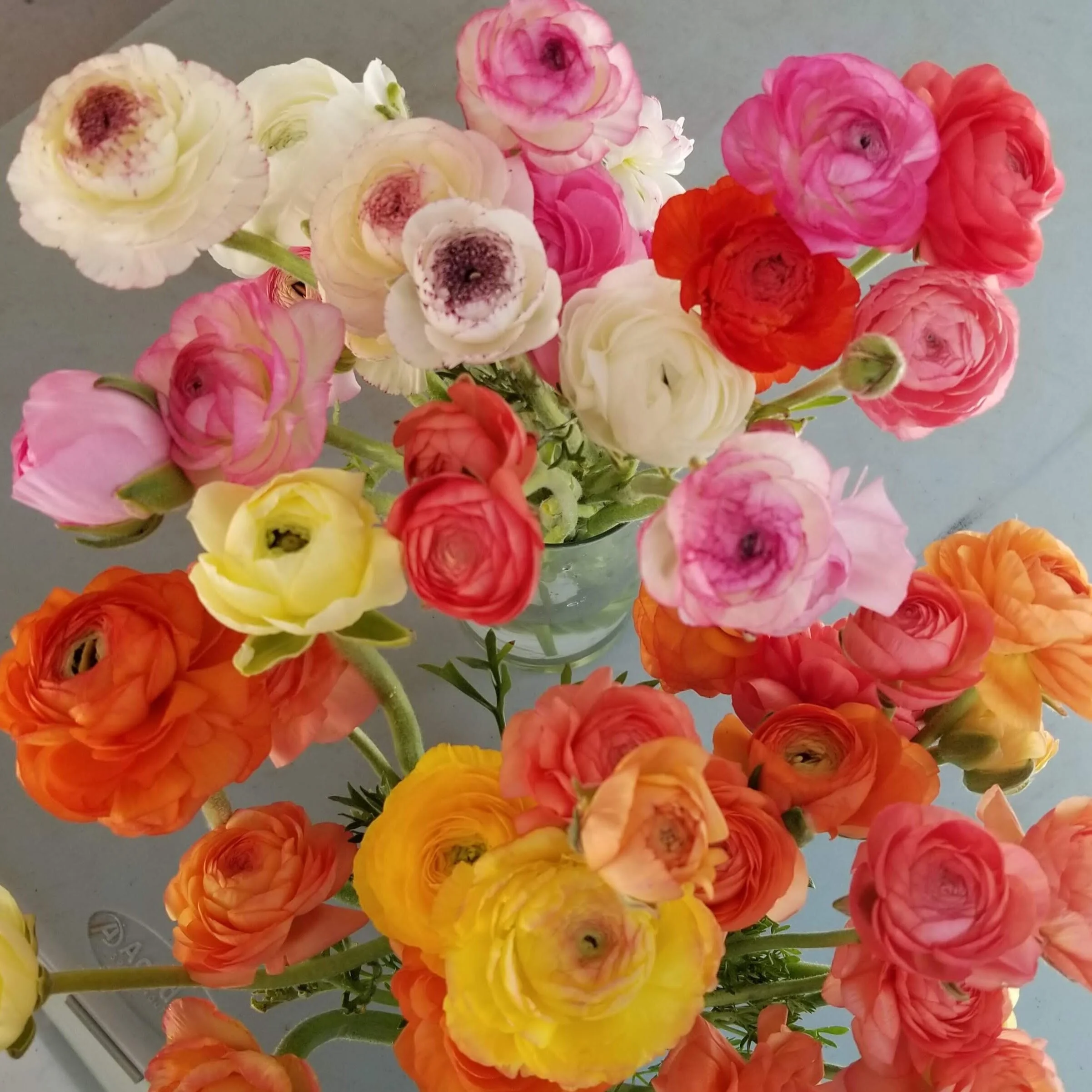

Ranunculus starts blooming in mid-March in Columbia. If you want to add them to your garden, they are a perfect partner to anemone. The growing conditions are the same. The ranunculus corms can survive our winters in the ground. They do best when the daytime temps are in the mid-60’s and the nights are in the 40’s. They will keep blooming until the daytime temps are consistently in the 70’s. After the heat comes on, they fade away until November or so. Then they green up and take up the sun until the March blooms appear.
Ranunculus blooms need protection from the rain. Each plant will bloom several times while in season, so even if a flower gets drenched, all is not lost. Just deadhead it and wait for the next one.

In addition to these there is a variety known as butterfly ranunculus. These are more of a spray form and the flowers have wax coated petals that give them a shimmer. They come in soft pinks, yellows and a pale salmon color (pictured). From Italy, these are fairly new to the United States. Only two wholesalers can distribute them here which makes them more expensive. We are growing some for the first time this year and experiencing some problems but still hopeful that some will make it into spring bouquets.
There is a proper time to cut every flower in order to maximize its vase life. For ranunculus, the right time is when the flower petals are barely open. When properly cut, they will last a good week in a vase.
What do you think of ranunculus?
Thanks to all of you who have ordered your subscriptions. Although the spring season is sold out, we still have some available for the spring to summer season. You can sign up on our website, www.purpletuteur.com.
As always, we appreciate all the love and support you show us here at our farm. It keeps us motivated to try and bring you the best and most beautiful blooms.
Many thanks,
Linda
5 Annual Cut Flowers That Flourish in Our Hot and Humid Summers
Its still summer. Sigh. Our “famously hot” summers are no joke. The hot and humid weather is a challenge to us and to most of the plants that we try to nurture through to fall. There are those, however, that do well or do their best in these conditions. Here are my top 5:
1. Zinnias

Zinnias
Who can resist these happy blooms? They come in every color but blue. There are multiple sizes and shapes available. They can be started fairly easily from seed and if you cut and feed them weekly, they will produce flowers for your home for weeks. They are prone to powdery mildew, so here in Columbia, plant them further apart than the seed pack recommends. I plant mine a foot apart (Benary’s Giants) so there is plenty of airflow between the plants. Cutting them frequently also keeps the vegetation thinned out, further improving the airflow.
2. Basil

Basil
Yup, you read that right. All bouquets need greenery to make the blooms pop. Basil does the trick. Using Mrs. Meyer’s Lemon or Cinnamon also adds a lovely fragrance to your bouquet. When growing basil as a cut flower, you need to let the plant bloom and let the stem get woody before you cut it. This is the opposite of what you would do if you are growing it to eat. Basil grows well in full sun in the spring, but in the summer give it a little bit of shade to keep it happy.
3. Globe amaranth

Globe Amaranth
This sweet bloom doesn’t even get going well until it gets hot. Really hot. It may seem like it isn’t going to do anything, but when the heat rises, it produces a profusion of blooms from a single plant. It will keep producing until the fall frosts arrive. It comes in white, light and dark pink, red and orange.
4. Sunflowers

Sunflowers
These magical blooms are not bothered by the heat. We grow the pollenless single stem varieties for bouquets, but the branching varieties will also do fine when we’re wilting. Did you know that you can affect the size of the blooms by how you space the plants? Planting them 6 inches apart will give you blooms that are right-sized for a bouquet. At 12 inches apart, the larger, more typical flower head with form from the same seed. Be sure to cut them before they are fully open so that bugs don’t ruin the blooms.
5. Celosia

Celosia
This comes in many forms – spike, fan or brain and wheat. They all add texture and color to your bouquet. They come in good variety of colors so you can use this to round out the mix. Be sure to pick this one before the seed forms or you will find little black droppings on the table under your bouquet.
If you want to have something to cut in your garden in the hottest part of summer, these plants can fill the bill. Do you have any other favorite annuals that do well in this heat?
Happy Gardening!
Linda
Hello Spring!
Spring arrived a couple of days ago but today really felt like spring. The cherry trees are blooming and the sky is thankfully clear. The temperatures are warming up and the day length is now longer than the night. These are excellent conditions for getting the fall-planted flowers out of dormancy. The covers are off the beds and we can begin feeding to further encourage growth. In another month to six weeks, we will be able to have blooms like these available on a consistent basis.
Wishing you a wonderful season!

