These are Amaryllis and Delphinium
Doubling up now since the season is changing and soon many new flowers will be showing up in the bouquets!
This is Amaryllis
Amaryllis is something that most of us are familiar with for the Christmas holidays. At that time of year, they are most often red, white or a combination of both. Beyond the traditional, amaryllis come in many colors and some alternative flower shapes as well. They make an excellent, long lasting cut flower.
We grow them just as you do for the holidays: indoors in a warm climate. See our blog post on how to grow them here. This year for bouquet season, we have used hot pink, white, burgundy and red striped varieties. They also come in green, orange and yellow. We will probably try some of those as well in the future!

This is Delphinium
Delphinium is actually a whole genus of plants but what we use specifically is the Guardian variety. The colors are gorgeous shades of blue and white. We grow these from plugs (baby plants grown in a greenhouse) since they are difficult to germinate. As they require cooler temperatures to grow well, we plant these in the fall. They overwinter in the garden and break out into bloom in early spring.
There are other great varieties to grow. Belladonna has more of a spray growth habit and is also nice for cutting. Pacific Giant is the same shape as the Guardian but much taller. These are well suited for the back of the garden border where they add height and drama. Probably too tall for bouquets.
In some areas delphiniums are perennial but we treat them as annuals since they typically can’t make it through our “famously hot” summers. They are repeat bloomers, so when you cut them, cut close to the ground. The stems start off a little short and get longer with each cutting.


Our spring season subscriptions are winding down. If you missed them and want farm fresh flowers delivered to your home or business we still have openings for our spring to summer subscriptions. For more information, see our website at : https://www.purpletuteur.com/subscription-information
Happy flowering,
Linda
This is Ranunculus
Ranunculus (Anemone Coronaria) is commonly known as Buttercup. The corms (bulbs) come in yellow, orange, pink, red and white. Known as the “rose of spring”, the flower is shaped like a rose.
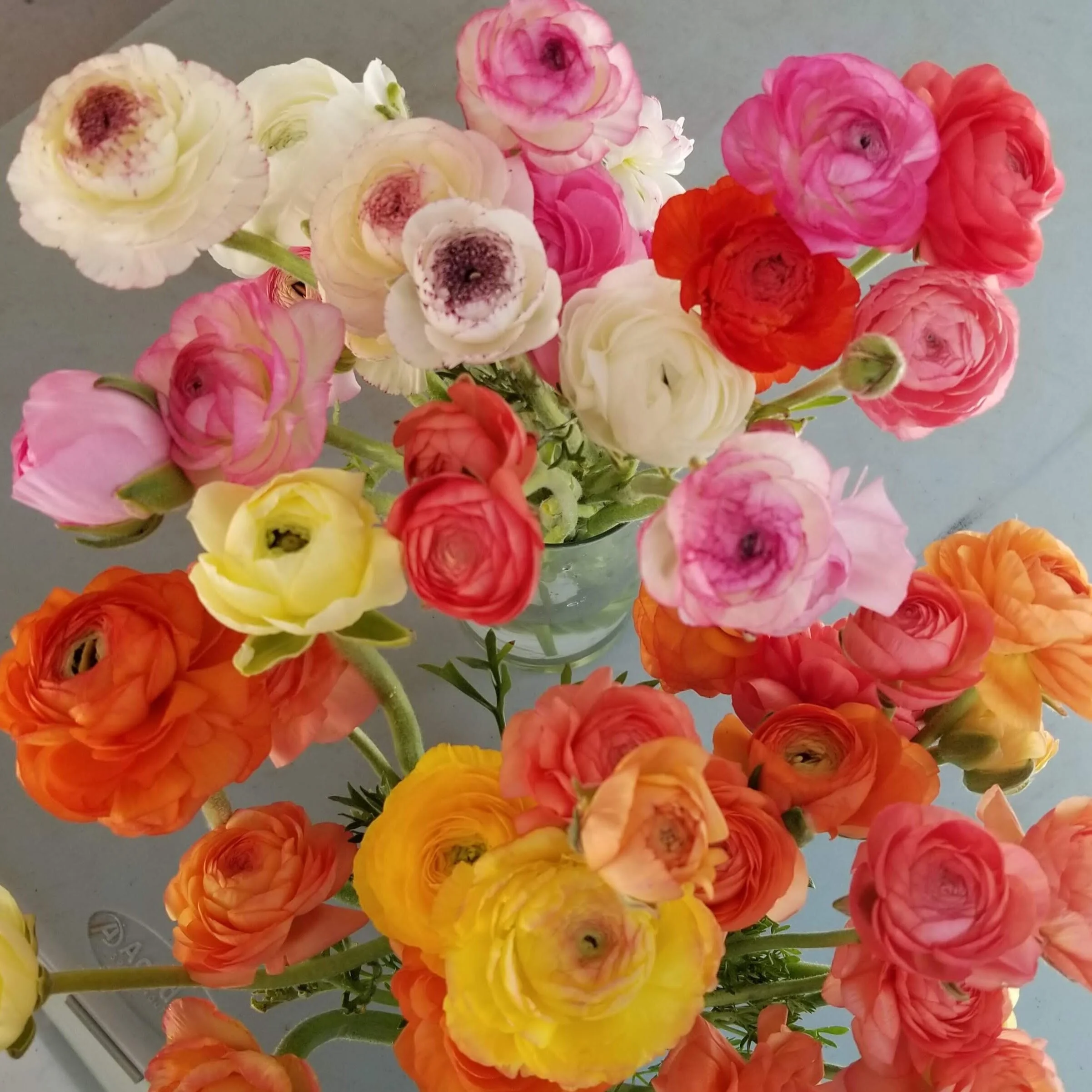

Ranunculus starts blooming in mid-March in Columbia. If you want to add them to your garden, they are a perfect partner to anemone. The growing conditions are the same. The ranunculus corms can survive our winters in the ground. They do best when the daytime temps are in the mid-60’s and the nights are in the 40’s. They will keep blooming until the daytime temps are consistently in the 70’s. After the heat comes on, they fade away until November or so. Then they green up and take up the sun until the March blooms appear.
Ranunculus blooms need protection from the rain. Each plant will bloom several times while in season, so even if a flower gets drenched, all is not lost. Just deadhead it and wait for the next one.

In addition to these there is a variety known as butterfly ranunculus. These are more of a spray form and the flowers have wax coated petals that give them a shimmer. They come in soft pinks, yellows and a pale salmon color (pictured). From Italy, these are fairly new to the United States. Only two wholesalers can distribute them here which makes them more expensive. We are growing some for the first time this year and experiencing some problems but still hopeful that some will make it into spring bouquets.
There is a proper time to cut every flower in order to maximize its vase life. For ranunculus, the right time is when the flower petals are barely open. When properly cut, they will last a good week in a vase.
What do you think of ranunculus?
Thanks to all of you who have ordered your subscriptions. Although the spring season is sold out, we still have some available for the spring to summer season. You can sign up on our website, www.purpletuteur.com.
As always, we appreciate all the love and support you show us here at our farm. It keeps us motivated to try and bring you the best and most beautiful blooms.
Many thanks,
Linda
This is Anemone
We are about a week away from getting enough blooms to begin delivery! Thanks to all who have signed up. We have just a couple of spots left for Friday delivery for the early spring season.
This is the first in a series of blogs introducing some of the flowers we grow.


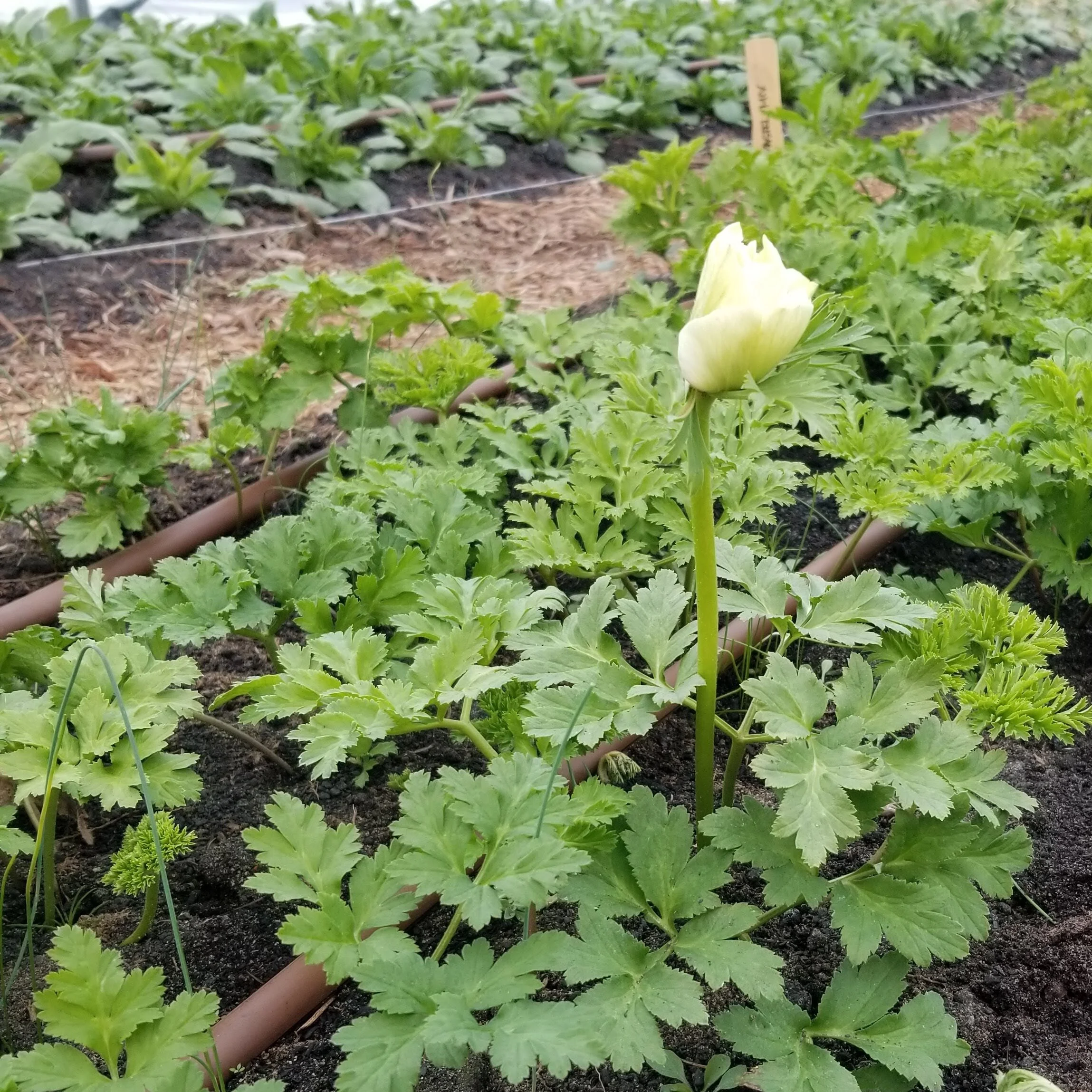
Anemone (Anemone Coronaria) is a late winter/early spring bloomer for us in Columbia. The corms (bulbs) come in many colors and in single double flower forms. In addition to the longer stemmed varieties that we use for cut flowers, there are short-stemmed versions that are nice to have in the garden.
All types can survive our winters in the ground but the flowers don’t do well in the rain. If you don’t have time to be concerned about every bloom, you simply dead head those that have gotten wet. Otherwise, you can grow them under cover to protect them from our wet spring weather. Each plant will bloom several times while “in season”, so even if a flower gets drenched, all is not lost.
Anemone does best when the daytime temps are in the mid-60’s and the nights are in the 40’s. This translates to March for us. They will keep blooming until the daytime temps are consistently in the 70’s. After the heat comes on, they fade away until November or so. Then they green up and take up the sun until the March blooms.
There is a proper time to cut every flower in order to maximize its vase life. For Anemones, the right time is when the collar under the bloom is about a half an inch from the base of the bloom. They may wilt if you cut them sooner. When properly cut, they will last a good week in a vase.
If you are thinking that you knew of anemone as another flower, you are right. There is a shrub-like perennial called Japanese Anemone (Anemone hupehensis). The blooms look very similar to the bulb form but they bloom in a spray in the fall. This is why botanists revert to Latin names for flowers. Many common names apply to multiple plants but each has its own unique Latin name.
What do you think of this flower? Have you grown it? Is there another flower that you like to see this time of year?
I hope you are as excited for Spring as I am!
Best,
Linda